BACKROOMS: The SILENT HILL Movie of My Dreams
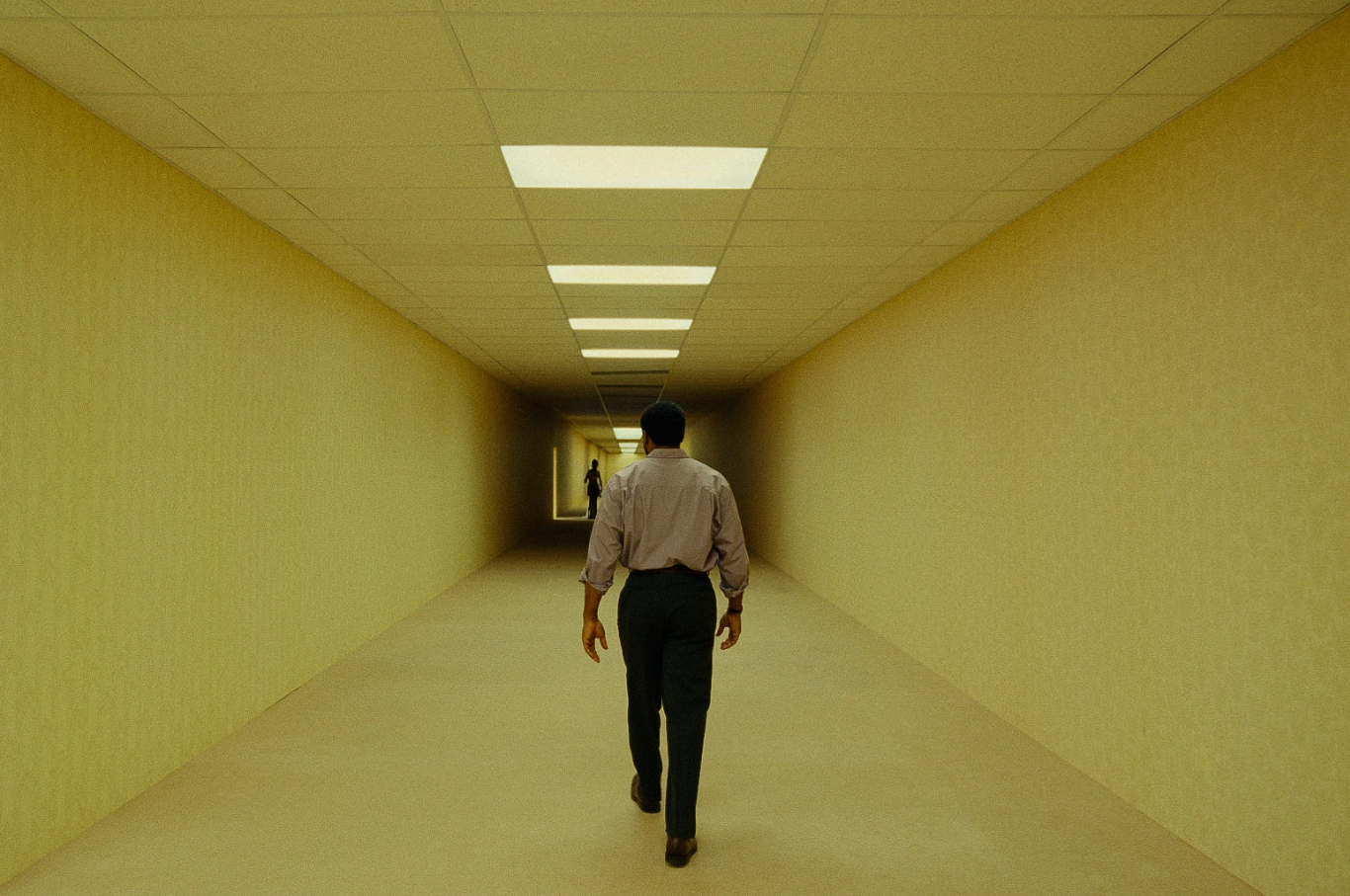
Chiwetel Ejiofor in Backrooms (2026), walking towards a mistake.
The best horror haunts you for the rest of your life.
But the nature of that haunting shifts; you eventually stop getting jump-scared by shadows, and learn to look ahead for dark corners, anticipating the shape of the thing before it even appears. In its final form, the haunting turns you into the host, recreating the thing that changed you in the first place and telling everyone around you to look at what you’ve found.
Like many Millennials of a certain age, the video game Silent Hill 2 fucked me all the way up. For years, I’d proudly cite it as the cause of My First Panic Attack (not true) and the reason I was scared of radio static for years afterwards (very true). And like the best hauntings, it resides somewhere new within my everyday life.
Because now I’ve become another foundational Millennial stereotype: The Boss Baby Vibes guy. Everything I love or find interesting can, in some way, give me “a lot of Silent Hill vibes.”
Foggy evenings. Foggy mornings. The sound of a mandolin. Someone putting a lot of emphasis on the word “anyway” during a conversation. The concept of marriage. The concept of therapy. Mushrooms.
The ability to carry the torch of a work of art and apply its unique light to everything else you encounter is maybe one of the most sincere forms of love I can imagine. But it is, again, a form of haunting. Every Silent Hill game is a mess is one way or another; until incredibly recently, the series was basically unplayable on modern hardware, its best entries the stuff of Let’s Plays and breathless anecdotes about having a panic attack at a sleepover in Grade 9.
Because the games are jagged, challenging, friction-filled things, they endure. My mind wants to turn them upside down and reposition the mismatched sides like a Rubik’s Cube. Imperfect things command our love and attention because they invite us to work on them; I’ve spent more time imagining a better ending for Naruto than I ever did reading and watching the series itself. That unrealized potential is where fandom is born; it haunts us with what could have been, and what nightmares may still come.
True to its namesake, Backrooms is bigger than what I can say about it here; this isn’t a review. But Kane Parsons has created something that has the hallmarks of something that will haunt minds and create fans dedicated to solving, fixing, and celebrating it in equal measure. The biggest internet-borne horror stories, digital folk tales, all arrive with that shared fandom element as part of the core appeal.
Anyone can create more Backrooms lore, or pitch a new SCP Foundation case file, or add a new twist to whatever today’s equivalent to Slenderman may be. The fandom becomes a writer’s room, culling the ideas that aren’t scary or resonant enough, and building upon the ones that endure, adding it to the shared whole.
It’s easy to carve Backrooms into its component parts and sources of inspiration: You can call it The Shining by way of House of Leaves and Portal. Your mileage may vary on how well it executes or earns all of those associations; it’s mostly a matter of which forces are haunting your brain that day.
And we know where I stand on this matter. In my restless dreams, I see that town.
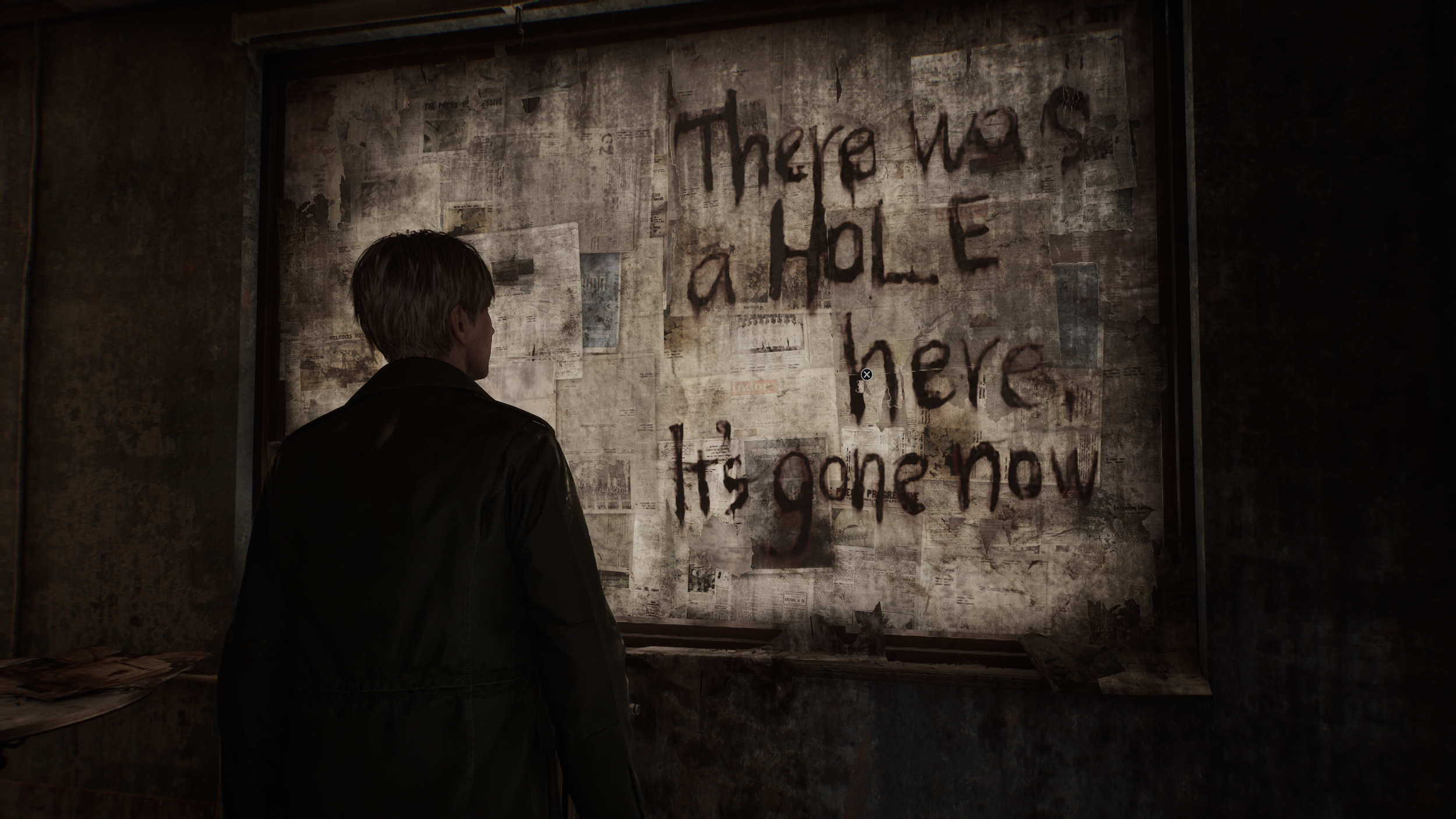
James Sunderland in Silent Hill 2 (2024), reading a single sentence that may stick with you for life.
Silent Hill refuses to leave me because I cannot shake its potential, and want the people I love to understand why it works so well when it’s firing on all cylinders.
I can see the HBO trailer for a Silent Hill show, each season tackling its own new arc in an anthology style.
I buzz with excitement when I see each new game in the series use the titular town as a signifier, abandoning the Midwest American Town setting for Germany, for Japan, for Scotland—for anywhere dense with architecture and grief.
I want to be consumed by more stories in this world that I become a shameless, speculative consumer. I paint the shape of the idea that haunts me on every surface and hope it springs to life. I can describe its outline almost effortlessly.
A Silent Hill story is about a person so saturated with grief and guilt and baggage that the physical world itself swallows them whole. It can be about a cursed bloodline and a devoted cult; it can also be about teenage bullying, veterans with PTSD, or the death of a marriage. It can happen anywhere, because you bring your monsters with you.
And for whatever reason, two-thirds of the Silent Hill movie adaptations have been helmed by a seemingly well-meaning French man who seems determined to do something else entirely.
Under the direction of Christophe Gans—a man who I can never hate because he gave us The Brotherhood of the Wolf—the obscure becomes knowable, and personalized demons are turned into franchise mascots.
A game with a famously bleak and open-ended finale is resolved by saying the entire movie was a dream, as the protagonist drives off into the sunset with his love interest, rock music playing in the background as the credits roll.
In Backrooms, I see the blueprint for a Silent Hill story laid bare in yellow wallpaper. An impossible space tied to the main character’s deteriorating mental state; dreamlike logic interrupted by monsters and helpless characters that are dim, imperfect reflections of his own life and regrets. Outsiders that are made victim to the space and its inhabitants; a fight to escape the monster that either distorts or illuminates who the man really is.
I don’t feel the desire to declare the success of Backrooms as a watershed event or a shape of things to come, simply because I think we all deserve better than to play along with the selective amnesia that plagues Hollywood Studio Types.
How many years in a row are we going to act stunned when a movie that presents audiences with something new does well at the box office compared to franchise sequels in their double-digit entries? Why did we fail to learn from Sinners, or Everything Everywhere All At Once, or every single Jordan Peele movie?
When are we going to stop downplaying the power of online fandom and popularity, simply because the fans are mostly under the age of 35?
What do we gain by insisting that a 20-year-old first-time Director immediately claim responsibility for the future of Hollywood and deliver a flawless final product that can explain the quarter-of-a-billion-dollars it has earned at the box office?
Because Backrooms isn’t perfect—but perfection has never been a requirement for something to be popular, interesting, and capable of building a home behind their eyes. It will haunt new fans and shape how they interact with life and art for years to come.
But for me? It didn’t haunt me in a new way; it just gave my oldest ghost somewhere new to rest. It doesn’t carry the name of that lakeside resort town, but it carries on its spirit.