HOKUM Review: The Scary Door Principle
(image courtesy of Elevation Pictures)
Horror is all about doors. When a door is open, bad things can come through—murderers, witches, traumatic visions. And when a door is closed, we’re trapped. Sometimes with the entities that got through before the portal was shut, other times all on our own. The doors can be literal, the kind you find in a hotel, and the doors can be metaphorical, the gateways of perception that provide visions of the supernatural or the invisible exits to our traumatic prisons. The best horror stories use all of these doors—locked and unlockable, tangible and rhetorical—to build and break suspense, terrify and entertain us, and sometimes even teach us a lesson. That’s the case with Hokum, Irish filmmaker Damain McCarthy’s latest silver screen nightmare.
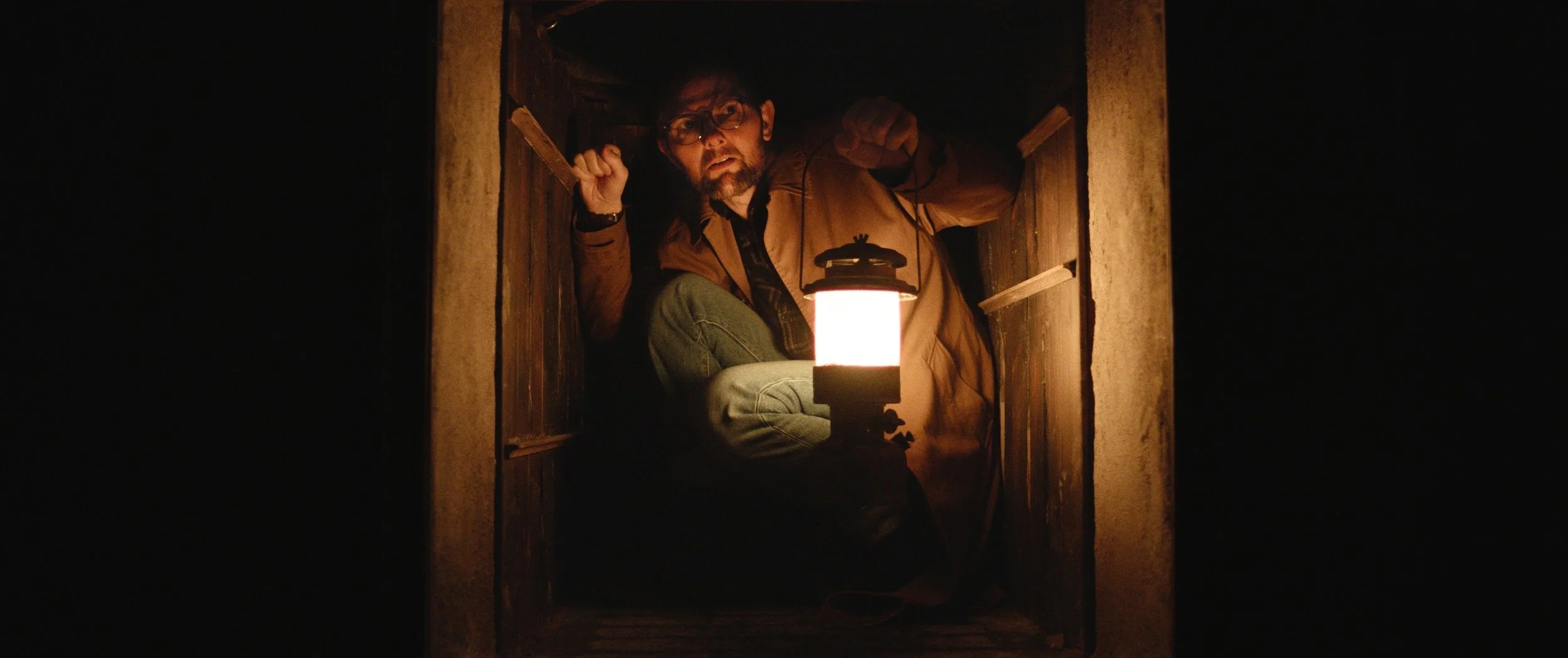
On the surface, Hokum is a haunted inn story focused on one literal door that won’t open: the blockaded threshold to the honeymoon suite of Ireland’s Bilberry Woods Hotel. Adam Scott plays American author Ohm Bauman, a successful writer with a dark secret, an attitude problem, and two dead parents whose ashes he intends to spread in the nearby forest. On his first night, he discovers that the special room for newlyweds, where his parents stayed after their nuptials, was sealed by the hotel owner for fear of a witch infestation. Bauman dismisses the tale as hokum, despite the chilling stories of hotel staff, but after the disappearance of an employee who showed him compassion at his lowest moment, he is compelled to sneak into the forbidden room after hours. And that’s when the screaming starts.
At first, the door won’t open, and Bauman has to get in. But once he’s broken in, Bauman can’t get out. And that’s a big problem in a haunted hotel suite. His increasingly desperate attempts to free himself of his confines spiral him into an escape room scenario from the deepest depths of Hell, bringing him face to face with the folkloric presence deep underneath the estate. And once that happens, the switch flips. Suddenly there aren’t enough doors in all the Emerald Isle that could make us feel safe from the inhuman forces sharing the room. Trapped with Scott’s character, I cringed and moaned and shouted and laughed—Hokum is an incredibly fun time, as long as you’re the type of person that loves writhing in fear.
Like McCarthy's Caveat and Oddity before it, Hokum manages to build a sense of unbearable tension with little more than stillness and darkness. As Bauman slowly explores the honeymoon suite and and later the witch’s underground lair, I found myself animated by the lack of motion, fidgeting with anxiety. The camera holds on visually complex images, obscured by black shadows that only seem to get darker whenever Bauman flicks a switch to spark the most ineffective lamps outside of Silent Hill. The effect is like staring at an I Spy picture book and waiting for it to say, “Boo!”
(image courtesy of Elevation Pictures)
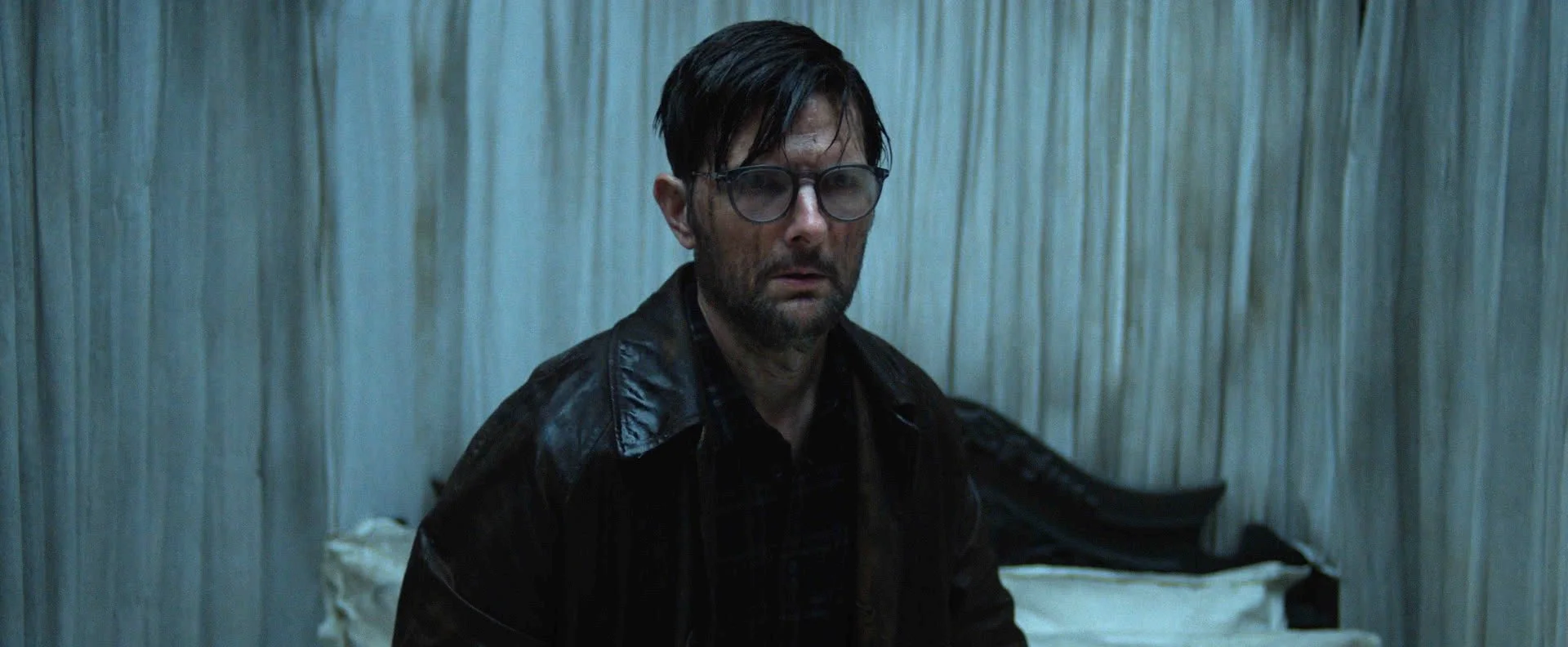
That tension only mounts. I found myself on edge for most of the film, caught between the need to have my anxiety broken by a shock and the dread of seeing something moving in the shadows. That tension is punctuated with skin-crawling scares that mostly amount to simple shots of faces where you didn’t expect them to be—behind a character as they gaze out beyond the camera, deep in shadow beyond a fastened gate, or right there in front of Bauman revealed by the light beam of a go-pro or the flicker of an old tube television.
And while the malicious forces in Hokum take many forms—from ghostly apparitions and scheming murderers, to a human-jackass hybrid with bulging eyes, to the classic storybook witch underneath it all—the fear all comes from a tangible struggle to get in to where someone needs help and then get out before the situation gets weirder. The honeymoon suite is an abyssal variant of Monty Hall, every prize door that could save us is bolted shut, and the ones we can open are tragically vulnerable to eldritch crones.
On an allegorical level, the scary door principle is threaded through Bauman’s character journey. From skeptic to fearful believer, from miserable asshole to grateful would-be hero. And those paths of transformation are all coded as prisons. A framing device that bookends the film shows various potential endings for Bauman’s next book, visually represented by a red circle in a desert and a treasure map stuck in a thick glass bottle. That red circle is visually linked to the ring of condensation from Bauman’s too-full whiskey glass, hinting at self medication and the prison of trauma-induced writer’s block. These jails of the soul are just as claustrophobic as the dumbwaiter Bauman uses as an elevator to access the hotel’s subterranean witch dungeon, and as urgent as the chalk circles he deploys to fend off evil forces in spite of his cynicism. Every door Bauman opens, literal, metaphorical, spiritual, or psychedelic, comes with a dual sense of relief of potential freedom and fear of what he might be letting in.
The story is ambitious enough on its own—a murder conspiracy wrapped in a character drama about grief and guilt. And it’s funny, too, an element that always adds a pinch of endorphins to the adrenaline, even if laughter won’t save you from the shock. But McCarthy’s true accomplishment here is his ability to align the boneshaking experience of fear with the emotional journey and thematic message of the film. Hokum is the rare horror movie that uses its heart pounding frights to make you physically feel its deeper message, one about the doors we lock when we close our minds and the healing we allow ourselves when they’re open.
PETER COUNTER is a culture critic writing about television, video games, film, music, and technology. He is the author of Be Scared of Everything: Horror Essays and How to Restore a Timeline: On Violence and Memory.