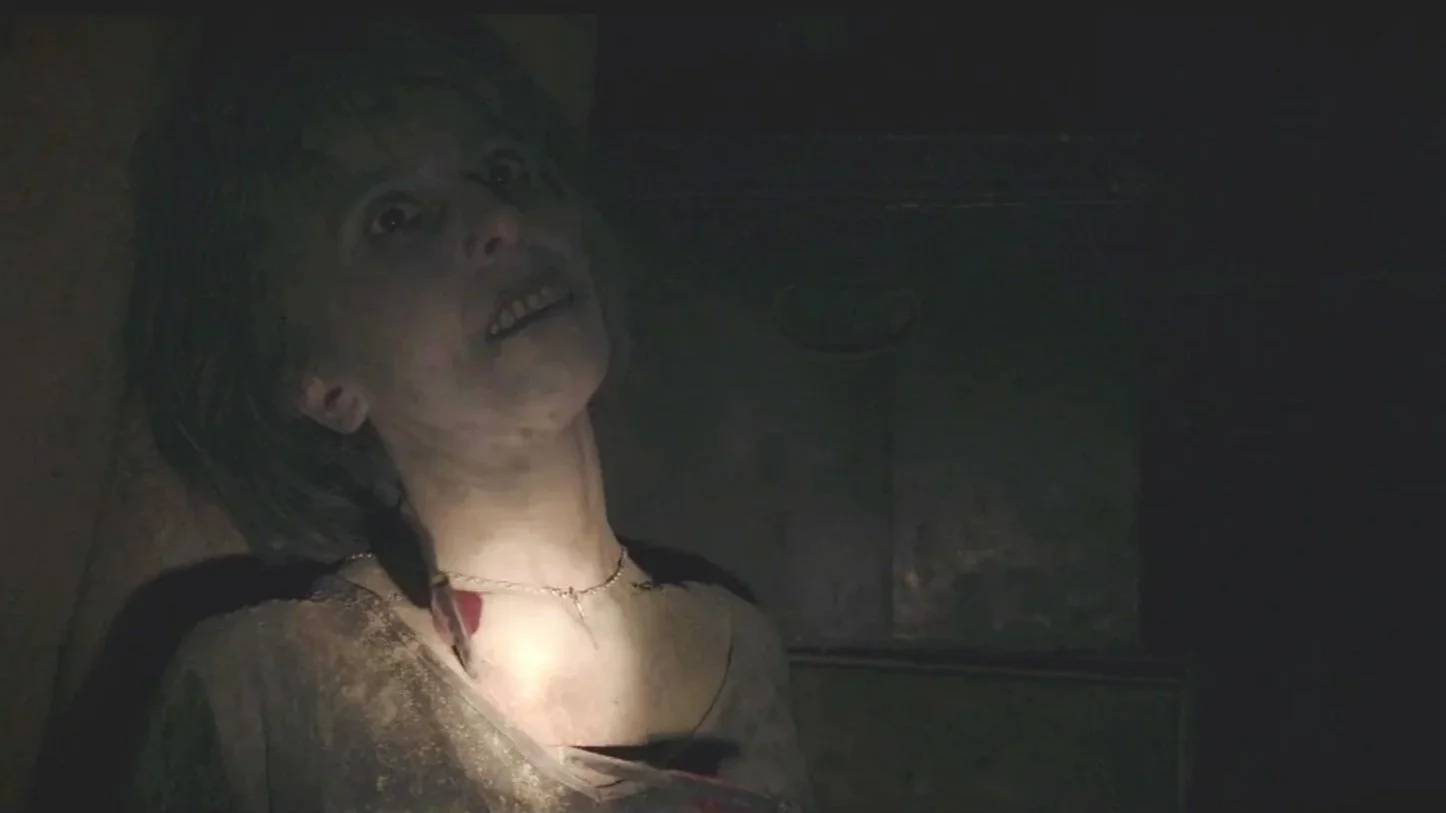
In film, fright is usually a state achieved through visible action: the swing of a chainsaw, the stab of a knife, the floating of a child vampire, or the persistent crawling of a killer from the Black Lodge. It’s kinetic. So much so that we use the language of locomotion to describe the most heartpounding horror movies, which are “rollercoasters” or “thrillrides,” surprising us through twists and turns and trapdoors. So when we sit down in front of a modern horror movie, our expectation is that the scares will move. Mc Carthy subverts this vocabulary of dynamic heebie-jeebies by using stillness for the most bone-chilling scenes in his movies.
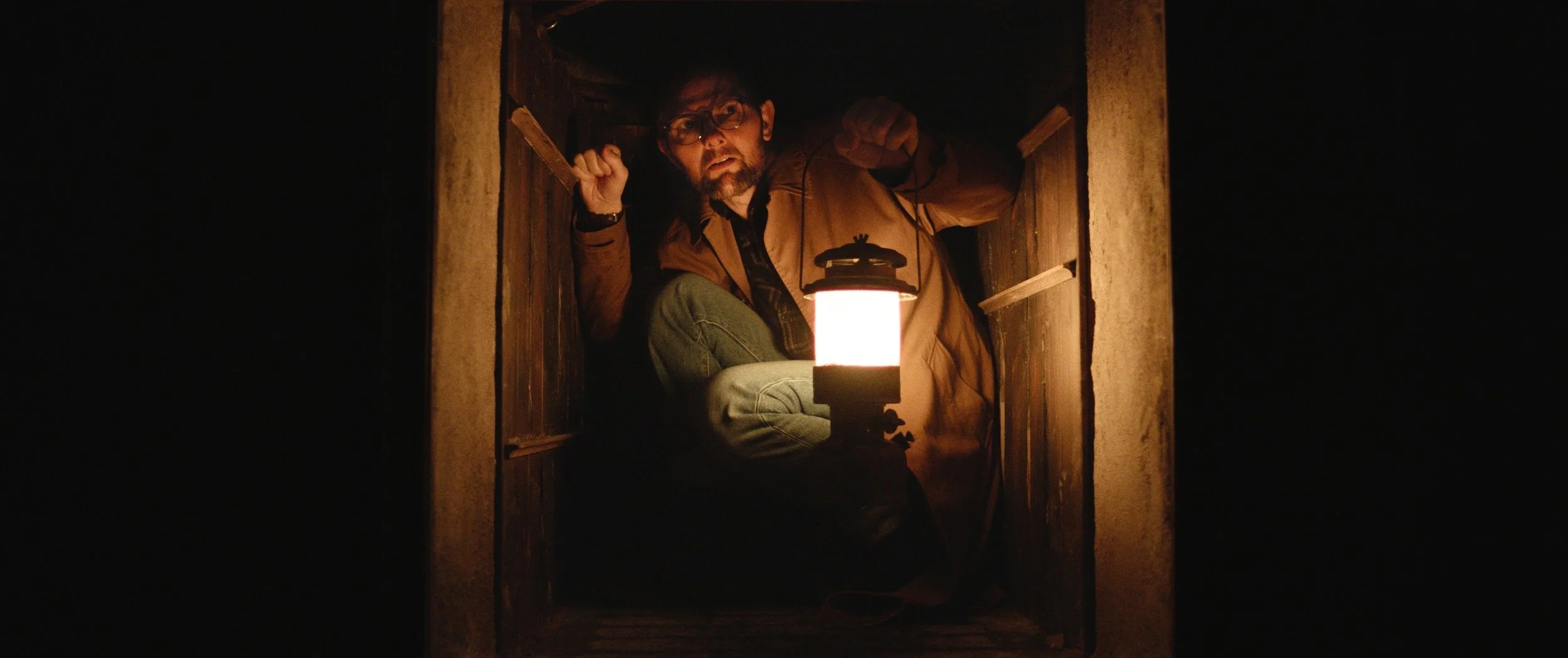
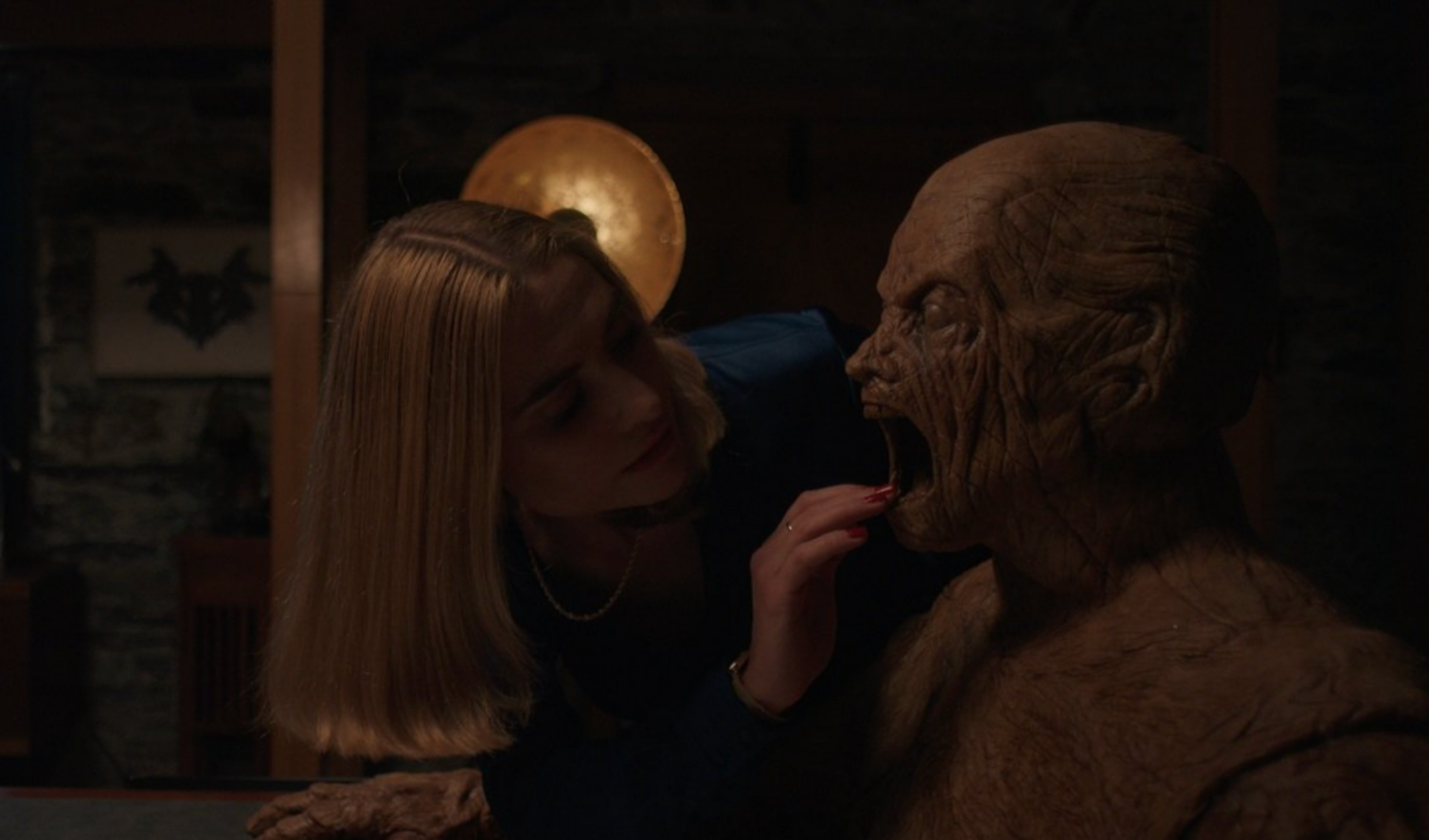
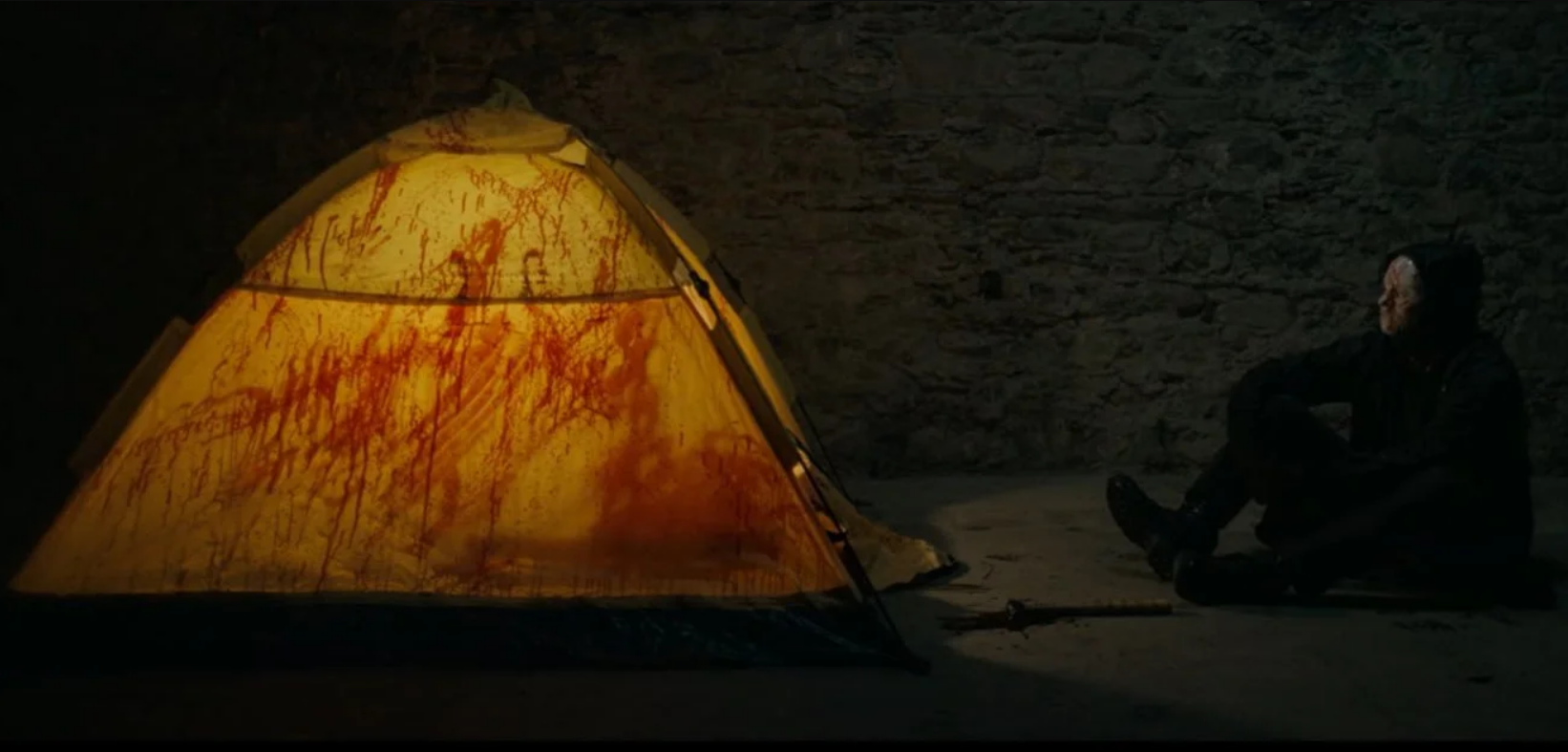
In both Caveat and Oddity, Mc Carthy sets up scare expectations in a similar manner to the aforementioned tent camera by introducing human-shaped objects that are clearly meant to move. Early in Caveat, Isaac finds the body of Olga’s dead mother hidden in a basement wall, and in Oddity Darcy’s golem sits at a table for most of his screen time. Tension is built through that knowledge—the expectation of impossible motion. The mother corpse, for example, is just an actor in makeup, and you can tell her eyes are alive from the moment you see her. Every shot of her face is wound tight with the anticipation her irises will shift, or her pupils will narrow, or her mouth will curl into a smile. So when, in the film’s rising action, Isaac finds himself trapped on the other side of the wall, intimately cramped next to the corpse, you expect motion. And it happens. But not in front of you.