Stillness is the Move: The Immobile Horror of Damian Mc Carthy
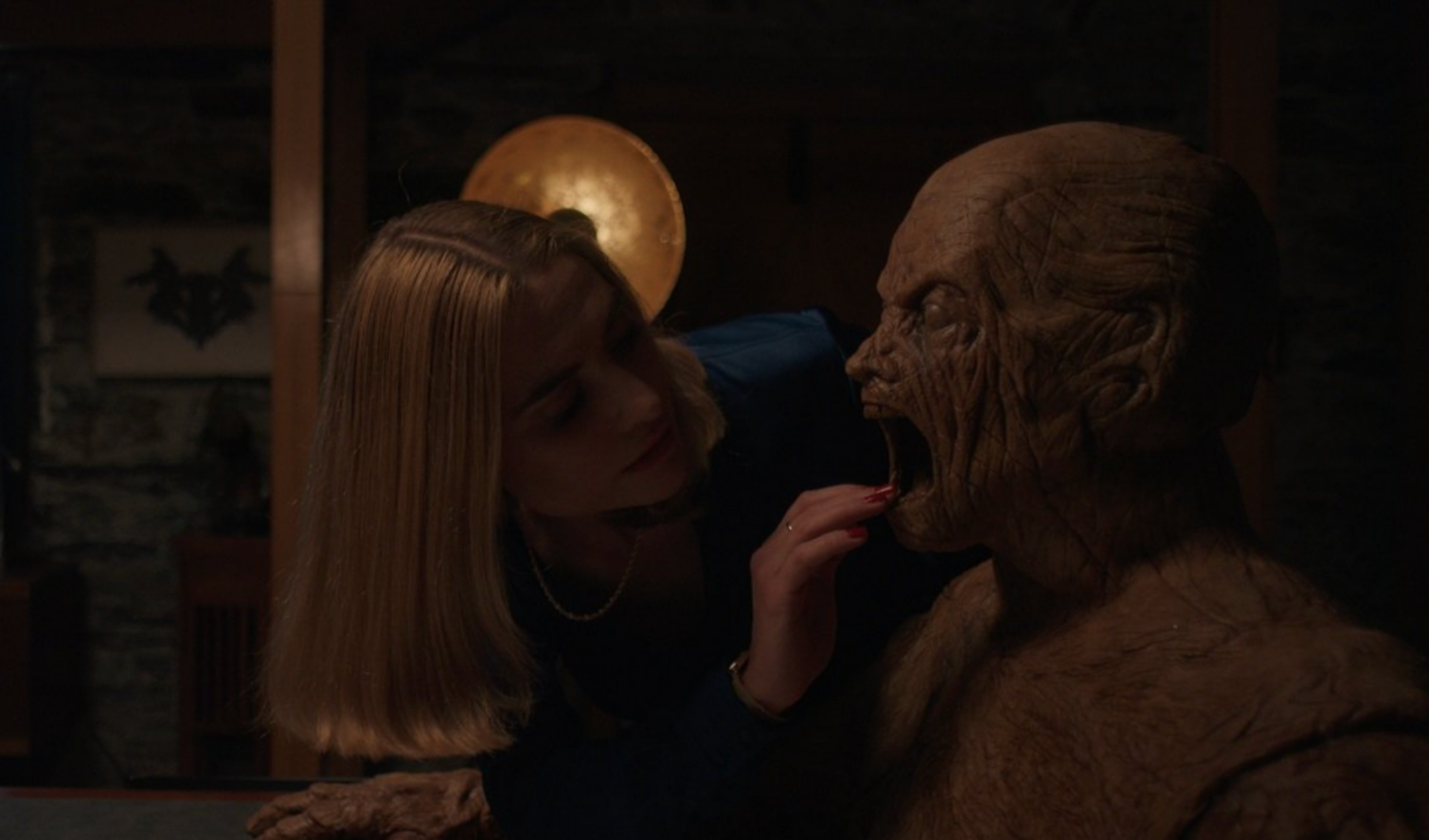
What if he just… chomped?
SPOILER ALERT: This post discusses details about the films Caveat and Oddity that will ruin some of the surprise. Read at your own risk.
Horror is all about broken expectations. A storyteller establishes a pattern that we can anticipate and when they introduce variation—like a brick wall when you expect a window or a corpse when you expect a living protagonist—we are sent into a stomach-flipping state of existential freefall. The best spooky bards find a perfect balance between expectation and variation, conjuring a pervasive aura of doubt and fear. But of course, after enough slasher films, ghost stories, and survival horror video games, the veteran horror buff becomes desensitized to the effect. I’m as guilty as any other horror viewer when it comes to wishing a piece of media “went harder,” which is code for violently breaking my jaded expectations. And that’s why I feel so upsettingly refreshed when watching the work of Irish filmmaker, Damian Mc Carthy.
Mc Carthy’s movies play with the absurd, wasting no time sending us into that sweet horror freefall. His 2020 debut feature Caveat throws logic out the window immediately and leashes us to its nightmare premise: an amnesiac named Isaac is hired to babysit Olga the orphan, and as a term of his employment, he is chained to the basement of her clearly haunted house. The 2024 follow-up, Oddity, is a similarly high-concept story with paranormal detective vibes, following a blind medium named Darcy who seeks the truth behind the murder of her sister through the application of occult methods involving an imposing wooden golem. Both films clip along at a steady pace of tension-building creepouts, broken very rarely by the occasional jumpscare.
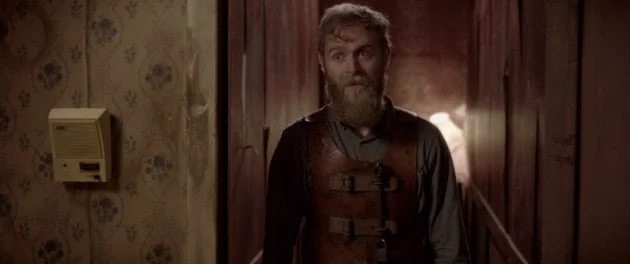
I’ve heard of being chained to the desk, but this is ridiculous.
In both films, Mc Carthy demonstrates a sense of gruesome playfulness, sometimes literally showing us how he is going to scare us, and then doing so in the next beat. When Darcy’s sister Dani is looking through digital photos inside a tent during the first act of Oddity, she sees an image of a masked figure standing outside her tent. And that’s exactly what we see when she unzips the tent’s flap moments later. The knowledge of what’s going to happen enhances the fright with an intimate, almost conversational element—as if you can hear Mc Carthy laughing after pulling off the perfect prank. This effect is at its best when he adds a secondary twist to his nightmares: playing against modern tradition and removing the motion from the terror.
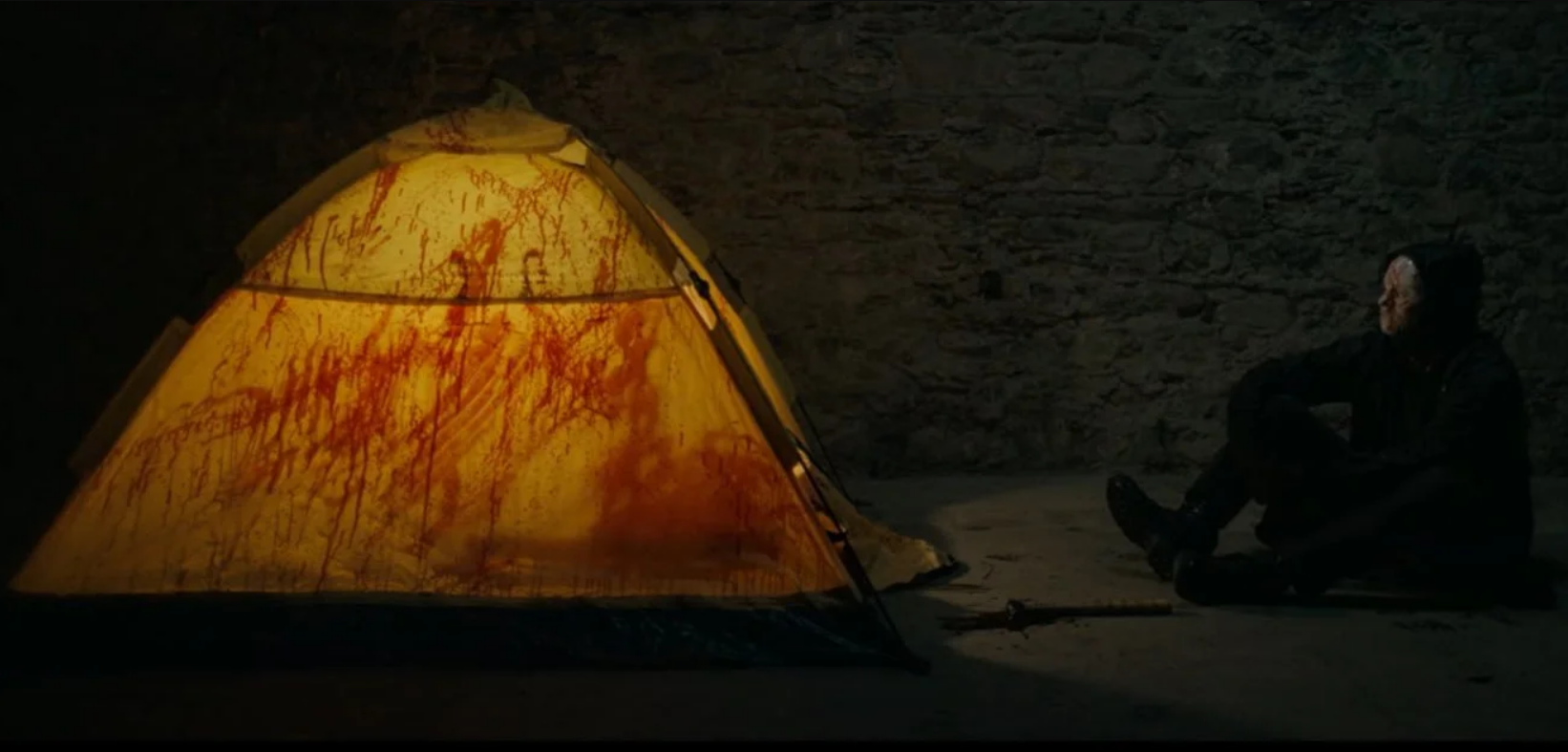
As seen on camera!
In film, fright is usually a state achieved through visible action: the swing of a chainsaw, the stab of a knife, the floating of a child vampire, or the persistent crawling of a killer from the Black Lodge. It’s kinetic. So much so that we use the language of locomotion to describe the most heartpounding horror movies, which are “rollercoasters” or “thrillrides,” surprising us through twists and turns and trapdoors. So when we sit down in front of a modern horror movie, our expectation is that the scares will move. Mc Carthy subverts this vocabulary of dynamic heebie-jeebies by using stillness for the most bone-chilling scenes in his movies.
In both Caveat and Oddity, Mc Carthy sets up scare expectations in a similar manner to the aforementioned tent camera by introducing human-shaped objects that are clearly meant to move. Early in Caveat, Isaac finds the body of Olga’s dead mother hidden in a basement wall, and in Oddity Darcy’s golem sits at a table for most of his screen time. Tension is built through that knowledge—the expectation of impossible motion. The mother corpse, for example, is just an actor in makeup, and you can tell her eyes are alive from the moment you see her. Every shot of her face is wound tight with the anticipation her irises will shift, or her pupils will narrow, or her mouth will curl into a smile. So when, in the film’s rising action, Isaac finds himself trapped on the other side of the wall, intimately cramped next to the corpse, you expect motion. And it happens. But not in front of you.
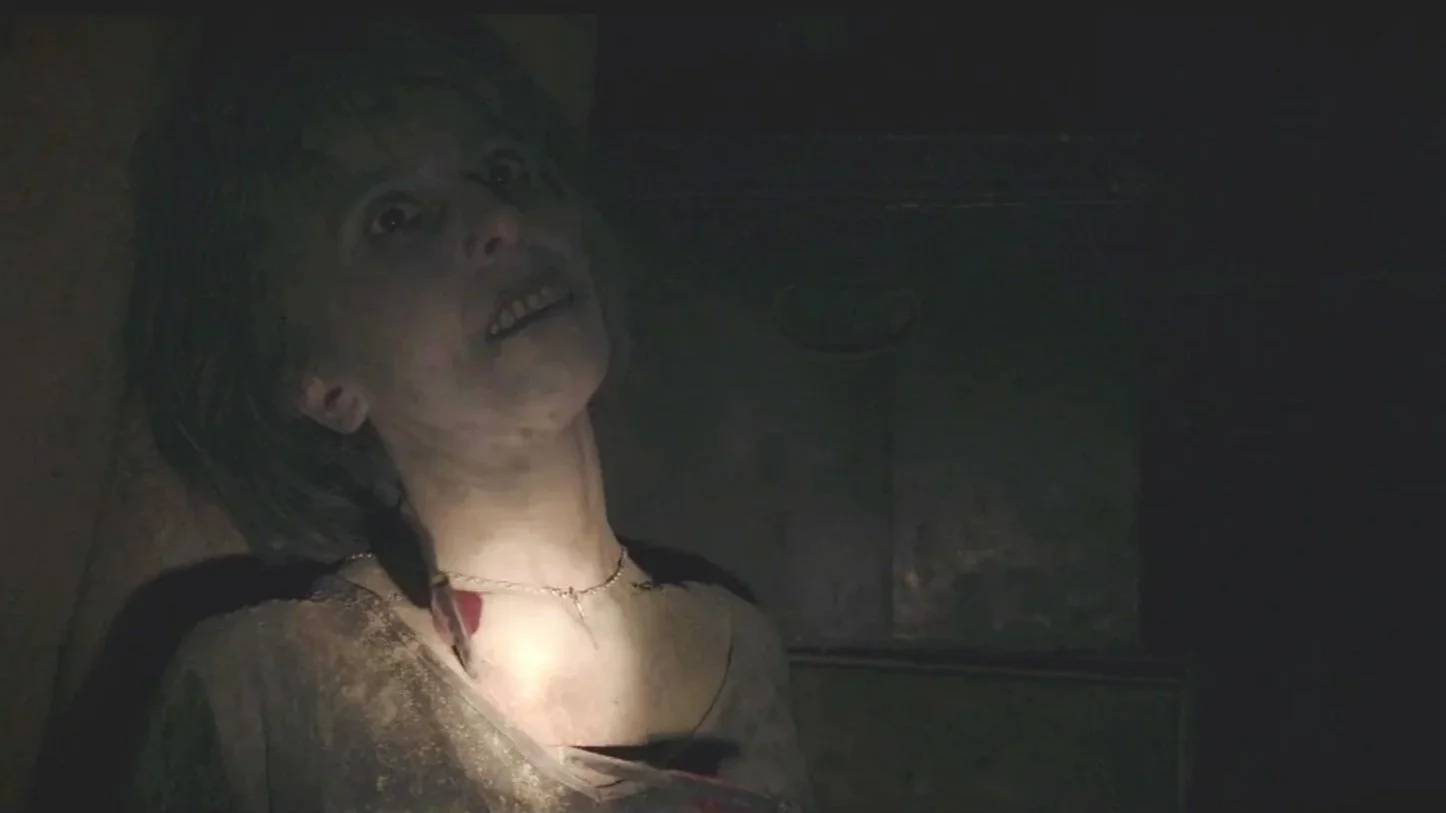
Jeepers creepers, where’d you get those eyes?
The mother’s motion is hidden in shadow. Every time Isaac’s flashlight passes over her, we see her in a slightly different position. And to let us know he’s having fun, Mc Carthy even put in a gag involving a hat that, for all its humour, only supercharges the agony of the moment. A series of still images, the result of unseen motion that should be impossible.
People often ask me what the trick is to watching horror, and my go to answer is that it’s always worse in your head. Fear lives in your imagination, so actually viewing the gore and ghosts is the best way to dispel it. Look at the effects and the acting and you will understand it’s just something on your TV or projected on a cinema screen. And that works most of the time. But not with the movies of Damian Mc Carthy. By telling you what he’s going to do and then removing the fundamental material of horror—motion—you have no choice but to fill in the blanks between static. His stillness implies impossible motion and it infects our minds with fright.