The Truth Is My Design: Hannibal and The X-Files
What would happen if Fox Mulder met Will Graham, or at least tried to think like he does?
Read More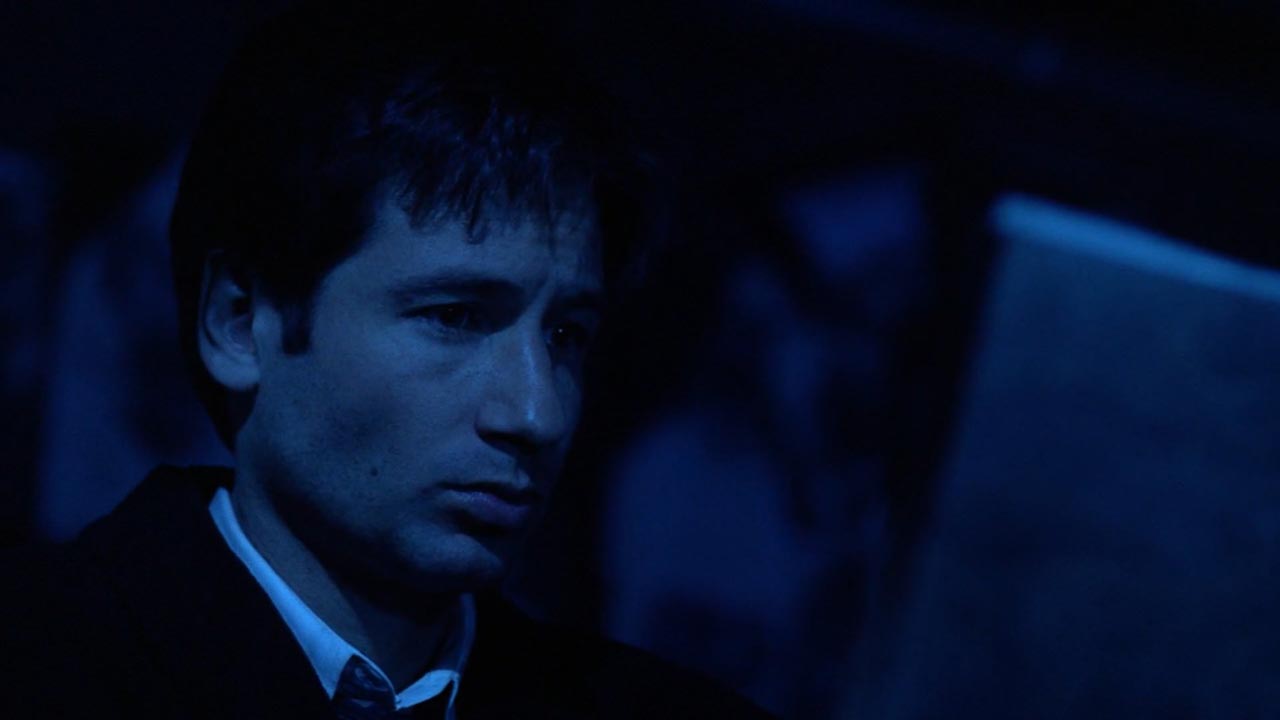
What would happen if Fox Mulder met Will Graham, or at least tried to think like he does?
Read More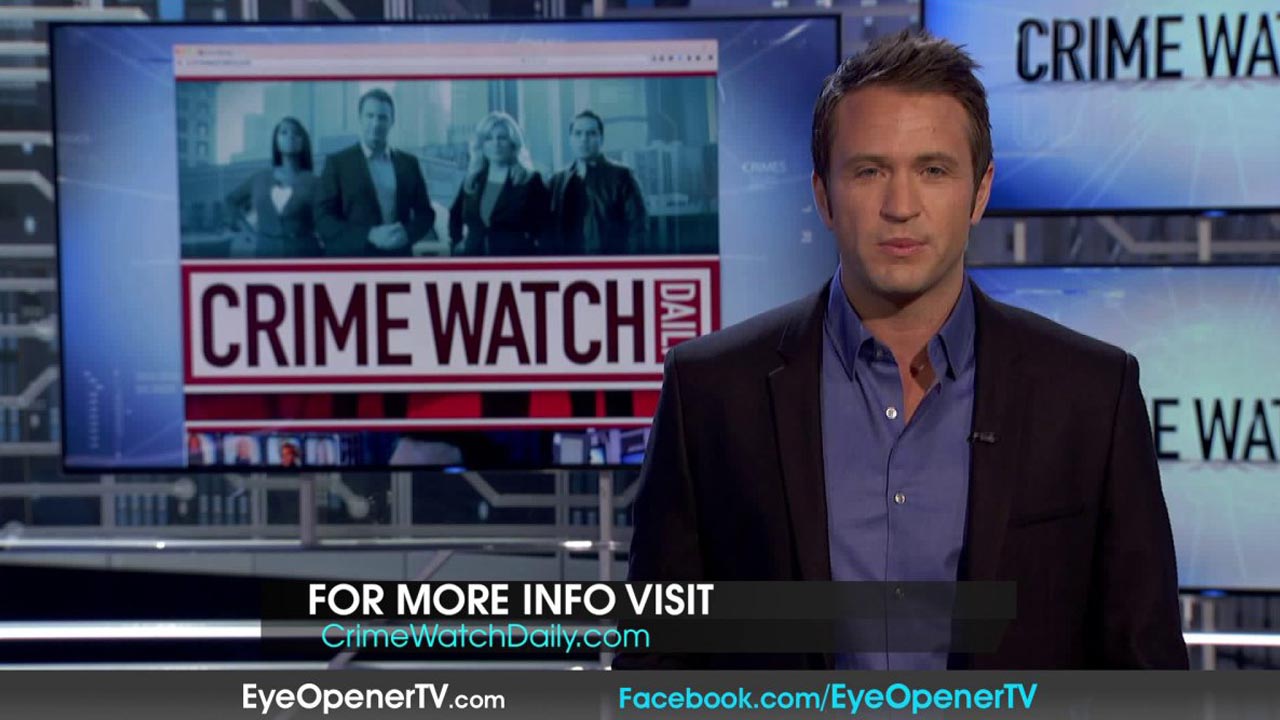
In the advent of ground-breaking true crime shows like The Jinx and Making a Murderer it seems utterly bizarre that a show like Crime Watch Daily exists.
For starters, each episode opens like Inside Edition, the TV show equivalent of those annoying click bait Buzzfeed headlines that clog your Facebook feed with crap like “You won’t believe what happened when this man ate a cheese sandwich!” The barrage of “if it bleeds, it leads” style headlines on Crime Watch Daily provide viewers with very little useful information about actual crime, relying instead on grabbing ears and eyeballs with whatever salacious copy they can conjure. At least you can click on clickbait headlines; you have to sit through an entire episode of Crime Watch Daily to get to the “good” stuff.
It’s bad enough that the Internet is crammed with this kind of junk; do we really need it on our TV screens as well? It’s a relevant question since the Crime Watch Daily set virtually indistinguishable from the ones used by shows like Entertainment Tonight: all glass, chrome, sparkling lights, and giant flat TV screens. The set also looks like a super close up photo of microchips, which ironically only serves to further highlight the distinction that this is Not The Internet.
The idea that a daily TV show would be able to keep up with crime stories in real time as they develop – a market the Internet and 24-hour news channels have cornered – makes the existence of Crime Watch Daily an anomaly in the first place. If they were reporting on the kinds of things that viewers need to know about crime on a daily basis, perhaps an argument could be made that they provide a vital service, but they don’t.
It’s true that we take risks every time we leave the house (or in the case of a home invasion, while we’re there). Depending upon where we live or what kind of job we have, we could encounter a lot of crime: mugging, shooting, stabbing, kidnapping, or sexual assault. These kinds of risks, however, are already covered by local news programs and crime data maps that are available on, you guessed it, the Internet.
Note that I’m not implying local news stations always do a bang-up job reporting on the kinds of crimes we might encounter, but they are at least more qualified to give us a microcast of what’s going on around us than a national program like Crime Watch Daily. The show does have a segment called “Crime Watch Local,” but it only airs weekly, competing with 30 to 40 other minutes of the show’s airtime; therefore, it would be impossible to cover every “local” corner of the United States.

Crime Watch Daily doesn’t even provide any tips or tricks for how to avoid crime, focusing instead on just telling us about it without giving us any insight into what the crime could mean to the viewer on a personal level or what it means to crime in society as a whole. In fact, the show has two specific segments that seem to have been created purely out of some need to make fun of others. “Bad Seed of the Day” and “CrimeTube” are, respectively “a weekly segment profiling a particular criminal and the crime they committed” and “a daily segment… featuring videos of criminal acts, sting operations, police pursuits, and footage of law enforcement activity culled from public doman security camera, traffic camera, and police dashcam footage." Yeah, we have that second thing already; it’s called YouTube.
Sure it might give us a feeling of schadenfreude to witness criminals being caught in the act, but does that serve any real purpose? No, it seems that Crime Watch Daily is merely interested in WATCHING crime, not examining it, not trying to prevent it, not helping viewers get a more profound understanding of it. It’s a spectator sport that takes real tragedies and repackages them into glossy, bite-sized chunks of sugar, providing a quick fix of empty calories.
There is a certain element of fear-mongering on Crime Watch Daily, which feels carefully scripted to highlight the lurid details and the emotional fallout of the crimes it depicts, but the show doesn’t evoke empathy in the same way that seeing a grieving family member at a press conference or being interviewed at a crime scene might. It’s like a ginned-up version of fear that makes people feel like they know what’s going on even though Crime Watch Daily only provides limited information, the kind of thing that people might use to justify racism, classism, sexism, and the intersection of all three.
Crime Watch Daily is fear mongering without the fear, replaced instead by self-righteousness. That’s truly scary.
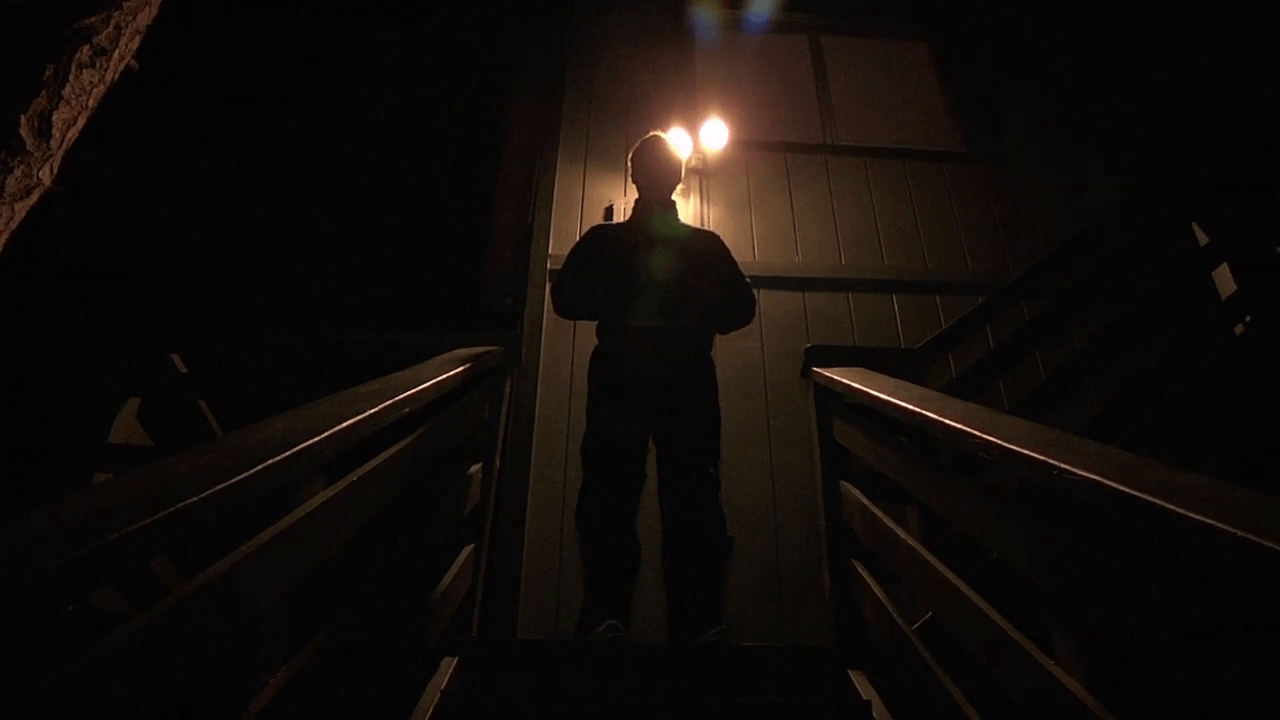
Mark Duplass's Creep brings the found footage horror film to the next level.
Read MoreJerry seems like a nice guy. He works at a bathtub factory in Milton and lives in the upstairs apartment of an old bowling alley with his two pets, Bosco (the boxer) and Mr. Whiskers (the yellow tabby cat). Jerry is kind of shy and awkward, but his therapist encourages him to participate in planning the annual office picnic. Jerry is also smitten with Fiona, the beautiful English woman who works with him, and hopes that he’ll be able to woo her with his humble charms.
The Voices begins like a sweet romantic comedy with a slightly dark undertone. As Jerry, Ryan Reynolds is less Green Lantern and more Clark Kent. We find out right away that he talks to Bosco and Mr. Whiskers and that they talk back. We figure he’s got some kind of schizophrenia, which is confirmed when he fudges the details about hearing voices and taking his meds. It doesn’t seem like that big of a deal until Fiona is revealed to be something of a self-centered creep and Jerry accidentally-on-purpose stabs her to death.
It’s a shocking scene in a movie that, up until that point, feels like a quirky art-house film. Director Marjane Satrapi and writer Michael R. Perry shift the tone of The Voices in an uncomfortable direction, one that almost feels like it was borrowed from another genre. It’s a stylistic gamble that actually pays off due to Ryan Reynolds’ sympathetic portrayal of Jerry and some straightforward talk about mental illness.
In her review of The Voices, The Spectator’s Deborah Ross doesn’t mince words about how much she “bitterly” resents having to watch the movie at all, describing it as “hateful” and “repellent” and singling out its tone shift for particular condemnation. I have to wonder if we saw the same movie. There are certainly horror films that seem to glorify the killer’s grisly acts or which revel in misogyny for misogyny’s sake (the recent remake of Maniac, for example), but The Voices doesn’t even show most of the crimes that Jerry commits. The majority of his murders take place off screen and he clearly, obviously, and repeatedly regrets the killing.
Terrible acts have been committed by those who have felt compelled to kill because of a mental health condition and many of the victims’ families have a hard time understanding what could drive someone to do those terrible things. I only need to say the names “Vince Weiguang Li” or “Rohinie Bisesar” to evoke a visceral reaction in certain people. The Voices, however, doesn’t ask us to forgive anyone’s crimes; it offers a window into the interior life of someone who commits murder at the behest of the voices in his head. It also shows how even those who aren't subject to delusions have inner voices which can cause immense psychological harm.
The world in which unmedicated Jerry lives is bright and cheery; the world in which medicated Jerry lives is like something out of Hoarders. Without his ongoing interactions with Bosco and Mr. Whiskers, Jerry feels frighteningly and overwhelmingly alone. That’s what taking medication does to him.
No doubt we’ve heard the stories of schizophrenics who don’t take their meds because it makes them feel weird, depressed, different, or miserable. Satrapi and Perry make this visually apparent through the reality of Jerry’s decrepit, disgusting apartment while Reynolds successfully conveys to us what it feels like to be trapped in that dismal world.
His hallucinatory flashbacks to the unfortunate demise of his mother at his own hands are heartbreaking, especially when Jerry’s hateful, abusive stepfather is depicted as exacerbating the situation. How could we not feel sorry for what Jerry went through, none of which was his own fault?
Once the depths of Jerry’s disease and despair have been revealed, the comedy in The Voices feels more like the only way he can escape his tortured existence. It’s the fear of being alone that drives him to resist taking his meds, to continue seeking that fantasy world with Bosco, Mr. Whiskers, and the love and affection of a genuinely nice co-worker named Lisa. It’s a fear that we can all relate to, whether or not we suffer from the delusions of paranoid schizophrenia and it’s what makes The Voices so smart and ultimately, so special.
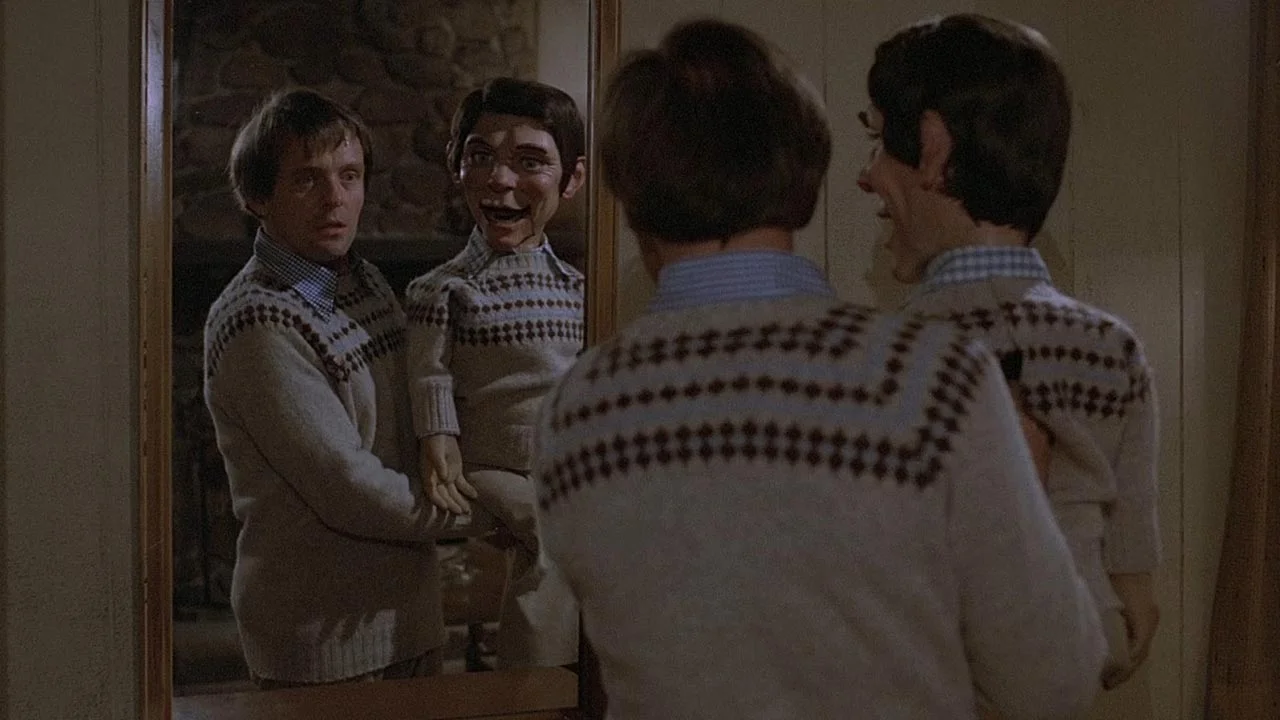
At some point in the 1990s, before became a horror junkie, I worked up the courage to watch 1978’s Magic. You know, the one where Anthony Hopkins portrays Corky Withers, a ventriloquist for the dummy known as “Fats,” who may or may not have a personality of his own.
That premise is creepy enough: my lifelong dread of ventriloquist dummies (or what Neal on Freaks & Geeks called “figures”) was set in stone thanks to the Howdy Doody that lived at my grandma’s house. The scariest scene in Magic takes place after (SPOILER ALERT!) Corky/Fats kills his agent Ben Greene (Burgess Meredith) and drags the body out into a nearby lake. Greene, however, isn't dead and his unexpected gasps for breath terrified me far more than any of Fats’ shenanigans. The experience was akin to falling into a deep, black hole; it was almost like the utter terror of a panic attack but concentrated into a few seconds. There was nothing else; only the feeling that I was actually going to die of fright.
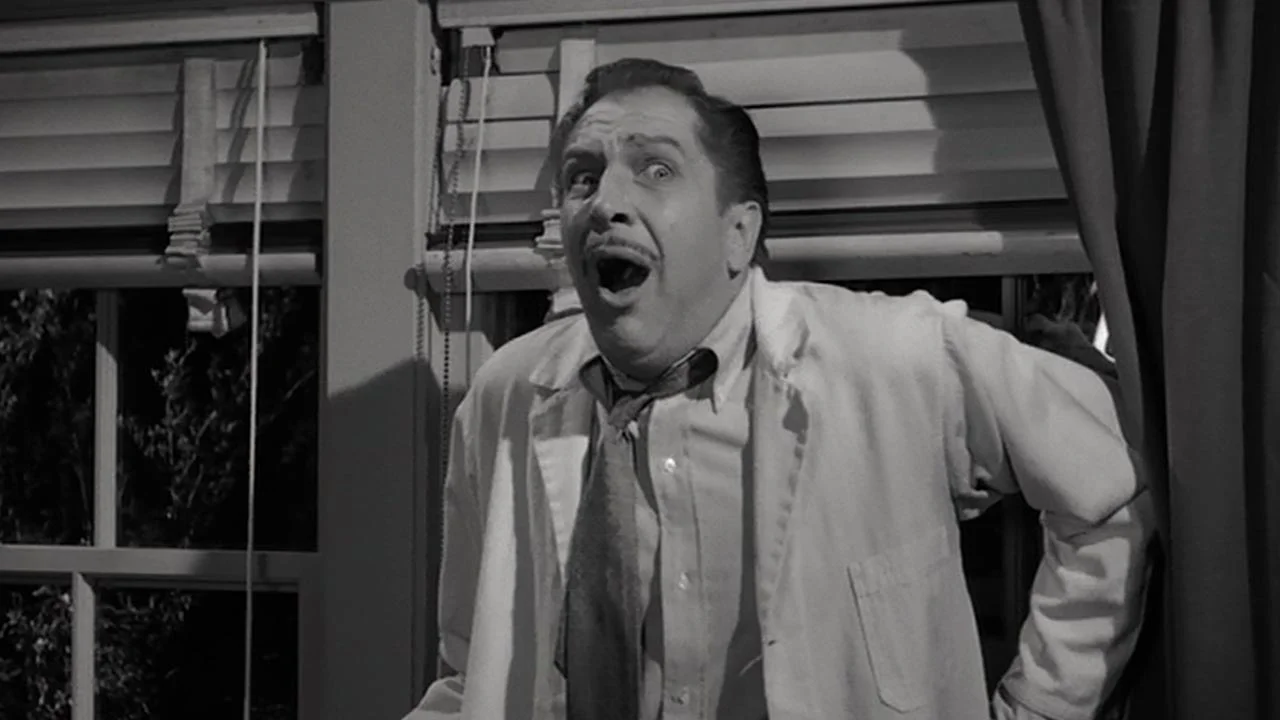
The idea of dying of fright wasn’t new to me. As a kid, I was a big fan of the William Castle-produced The Tingler, starring Vincent Price. Price portrays Dr. Warren Chapin, who becomes fascinated by Martha, the hearing-impaired wife of a movie-theater owner named Oliver Higgins. Similar to the spirit of death in The Asphyx, “The Tingler” is a parasite that resides within every person. When that person is afraid, the Tingler grows stronger. If that person cannot release that fear, it is possible, Dr. Chapin believes, for that person to literally die of fright when the Tingler crushes their spine.
I was mildly obsessed with the idea not that the Tingler was real, but that a person could actually die of fright. Was this part of the reason I avoided horror films for so long? Or did I subconsciously know that I would eventually become somewhat addicted to them?
Surprisingly, for someone who claimed to be too scared to watch horror movies, I sure did watch a lot of them. And oddly, many of them were simply not scary. It seemed that it was the fear of fear that kept me away. There were major exceptions: Fulci’s The Gates Of Hell, Zelda in Pet Sematary, that part in Jeepers Creepers when the creature realizes Trish and Darry are watching him, when the alien is shown on the roof of the house in Signs. After I learned to relish the feeling of falling into a hole, I began to crave it.
Yet each time that feeling would eventually subside. I became convinced that the filmmakers knew that they had to ease up on the fear factor or it would be too much for viewers to handle, as if there was some precise algorithm to determine how much fear an audience would experience, when they would experience it, and the best ways to hold back to avoid killing them.
The more I craved That Feeling, the more movies I watched in an attempt to evoke it, and eventually it became harder to feel that specific type of fear. Of course, I felt scared watching horror movies, but that specific “falling off a cliff into a dark, bottomless pit of fear” feeling was rare. When I experienced it (like the first time I saw The Descent, for example) I was so terrified I just started crying. I was preventing my own Tingler from killing me by releasing my emotions in a strange and unexpected way.
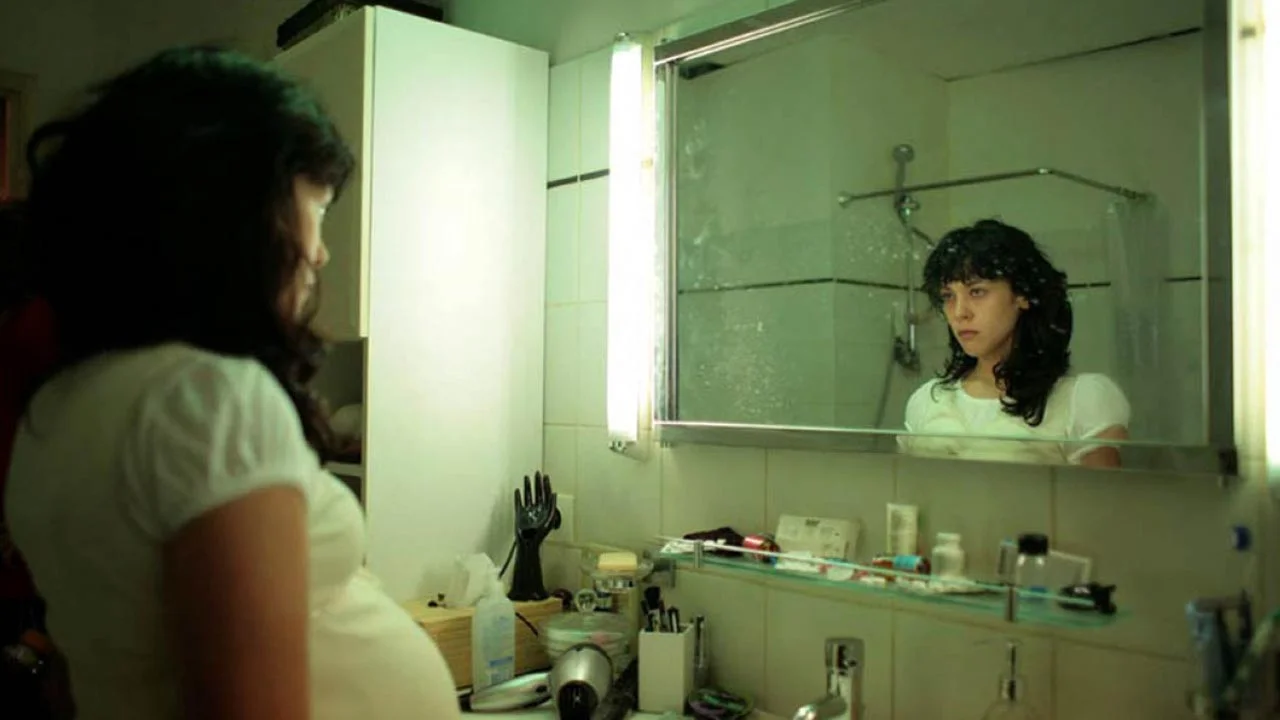
The most profound example of this was the first time I saw À l’intérieur. I was home by myself, yes, but it was on a sunny afternoon. This film, with scant few jump scares but a veritable ocean of blood made me so scared that I started crying about a half hour in. When I finally stopped, I started thinking that maybe that magic algorithm had been utilized. Yet, the film wasn’t done with me, because it all started up again just a few minutes later, leaving me a literal, sobbing mess long after the credits had ended.
Ladies and gentlemen, I had broken my own fear barrier.
Once that happened, I felt like I could watch anything, thinking I’d probably never get that feeling again. Which is why when it has happened a few times over the next few years (Insidious, “Second Honeymoon” in V/H/S, Session 9), it has been a huge surprise. I still seek out that feeling because despite those few seconds of panic, it is one of the most disturbingly satisfying sensations in the world.

“Kilgrave, in many ways, can be seen as an avatar for all of mental illness… Further developing the comparison, we see through the entire thirteen episodes that the Purple Man’s true power and freedom comes from his ability to stay invisible to the public at large.”
In his Dork Shelf article, “4 Reasons Jessica Jones is the Definitive Post Traumatic Hero,” Peter Counter talks about why the TV show’s representation of PTSD is so accurate, powerful, and important. Jessica Jones, the character, has PTSD. It doesn’t define her, but it does affect her.
Another trait that affects her? Her superhuman strength, which according to the comics, she acquires after an accident involving radioactive chemicals. (This accident is referred to only in passing on the TV series.)
These two qualities present an intriguing dynamic. Since so many superheroes are defined by their superhuman strengths (and weakness, like Superman and Kryptonite), it’s important that Jessica Jones is never depicted as invulnerable. In fact, she’s shown as quite the opposite; she’s shown as human.
Her drinking problems began before she met Kilgrave; in a flashback in episode 5 (“AKA The Sandwich Saved Me”), she is shown quitting what is apparently another in a long series of mind-numbing office jobs, asking Trish how she should add “day drinking” to her resume. Her superhuman strength hasn’t done much for her career options.
That strength made her attractive to Kilgrave, but in the end, it didn’t protect her from him. His invisibility is perhaps more dangerous than if he could actually make himself invisible. In the world of Marvel’s The Avengers, skills like super strength and invisibility are accepted, even if not everyone feels comfortable knowing they exist (see also episode 6, “AKA You’re A Winner!”).
Jessica committed heinous acts while under Kilgrave’s spell, but she was able to fight him off and survive, even if the cost of that survival still presents obstacles to not only Jessica herself, but the other people in her life. She can break locks, bend rebar, fight off several would-be assassins at once, stop a car in its tracks, and kill a person with a single, well-placed shove, but she can’t be rid of Kilgrave’s evil.
It’s the worst kind of fear; living in terror of something that no one can see, something that not even the victim who is suffering can physically touch. What’s more frightening: being physically hurt or being mentally hurt, or to quote The Joker in The Dark Knight, “You have nothing, nothing to threaten me with. Nothing to do with all your strength.”
This idea of the invisible enemy can be also found in The Avengers movie from 2012, when Hawkeye tells Black Widow, “You don't understand. Have you ever had someone take your brain and play? Take you out and stuff something else in? You know what it's like to be unmade?”
Truly, it is a terrifying concept. After a sexual assault, and the subsequent PTSD that ensues, many women wonder if they look different, if people will look at them and see that they’ve been a victim. That feeling of being broken or unmade transforms a physical act into a metaphysical burden.
But the thing about survivors of trauma is that we don’t have to be defined by what happened TO us. Jessica Jones, for all her flaws, shows us that there is a way out, a way to reclaim our minds and our sanity. That fear may be there, but it doesn’t need to define us.
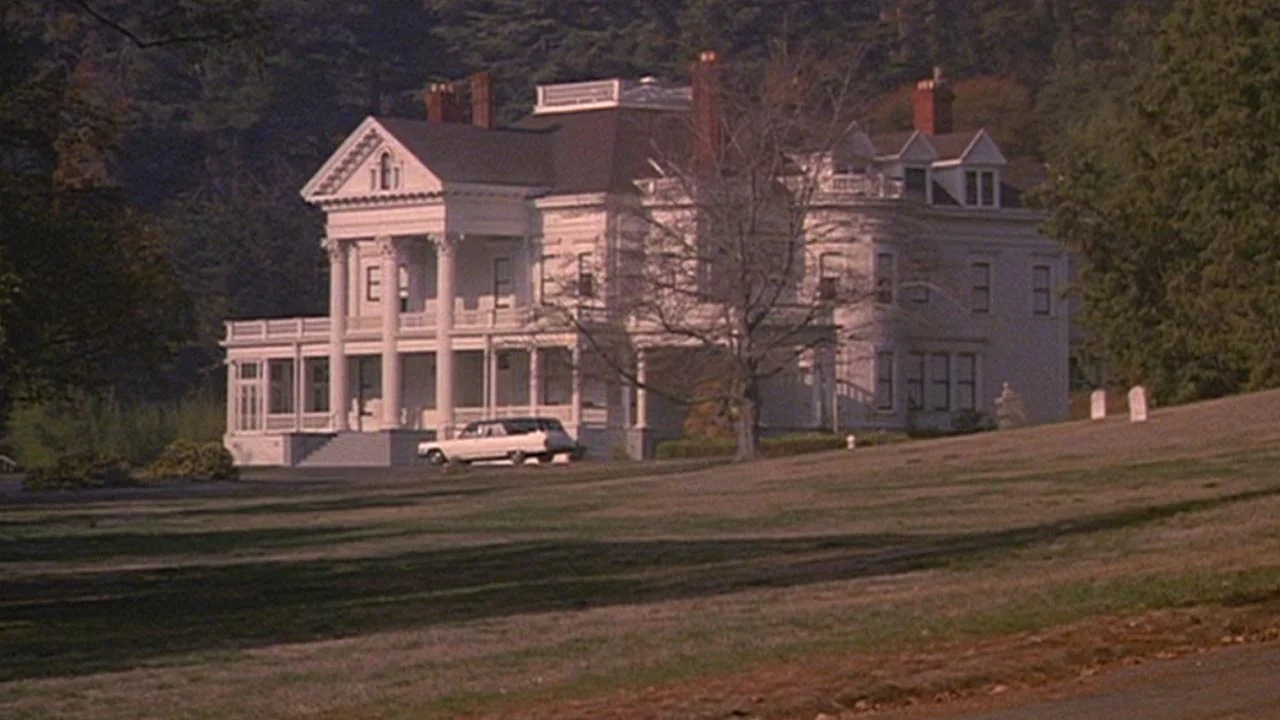
There have been many horror films about nightmares, including one popular franchise starring a guy with a red and green striped sweater, but they all have one thing in common: they clearly announce their intent in their titles. The scariest thing about an actual nightmare is not being able to tell the difference between the dream world and waking life. In that respect, Phantasm stands tall amongst its nightmare movie brethren, and not just because it stars six-foot-four actor Angus Scrimm.
If I had seen Phantasm in 1979, no doubt it would have traumatized me. As a kid who suffered from insomnia, nightmares, and panic attacks, the iconic visuals in the film feed into the typical but frequently debilitating fears of the easily spooked: death, cemeteries, funerals, things under the bad, masked creatures, and of course, the imposing and mysterious Tall Man. Since the main protagonist of the film is a 13-year-old kid, it only makes the creeping terror of Phantasm’s narrative more frightening.
Many classic tales are based on the simple idea that no one believes the protagonist; no one will entertain the possibility that the things he or she insists are happening have actually happened or are even real. While this trope is often utilized with women in horror films—with Let’s Scare Jessica To Death and Don’t Be Afraid Of The Dark being my two favorite examples—there are many examples of fiction when this lack of belief from others plagues a child, such as The Wizard of Oz.
In Phantasm, Mike’s parents were killed two years ago, and his older brother Jody wants to protect him. When Jody attends the funeral of his friend Tommy, he warns Mike to stay home lest it freak him out too much. Mike doesn’t listen and this sets some of the events of the film in motion. As things get more and more dangerous, Jody continually tells Mike to stay home, stay safe, stay away from the danger, but Mike always finds a way.
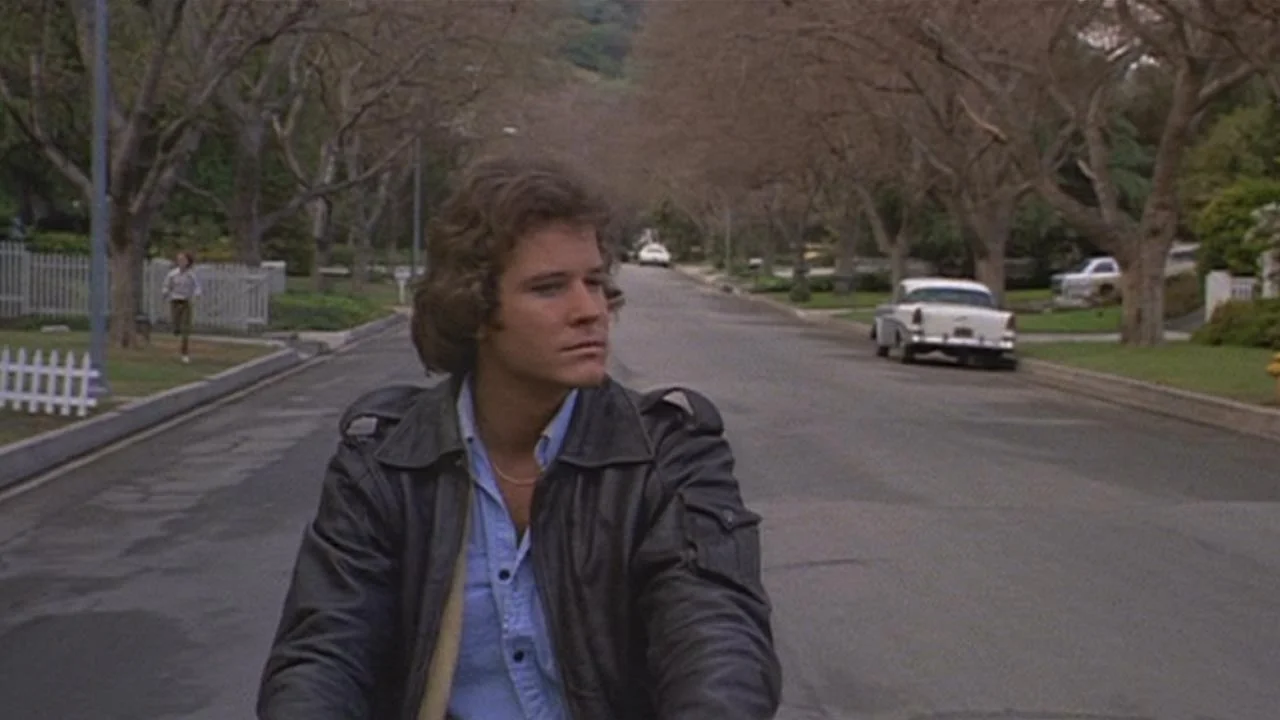
In the beginning of Phantasm, Mike visits a psychic and expresses concern that Jody is leaving. The film then cuts to a shot of Jody’s car driving down the street. It pulls into a driveway and Mike and Jody get out and while Mike works on the engine, Jody tells his friend Toby that he’s unsettled by the way Mike is always following him around. The movie cuts away from this conversation to show an example of this, and by not changing the visual style of the film or cutting back to Jody having the conversation, it’s difficult at first to know whether this image is a flashback or happening in the present, especially when this is followed up by a continuation of Mike talking to the psychic. Director Don Coscarelli does this frequently throughout Phantasm, using dialogue as a kind of sound bridge between scenes to indicate the fluid nature of reality.
It’s true that Mike always seems to be present no matter where Jody goes: when Jody is riding his bike, when Jody is at a local watering hole hitting on a woman, when Jody is having sex with the woman a few minutes later. This is much like the way that we are omniscient in dreams, bearing witness to the activities of others in situations when were not physically present.
There are a few instances where Mike does something and then Jody does the exact same thing, or vice versa. Mike breaks into the funeral home to find more about the Tall Man, when he is attacked by the dwarves. Later, Jody does the same thing, using the same window to enter the building, and is also attacked. When Reggie takes Mike to Sally’s house for safekeeping, Jody dreams of being pulled through the wall by two dwarves, a scene repeated at the end of the movie, only with Mike instead.
Later, when Mike is lying on the ground after being attacked by the dwarves in Sally’s car, the film cuts back and forth between him on the ground and Jody’s face, almost as if Jody can see what is happening to Mike. Is the Jody of the film just Mike’s dream world version of his brother?
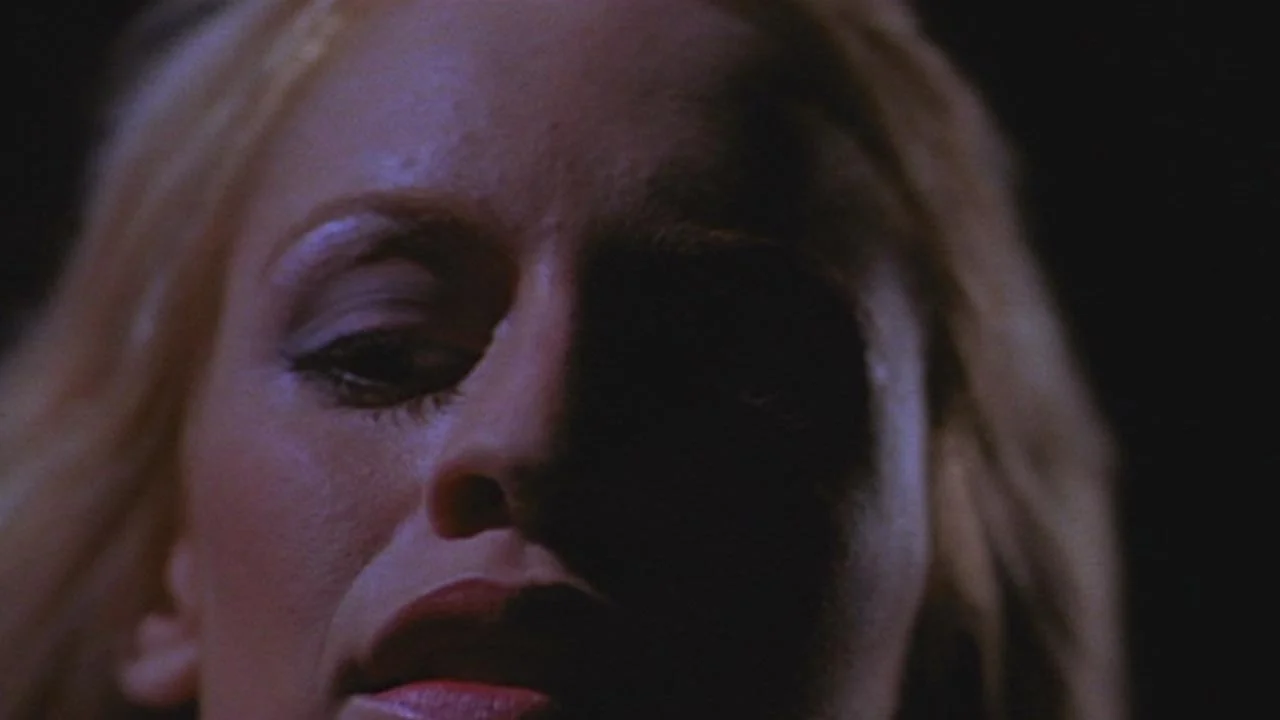
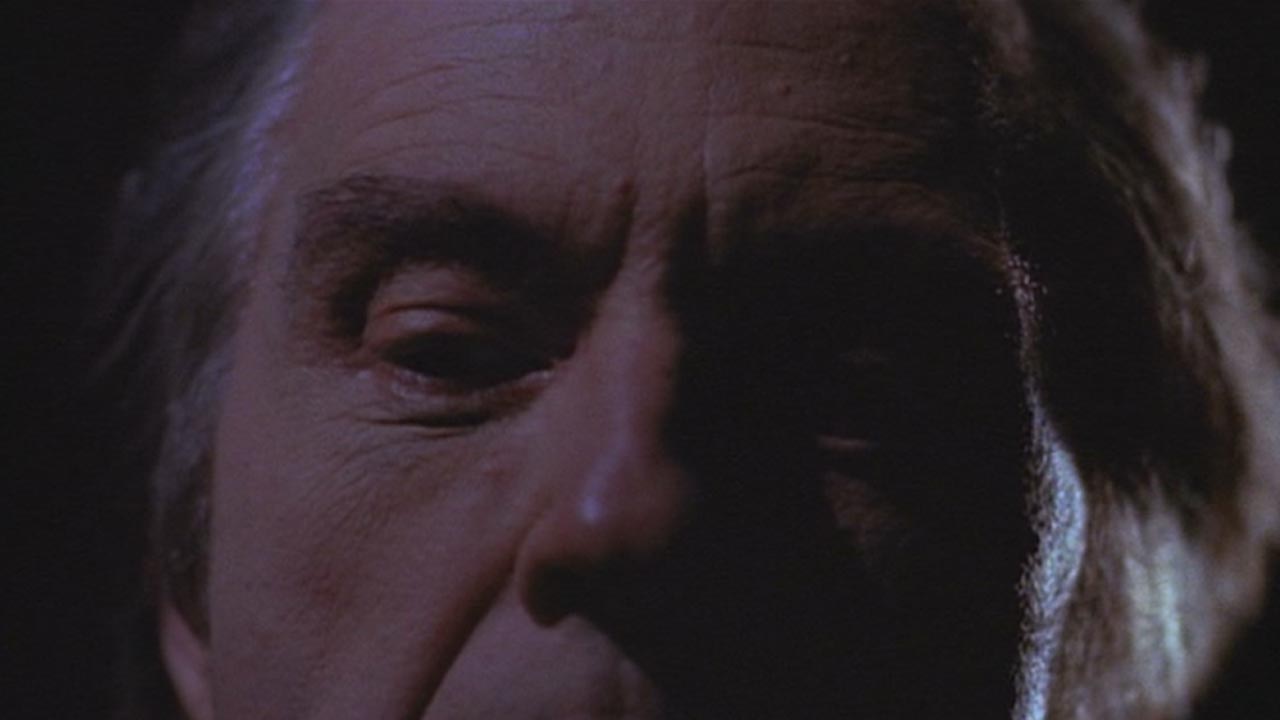
These are not the only two characters blurred together in Phantasm. The Lady in Lavender stabs and kills Tommy at the beginning of the film. A close up on her face cuts to a close up of the Tall Man’s face but this is never explained. This visual is repeated when she stabs Reggie at the end of the film. This is similar to the way characters in a dream often “become” someone else without explanation, or the way that a dream character looks like one person but you somehow “know” they are another person.
Mike is able to prove to Jody that the Tall Man is a real threat when he cuts off his fingers and brings one home. But when he and Jody decide to bring the severed finger to the police, in typical dream fashion, it is inexplicably transformed into a large insect that proceeds to attack them both. Reggie is soon brought into their shared nightmare when he arrives at the house and sees what’s going on.
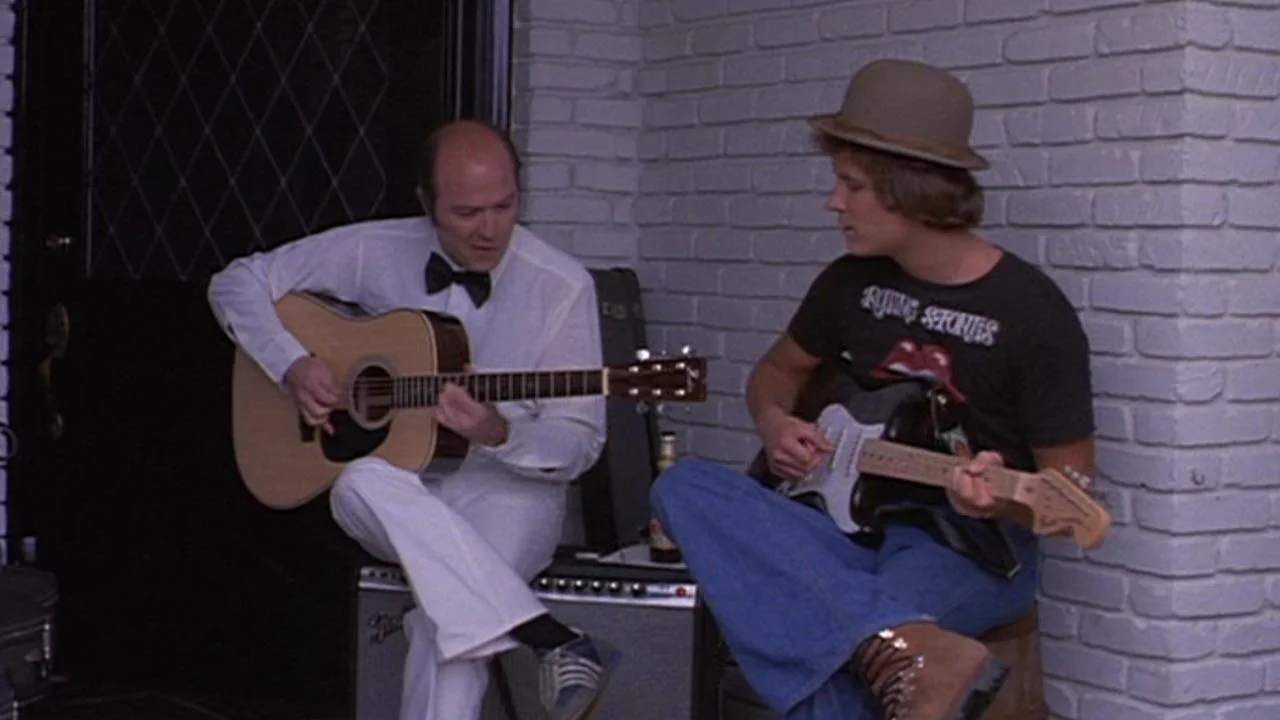
Reggie is not only one of Jody’s best friends, he is also a guitarist and singer, as is shown when Jody is playing guitar and singing and Reggie stops by. Reggie immediately picks up his guitar and starts playing and singing, too, even though this is an unfinished song that Jody has been working on. Reggie’s speaking voice even sounds like Jody’s. At the end of the film, Reggie says that he’ll never be able to replace Jody in Mike’s life but that he’s going to try. Is Reggie real, or just another version of Jody?
Are the events we see in Phantasm a collection of Mike’s dreams? There are many shots of Mike lying in bed sleeping, which suggest that the entirety of the film is a dream. After all, only in a dream would it be possible for the Tall Man to lift a heavy coffin by himself. Only in a dream would a strange silver sphere hurtle through the air and kill people by piercing their skulls. Only in a dream would corpses be crushed into dwarves to be used as slaves on another plant. Only in a dream would someone bleed yellow liquid when killed instead of red blood. Only in a dream would a photograph move and the person in it look directly into your eyes.
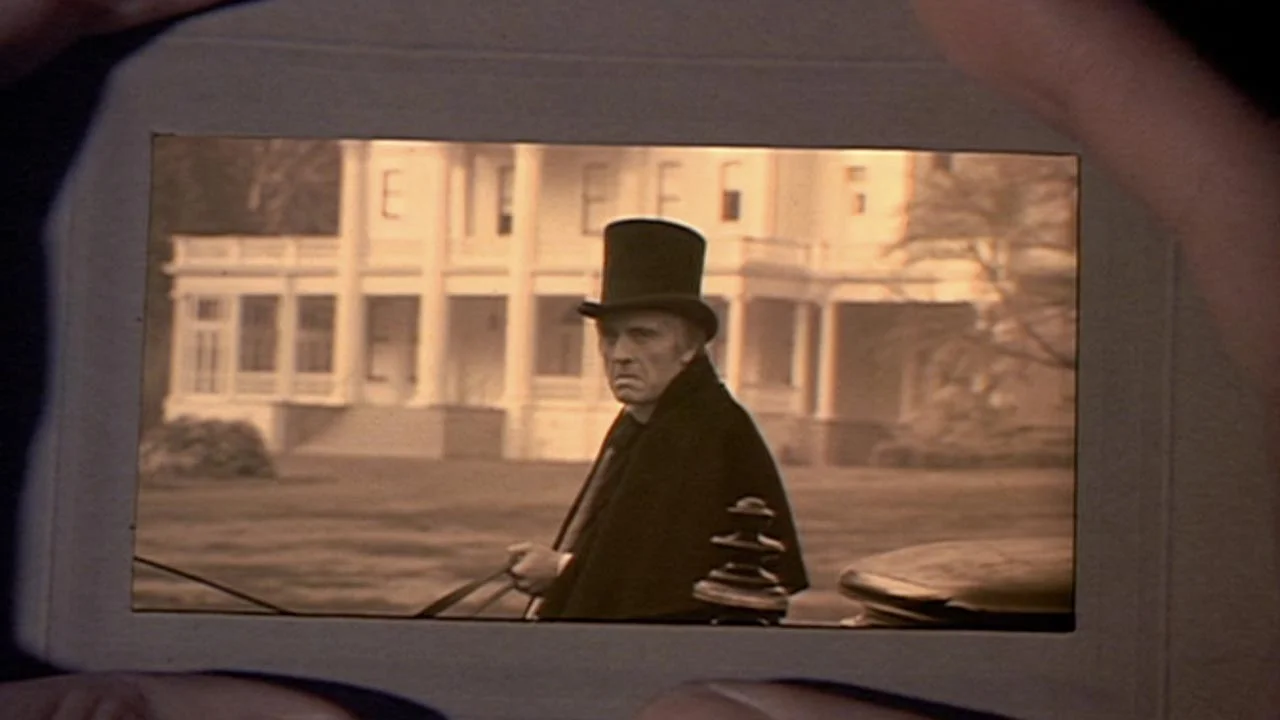
Interestingly, Jody sees the Tall Man before Mike does, but he only registers as peculiar, not evil. It’s Mike who tries to convince Jody that the Tall Man is something supernatural. When Mike sees the Tall Man walking down the street, he’s paralyzed by terror. The Tall Man stands right behind Reggie’s ice cream truck, breathing in the cold fumes, but Reggie—moving in slow motion—doesn’t seem aware that anyone is nearby. Is the Tall Man real or just a figment of Mike’s dream world imagination? The granddaughter of the psychic he visits tells Mike that “fear is the killer” that “it’s all in your mind,” but then she disappears into the mysterious door at the funeral home.
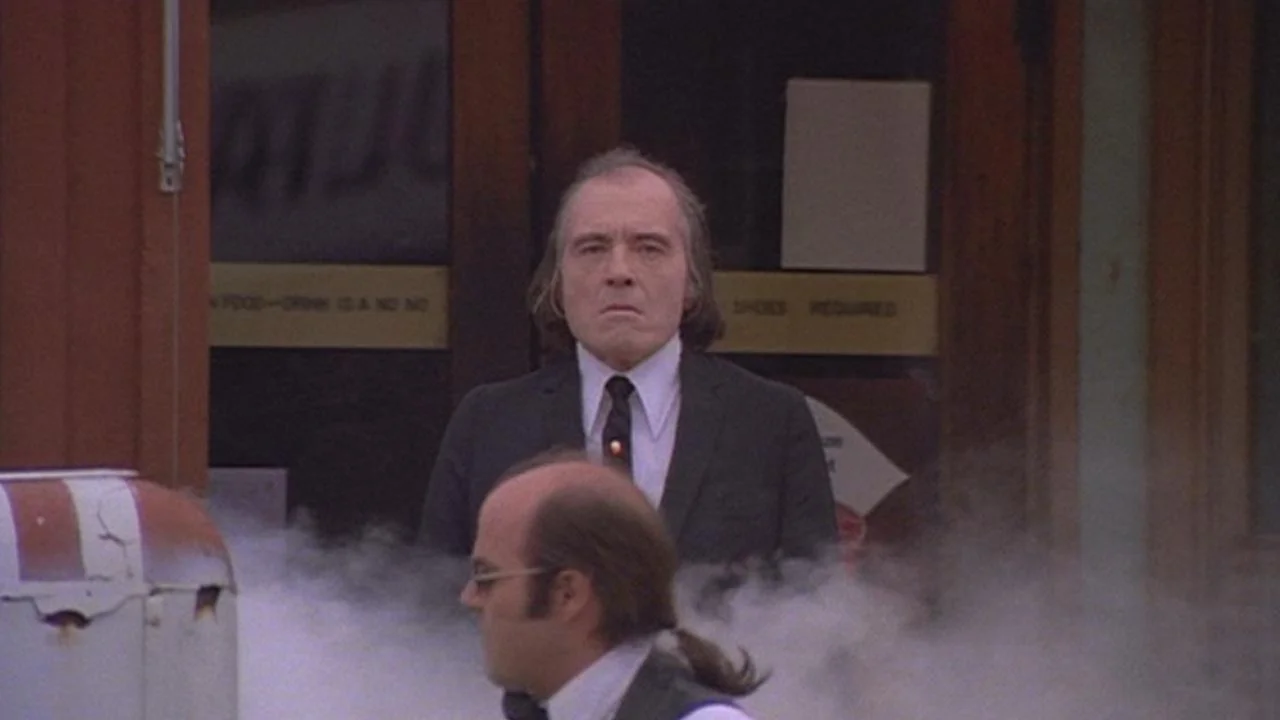
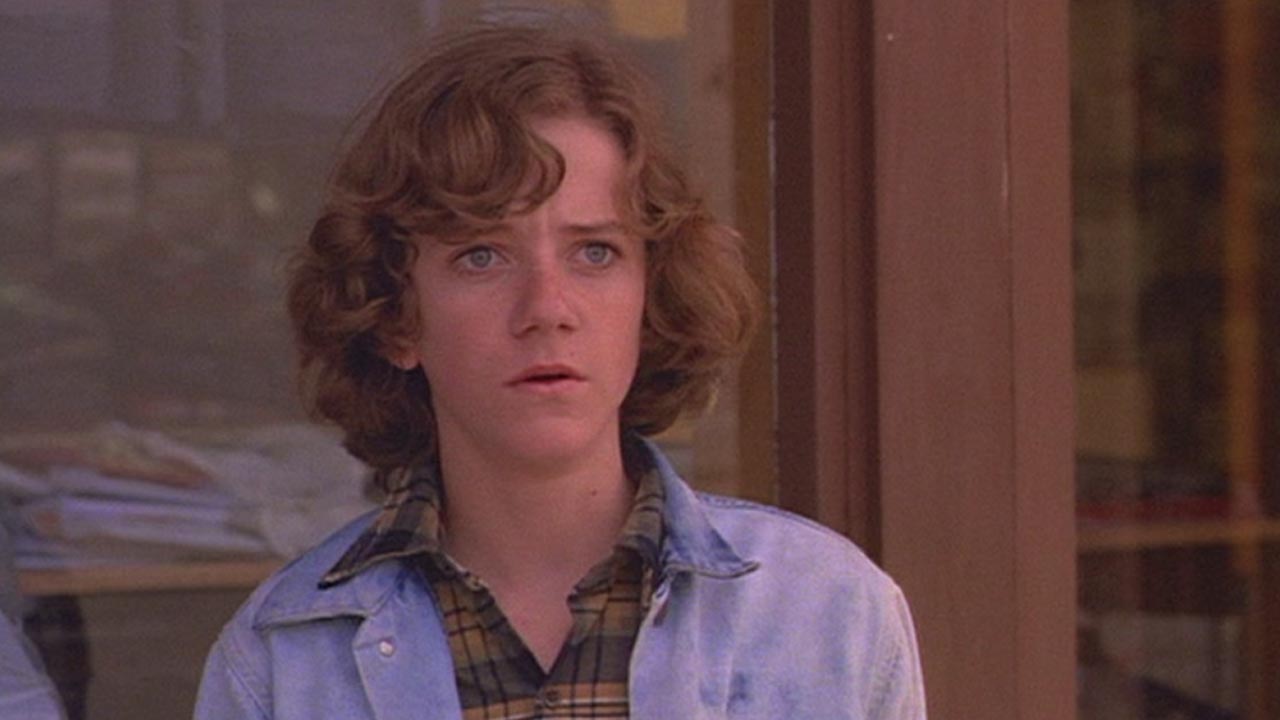
So what is real and what is not real in Phantasm? It’s impossible to decide, which makes it one of the most disturbingly accurate portrayals of nightmare logic in cinema.
The Walking Dead is one of those shows that it probably seems like I hate more than I really do. I'm still watching it, aren't I? And even when I gripe about the way the show lurches from action-set-piece-head-blasting-a-go-go to contemplative-no-movement-yawn-a-rama, I do still appreciate the character work they knuckle into to give us meaty moments.
Such a case was with the episode Always Accountable.
A lot of the attention for this episode focused on Daryl's story: laying the groundwork for a new batch of villains, some tense action, and of course the internet's favourite backwoods reformed racist doing what he does best (grunting, sweating, etc. (I kid, Daryl is awesome)). In the background, though, between crossbow bolts and backstabbing, a quieter, smaller arc was unfolding between Sasha and Abraham.
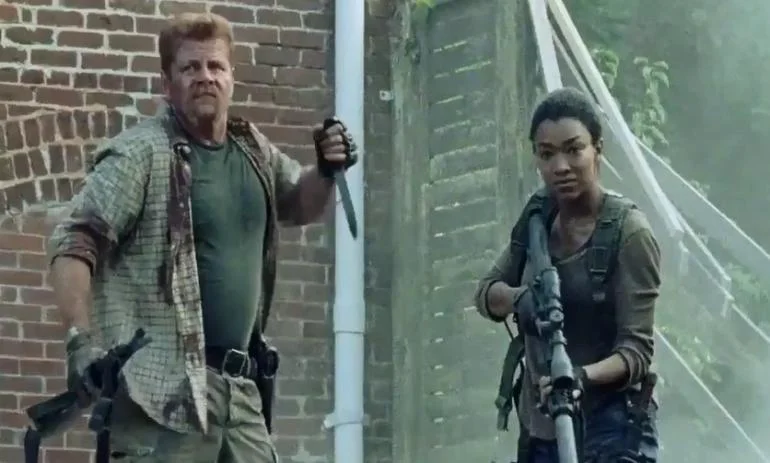
To be honest, I was only half-invested in this little plot. Literally. Sasha is, for me, perhaps the most poorly-drawn lead character on the show. She is largely defined by the men around her: Tyreese, Bob, and now, weirdly, Abraham. Her brief descent into madness and grief after Bob and Tyreese's deaths simply didn't resonate for me, in part because Tyreese's death was so utterly contrived as to be laughable.
Abraham, however, has for me transitioned from being a cartoonish caricature to one of the most engaging and interesting characters on the show. When we first met Abraham, he looked like he had stepped right off of the comic page, and not in a good way. He, Rosita, and Eugene seemed to inhabit a strange world outside of the gritty horror that has become the staple of The Walking Dead. They were...goofy, frankly.
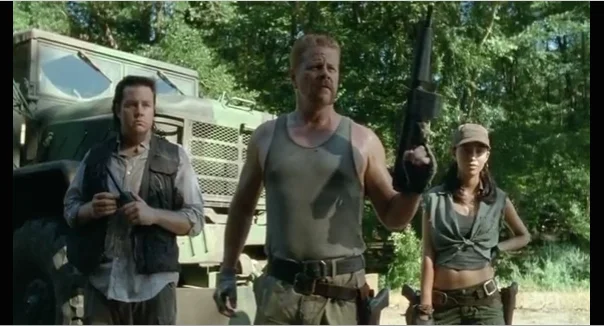
But then, Self Help came along. Granted, the fact that it took 11 episodes to get any kind of real development for these characters is kind of a sin in of itself, but I forgive it on the basis that the Walking Dead crew were dealing with cannibals and such.
Self Help is a tremendous turning point in Abraham's character. We'd had some hints of his single-minded obsession with getting Eugene to Washington before, particularly in his confrontation with Rick in the church, but in this episode we finally get to the meat of his backstory. Abraham's life in the initial days of the apocalypse unfolds in flashbacks with a gauzy haze filtered over them. We see him protecting his wife and children, but in so doing he unleashes an animalistic fury that ends up driving them away. That same fury comes back at the end of the episode, when he discovers that Eugene has been lying, and subsequently beats him to within an inch of his life.
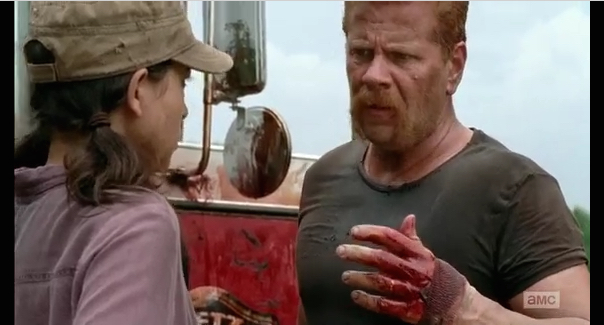
By itself, this episode was utterly heartbreaking and seemed without hope at the end. Abraham breaks down, crying, and flashes back to when he finally caught up to his family, only to find them already dead. In that moment, feeling he had nothing left, he put the barrel of his gun in his mouth, and only Eugene's sudden appearance stopped him. Ouch.
Taken with Always Accountable, however, Self Help forms a compelling forward movement in Abraham's character. The key lies in Eugene's line that stops Abraham from pulling that trigger: "I have a very important mission for you."
We all love a good mission, don't we? Missions are the bread and butter of manly men. Give us a mission, with parameters and objectives and enemies, and we'll march over hell and high water to see it through. A mission doesn't have to be military in nature, either. It could be a mission to get that girl, find that job, seal that deal, beat the other team. The only requirement? It comes with a complete lack of accountability.
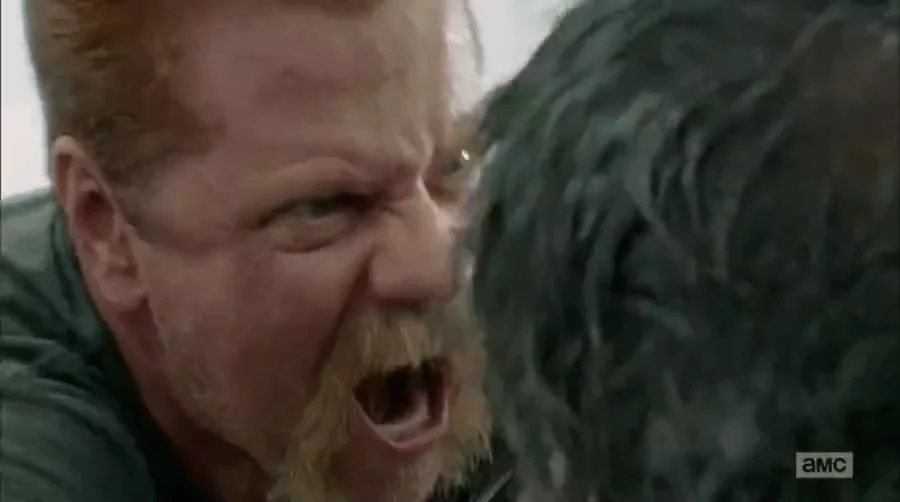
When you convince yourself that you're only living for one purpose, you reach a point where every ends justify every means. This is laid out for Abraham by Sasha:
You jump out of an airplane you don't have to make choices after that.
...But if you have a roof over your head. You have food, you have walls. You have choices. And without walkers, and bullets, and shit hitting the fan. You're accountable for them. And hell, you're always accountable. It's just, with all that other noise, you know people won't notice.
If you scream loudly enough that your mission is all that matters, you're not just trying to convince others around you, you're trying to convince yourself. In so doing, you're trying to find a way to forgive your own bad behaviour. During the height of the Gamergoober (I will not type "gate" for fear of bringing their bullshit to our doorstep) controversy, I recall one prolific tweeter screeching that they should "Keep it up...we've almost won this."
"It" in "keep it up" referring, of course, to a campaign of hatred, doxxing, bile, and filth. All for the objective of beating some vaguely defined enemies in order to...well, the final goal was never really crystal clear, was it?
Abraham realizes, in Always Accountable, that he can live a proper life now, not one defined by a mission. Whether he relapses into old habits remains to be seen, but he acknowledges that now is the time to start building to something, not to be rampaging and tearing down.
We all have to reach that point eventually, where we outgrow the childish fantasy of playing soldier, and trade in the mission for life. Let's just hope we reach it before someone really gets hurt.
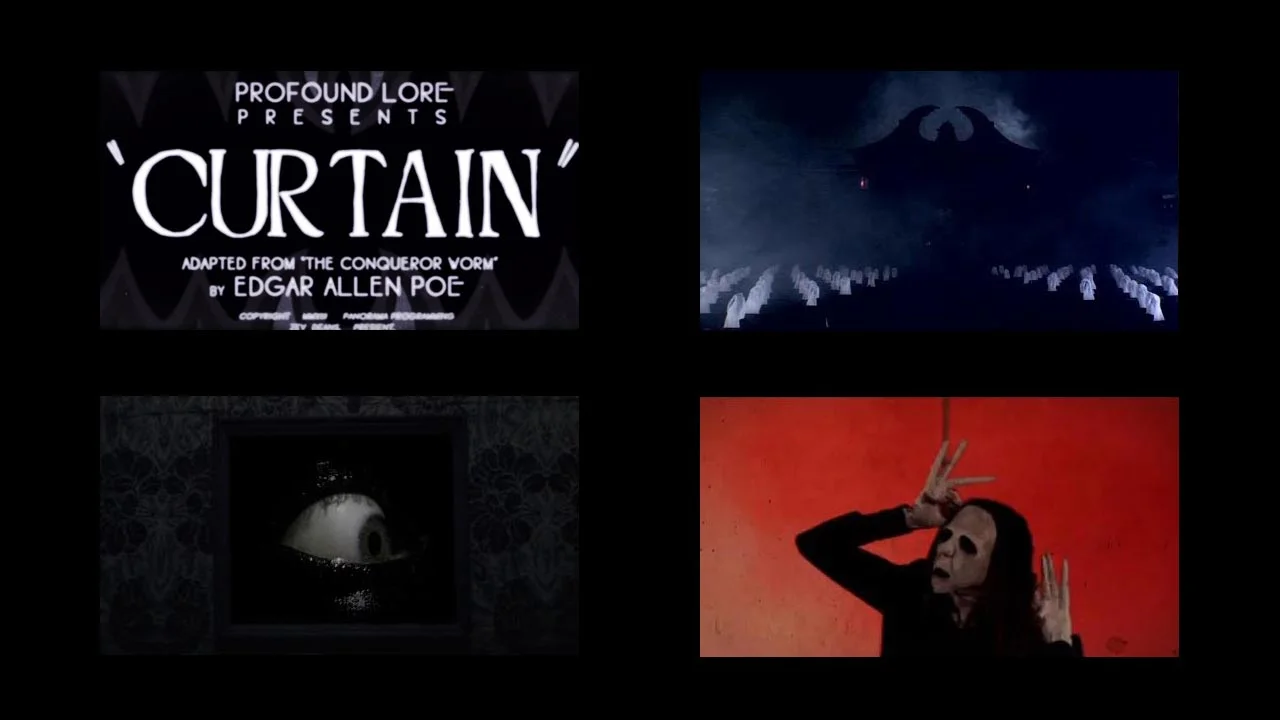
Although horror films and TV shows are experiencing a major surge of popularity right now, there’s yet another avenue available for artists to evoke fear and dread in people: music videos.
Granted, music videos might seem less significant now than they were in the 1980s and ‘90s, two decades which are usually considered their heyday, but they are still being produced, as anyone who as a Good Life gym membership can attest. Both the US and Canada still hold awards ceremonies with the words “music” and “video” in the title (MTV Video Music Awards and MuchMusic Video Awards, respectively), and although music videos might not make or break a band the way they used to, their existence is still part and parcel of the mainstream music industry.
But what about bands who aren’t part of the mainstream? Take for example, Portal, an Australian band fusing death metal and black metal (yes, they are distinct subgenres). Like their more sonically conventional brethren Ghost, the members of Portal keep their identities hidden; “band members don suits and executioners’ masks save for vocalist The Curator, who wears a huge, tattered wizard’s hat that obscures his face.” Portal is a band who is not content to have their image overshadow their sonic qualities; PopMatters writer Adrian Begrand astutely observes that their music is “truly friggin’ terrifying.”
This is the kind of build up that leaves horror aficionados begging for more. Enter director Zev Deans, who created a bona fide horror show for “Curtain,” a track from Portal’s 2013 album Vexovoid.
Some decidedly retro-looking opening titles announce that the video is adapted from the Edgar Allen Poe poem, "The Conqueror Worm." While the word “conquering” implies a larger than life hero, the actual size of a worm is quite small when compared to that of a human being. This is, of course, the cruel twist of mortality: even the mightiest will eventually die and be consumed by the lowly worm.
Deans has captured the essence of Poe’s words in a remarkable way in his video for “Curtain,” making the titular worm into a sort of Gothic Kaiju by the end. One wonders what Poe himself would have thought of this video or if anything resembling its unforgettable visuals was terrorizing the inside of his skull while he wrote his poem. This is easily one of the more unsettling, if not outright frightening, music videos you’ll ever see.
Don’t try to figure out what The Curator is saying; just watch and listen.
No doubt that Portal’s intensely grim, demonic sound makes the perfect accompaniment to these images, but even watching the video without sound is a disquieting experience (to say nothing of hearing “Curtain” without any visual aids).
It’s worth noting that the imagery within, despite being disturbing, does seem inspired by other things from the horror canon like Ringu, Hellraiser, The Exorcist, Curtains, and Coppola’s Dracula (itself inspired by silent horror films), not to mention the videos Adam Jones directed for the band Tool. Yet somehow, Deans combines these elements in a fresh way, one that evokes rather than imitates.
Although the video for “Curtain” is just under six minutes in length, those looking for new ways to scare audiences without crappy CGI should look to Zev Deans for inspiration.

If you’ve seen films like The Road or We Need to Talk about Kevin or the more recent Nothing Bad Can Happen, you likely know that there is bleak and then there is black-hole bleak, films that are so dark they make you lose faith in humanity. When bleak films have classic horror elements such as supernatural entities, classifying them as “horror” is easy enough. What happens, however, when they are firmly set in reality?
1986’s Henry: Portrait of a Serial Killer is considered a “psychological horror film” by Wikipedia. Tony, directed by Gerard Johnson in 2009, is described as “British social realist comedy/drama” on Wikipedia. It’s also based on a serial killer, one Dennis Nilsen. Although there are definitely comic elements, it’s a nasty bit of work, one with enough gore and grime to make you feel like you need ten hot showers.
So where do we draw the line? Is realistic horror somehow less horrific than vampires, zombies, or masked serial killers who can’t be killed? That scene in The Road where Viggo Mortensen’s character discovers the people in the basement is burned forever into my brain as a genuinely horrifying moment. Most of the time I spent watching We Need to Talk about Kevin my stomach was in knots because I knew something terrible was going to happen and that no one would believe Eva when she tried to warn people about Kevin.
Nothing Bad Can Happen consists of a series of increasingly awful scenarios set into motion by Benno (an adult) to torment Tore (a teenager). If you’ve seen that film, you’ll remember the cat scene, the garbage scene, or the scene in the trailers. How are the egregious acts depicted NOT horror?
These kinds of movies often get tossed into the “genre” category which is a polite way of saying “we know this movie is scary but we don’t know what the hell to do with it.” Not that movies like the ones I’ve mentioned need to be categorized to be good (or effective), but imagine how difficult it is to market these or get them distributed.
That’s the real problem. These are the kinds of movies that tend to be ignored, vilified, or forgotten altogether. Although We Need to Talk about Kevin snagged a BAFTA for Tilda Swinton, The Road received only limited release and its box office returns were only slightly higher than its budget. Nothing Bad Can Happen received both boos and cheers at its Cannes premiere, and to date has earned a paltry $4K worldwide from its purported half-million budget.
No matter the budgetary limitations, these kinds of frightening, unclassifiable films will continue to be made, but in a cinematic landscape dominated by blockbuster franchises, it’s become increasingly difficult to get them financed. By opening up the horror landscape to more varied fare, from both critical and audience perspectives, we can, however, ensure that that they don’t get lost in the shuffle and that those who want to make them are able to do just that.
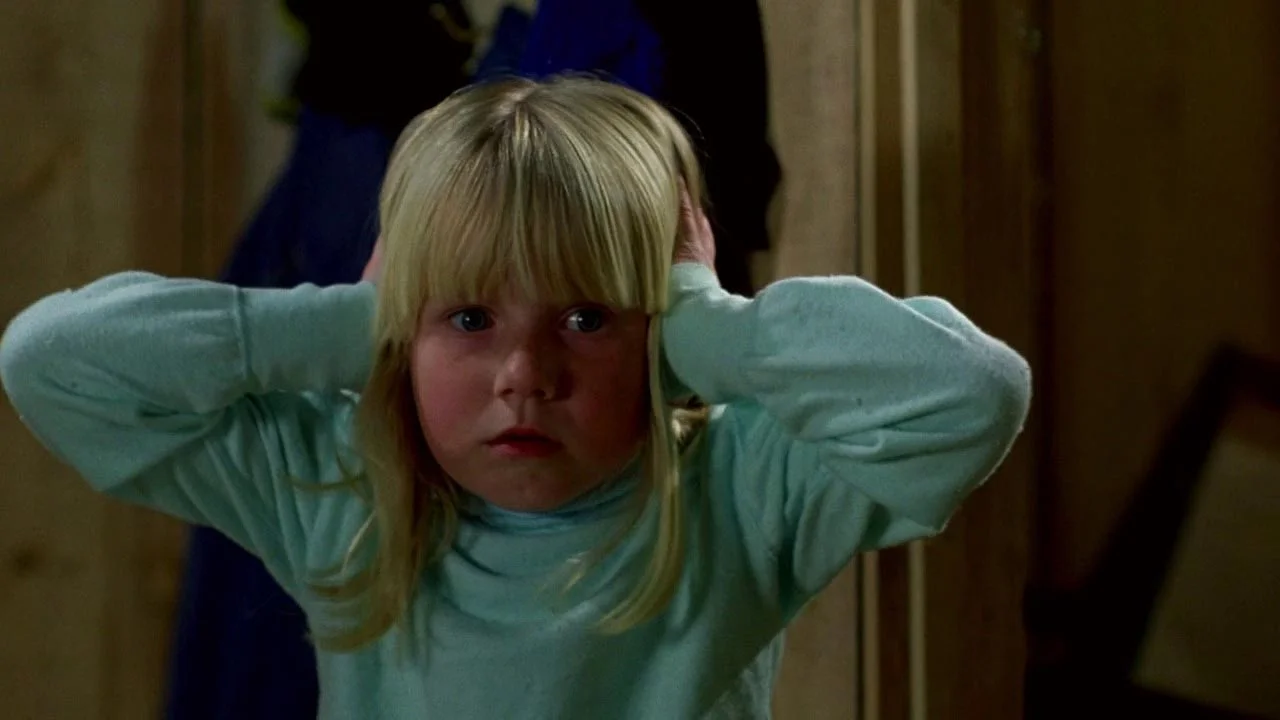
The domestic drama that brews between Frank and Nola Carveth in David Cronenberg’s The Brood has been discussed so frequently, including critic Carrie Rickey’s excellent essay in the new Criterion release of the 1979 film, that it’s easy to overlook another important aspect: Candy, the child at the center of the couple’s marital discord.
As Candy, Cindy Hinds gives a singular, heartbreaking performance as the world’s most adorable yet devastated child, outshining Heather O’Rourke as Poltergeist’s Carol Anne by light years. Her immense blue eyes see more than she’ll admit verbally, but her sullen, pursed lips give it all away. This is a child in crisis.
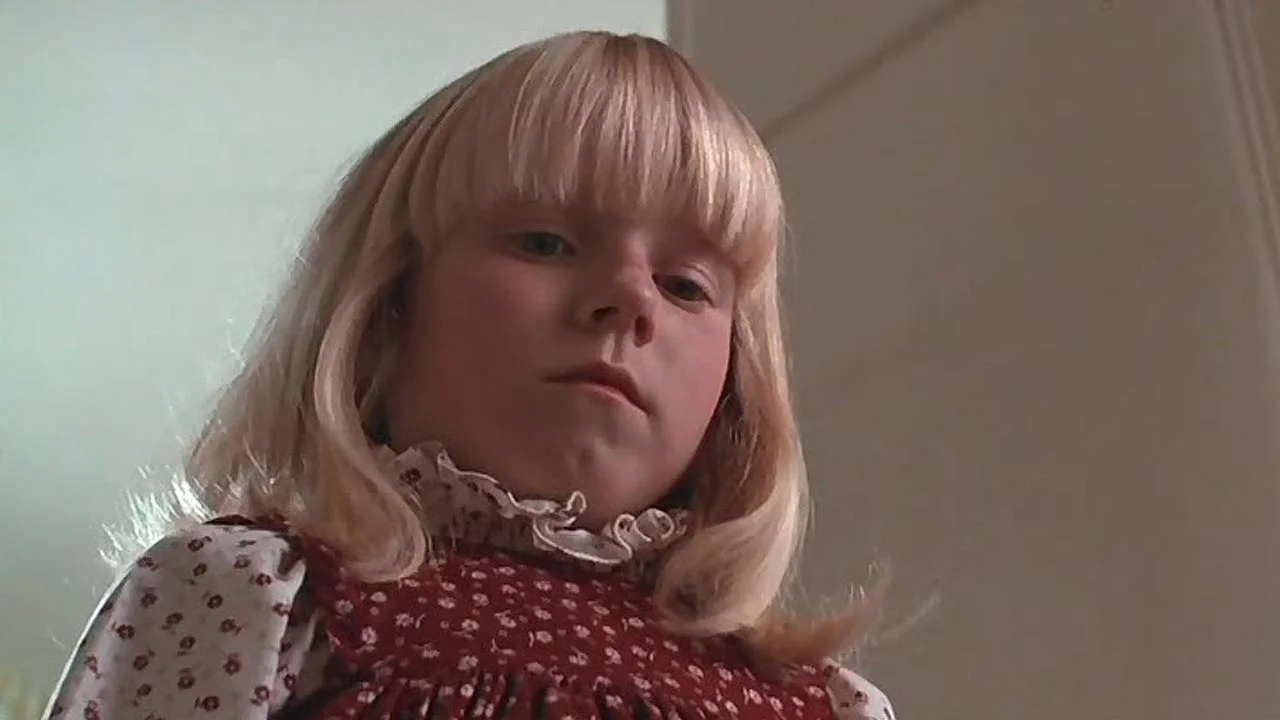
When she discovers her grandmother Julianna’s murder at the gnarled hands of one of the film’s titular gang of mutant children, Candy doesn’t scream or cry, she just STARES, absorbing all the violence, terror, and confusion into herself. The police psychologist explains to her father Frank that the deep sleep they found Candy in when they arrived at the crime scene signifies an attempt to avoid dealing with what she’s seen; we recognize that as a sign of clinical depression. Yet Frank, already weary of what he construes as another iteration of the psychobabble peddled by Dr. Hal Raglan, seems more annoyed than concerned.
There are several scenes in which Frank relinquishes Candy’s care to others, specifically her teacher Ruth Mayer. He’s late picking her up from school twice. On the second of these occasions we witness the only instance of the child smiling in the entire 90 minutes of the film: when she’s playing “mothers and daughters” with Miss Mayer. Later, Frank leaves Candy with her again to deal with his drunken former father-in-law and when he returns, Candy is huddled against the wall crying over a nightmare she’s just had. He assures her that the creature responsible for her grandmother’s death is dead and we finally see her attempts at a tough shell crack a little.

Subsequently, the look of dull terror on Candy’s face when she realizes that the creature is not only alive and well, but has somehow duplicated itself, is as sad as it is scary. There are now two mutant children standing in front of her in the classroom and she seems to be the only one who notices their presence. Does she think that see alone can see them, that it might be her imagination that conjured them? Does she wonder if her father lied when he told her the one that killed her grandmother was dead? Does she instinctively know that these are her mother’s other progeny?
Oddly, before these malevolent mutants attack and kill Miss Mayer, one of the only adults upon whom Candy can rely, they hustle Candy into another room so she doesn’t see what’s happening. They seem to want to protect her more than her mother or father. The other children are left to gawk as their teacher is left bloodied and crumpled on the floor. Still, when Frank runs into the room, he doesn’t console the crying kids, he just covers up Miss Mayer’s face with a piece of drawing paper, too stunned to know what to do.
It is soon revealed that Dr. Raglan has been keeping the brood in a shed behind the Somafree Institute, along with their mother, Frank’s ex-wife Nola, because it is Nola herself who has been spawning these children of rage. After the classroom murder scene, they escape back to Somafree, taking Candy into their fold and dressing her in pastel flannel footy pajamas so she looks like one of them. Which she is, in a way, although she was born of love and not hatred.
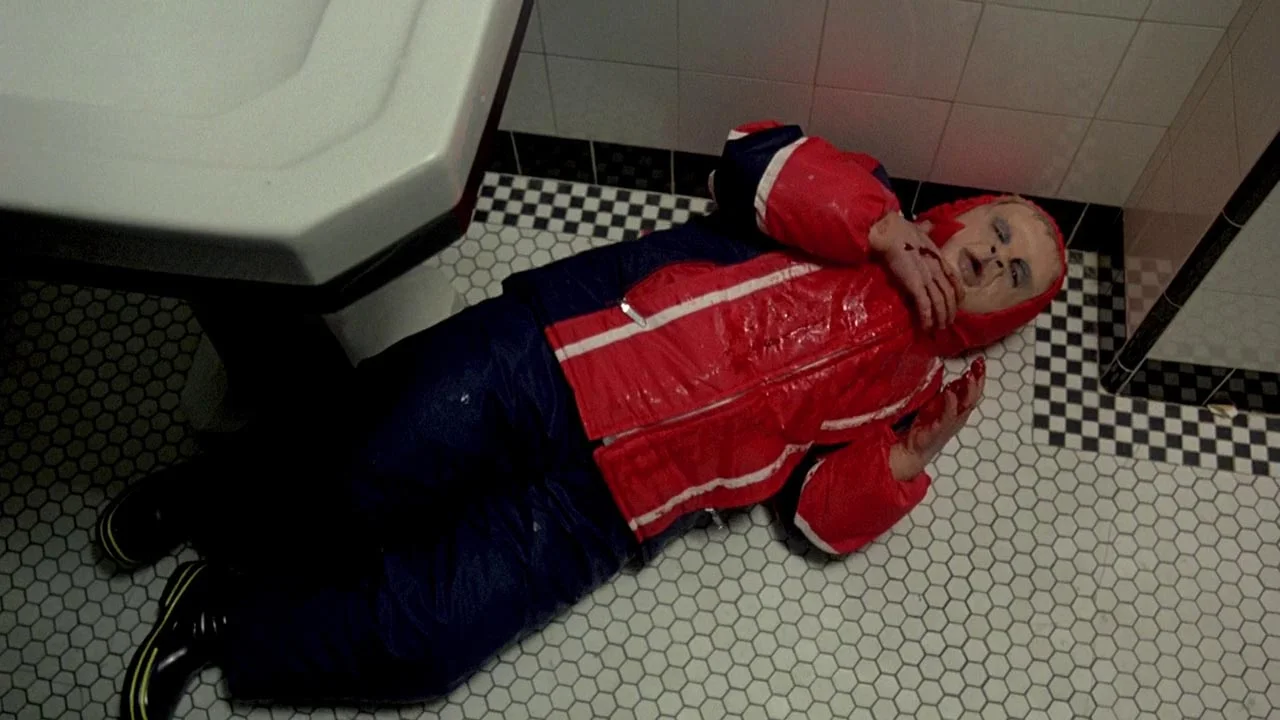
It’s fitting that these children look like withered, distorted versions of adults and not children at all because it’s the distorted version of love that has created them. Nola screams at Frank that she’d rather kill Candy then let him have her. Candy has become a thing, a prize, something to be won or lost, not a child to be nurtured and comforted.
So much of Candy’s reaction to the horrors of the film is blunted. Her fear of a world without her parents, her grandparents, or any sense of normalcy has transformed into resignation. Yet when her mother’s increasing rage sends the brood into attack mode, and they set their sights on Candy, she screams in terror, her first real outpouring of grief and horror. It is only when Frank strangles Nola to death that the brood is stopped, killed by the cessation of Nola’s rage, the only thing that kept them alive in the first place.

For me at least, The Brood provides no shortage of bittersweet nostalgia about the late 1970s. I was a child of divorce, and while my experience was far more mundane than Candy’s, it had its traumatic moments. Like Candy, however, I was an anxious, depressed child, plagued with insomnia and nightmares. The fear and anger on her face in the last scene of the film is difficult to watch because I know it all too well.
It irks me that there are still people out there who dismissively sneer that "Doctor Who is a kid's show."
Oh, I don't deny that it is a show made originally for children, and still is unquestionably watched by children all over the world, but when people deride something as being "made for children," it suggests to me that they see no inherent value in children's programming. Indeed, children's programming can be some of the most interesting, fulfilling media in our modern society, awash as it is in cynicism, callousness and doomsday-propheteering.
What Doctor Who regularly understands and communicates is that we were all children at one point or another, and we all had shared experiences growing up that bind us together. Dealing with emerging identities, struggling to balance our lives, coming to grips with our emotions of love, hatred, despair...fear.
Doctor Who is probably best known for its colorful range of monsters and aliens. One of the most common reactions I hear to the show is a long-forgotten memory of being scared under the bed by one of the hundreds of episodes in its 50 year history. Never has this aspect of the show's existence been more wonderfully examined than in the Twelfth Doctor's episode Listen.
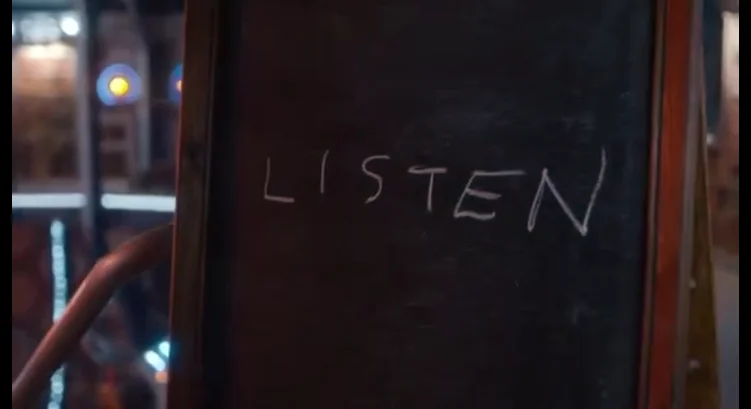
This instant classic starts off as a kind of thought experiment. The Doctor is meditatively contemplating on his TARDIS, when his eyes snap open and he cries "LISTEN!" He is pondering evolutionary existence, the idea that there is perfect animal speed, perfect defense, etc. And therefore...could there be such a thing as perfect hiding? How would you even know (given that such creatures would effectively be invisible)?
This leads him, and companion Clara, on something of a wild goose chase, hunting throughout time and space for these creatures, trying to find out what they might have to say for themselves. After all, tucked away by themselves for so long, they must want someone to talk to, right? The Doctor is convinced that evidence of their existence can be traced to a common nightmare, one that writer Steven Moffat - and millions, maybe billions of others - have experienced: you're sleeping in your bed, when you suddenly become scared. You're not sure why, but you sit up and put your feet down on the floor. That's when a hand reaches out to grab your ankle.
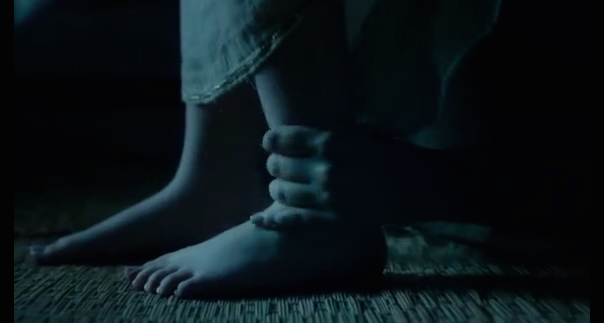
I've had this dream before. I'm sure many others have had it too. The idea that it wasn't a dream, but rather an actual creature of perfect hiding, is both intriguing and terrifying. But it's the shared experience that really drives the action and emotion in this episode.
We all feel scared sometimes. Growing up, with our imaginations firing at full capacity, we filled the gaps in reality with all kinds of creepy-crawlies. The "monsters under the bed" were the things we dreaded most: the Boogeyman, the Tommyknockers, the shapeless unknown. Being scared, alone at night, was something we all went through at one point or another. Many of us still do.
What if, though, we aren't alone? In a strange way, the creature is a comfort. If we were able to define it, put a name to it, see it, talk to it, what would it say to us? It's when we find out nothing's there that it almost feels a little sad. Listen drives this point home in its final moments, which I will not spoil here.
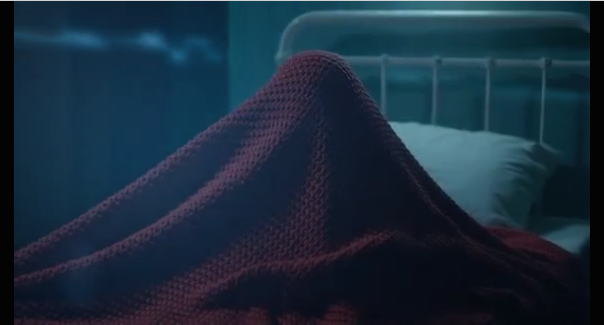
The message, though, is one worth repeating. Fear CAN be a force that drives us apart, but more often than not it also brings us together. Fear can make us strong. It's all right to be afraid from time to time, because everyone is afraid from time to time.
Knowing that, and knowing that the creature under the bed can be just as scared as us, is a comfort. We don't have to go tearing up the universe to find the message of the monster under the bed. We just have to listen.
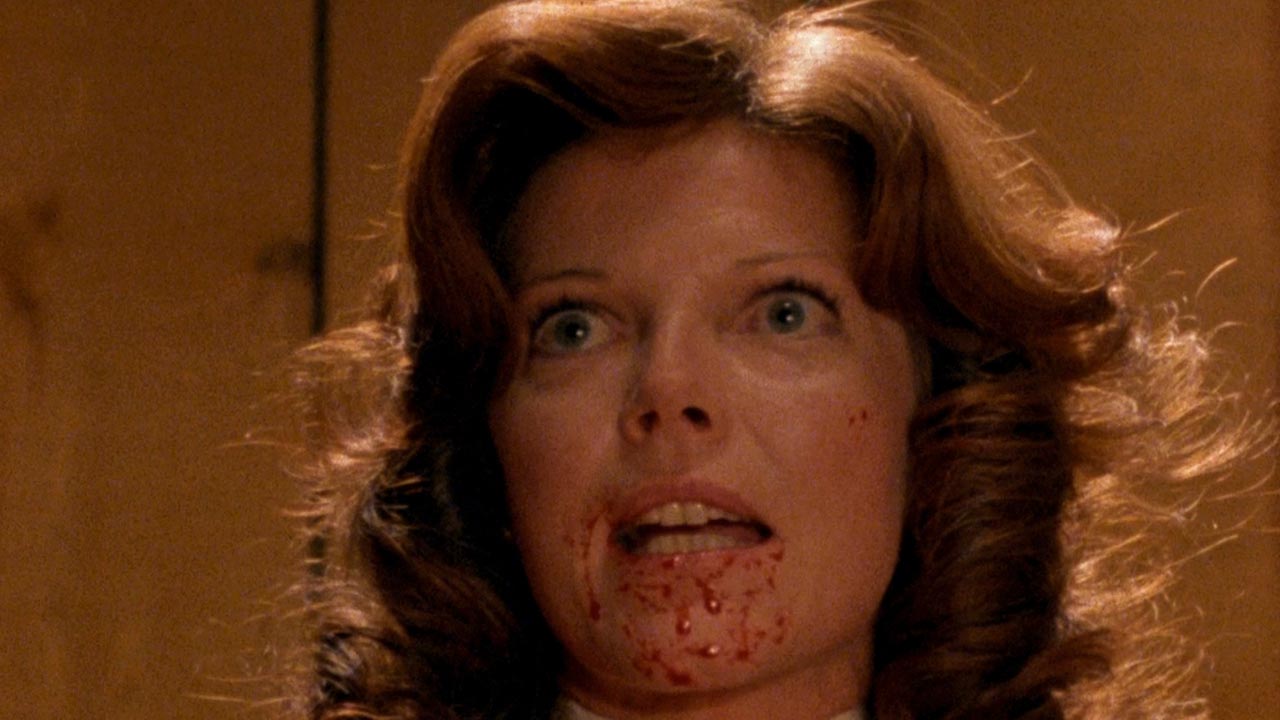
“It’s disgusting in ways that are not entertaining; as opposed, for example to the great disgusting moments in Alien or Dawn of the Dead… are there really people who want to see reprehensible trash like this? I guess so. It’s in its second week.”
--Roger Ebert’s review of David Cronenberg’s The Brood; June 5, 1979
Every horror fan has probably experienced this: someone else, often a family member or co-worker, doesn’t like horror movies and thinks that something is seriously wrong with you because you want to watch nothing else. Horror fans often complain that we’re ostracized, mocked, or misunderstood. Women seem to have it way worse, since we’re so often expected not to like “that sort of thing.”
But let’s face it: horror is hugely popular right now. Don’t think so? What about the fact that The Walking Dead is one of the most-watched shows on TV? Or the fact that Dexter – a show about a sympathetic serial killer – lasted for eight seasons? What about the Fannibals?
Now it feels like it’s longer cool to mock horror fans but rather to mock us for what kind of horror flips our switches and worse, cast moral aspersions on us for the kind of horror we like. It’s not like this is a new thing, and even the most sainted of film critics wasn’t above such petty name-calling (see above).
David Cronenberg was criticized for the alleged misogynist streak in The Brood at the time the film was released (and even sometimes to this day). He’s been open about how it was his nasty divorce that provided inspiration for the film, which raised a lot of eyebrows when he stated that the scene where Frank Carveth tries to strangle ex-wife Nora (spoiler alert!) was “very satisfying.”
So by extension, when we watch and enjoy The Brood, are we also misogynists?
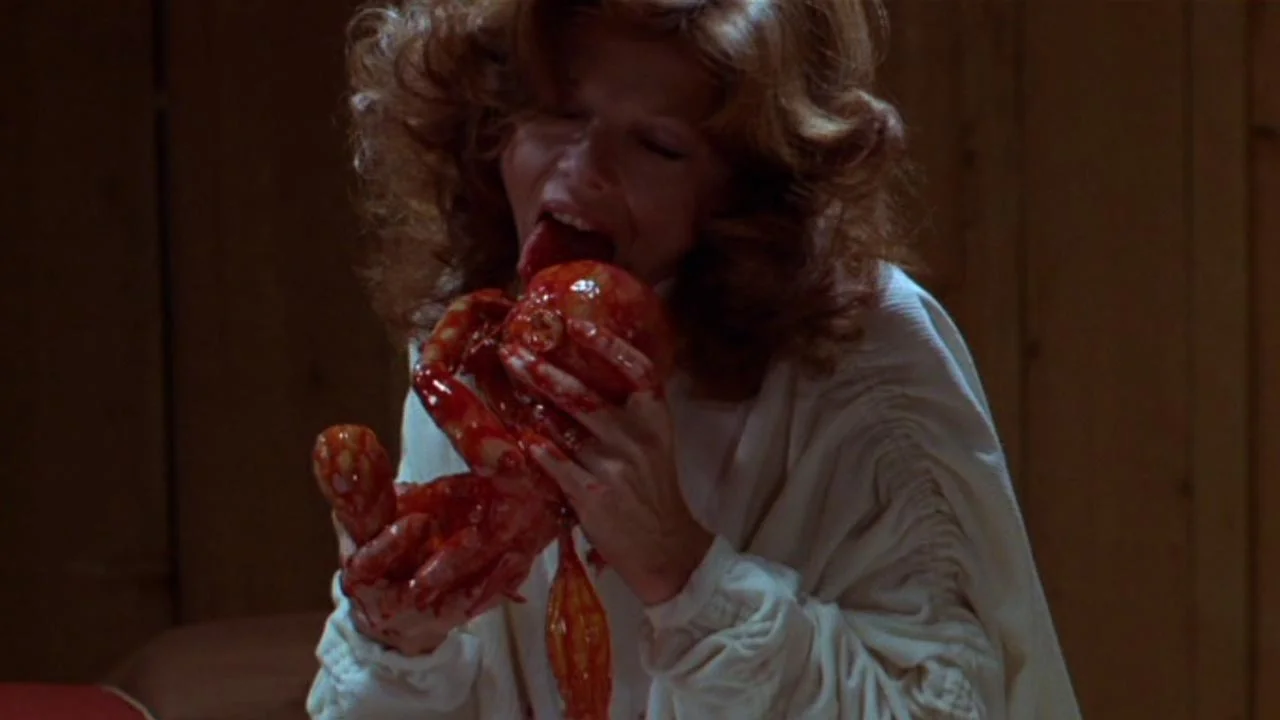
A few weeks ago, Peter Counter wrote about “Horror That Says Hello,” remarking that our relationship to the horror media that we consume is one of “enablement.”
By turning on Carrie and watching all those teenagers burn to death, we are implicitly responsible for the on screen horror. When we watch Kubrick’s The Shining, we are agreeing to watch the poor old psychic groundskeeper to get axed right in the back. We watch the horrible things happen and we don’t do anything to stop it.
Obviously this is not a moral indictment of horror fans. The fantasy of horror is enabled by a safe space. We allow anything to happen on screen under the tacit agreement that everyone, including us, is safe despite what movie magic might imply.
Not everyone thinks that enjoying movies that present problematic ideas or display extreme violence is morally suspect. But some do, and this is troubling in the same way censorship is troubling. It allows moral self-righteousness to trump artistic expression.
It’s not just that horror is a safe space for us to feel fear or to examine our relationship with the world; horror also allows us to explore things that are considered deeply taboo. Like strangling your ex-wife. Or Murder Husbands.
I referenced the Fannibals earlier and anyone who knows anything about Hannibal knows that there are thousands upon thousands of examples of fanfiction devoted to the show, most of it slashfic between Hannibal Lecter and Will Graham (Hannigram existed before the Bryan Fuller version of the show, in case you were wondering). Besides the eternally intricate configurations of Omegaverse, there’s another segment of Hannigram that might make even the most staunch splatter film connoisseur blush: Murder Husband fics.
I won’t make any definitive statements, but I’ll assume that Murder Husbands fanfiction is not considered socially acceptable on a widespread scale. But it’s also not real. Those of us who enjoy it don’t really want to go on killing sprees and have bloody, post-murder sex, but we do want to explore this option by reading fictionalized depictions of it in slashfic.
Judging fictional characters for their fictional bad acts is ludicrous enough; judging people for enjoying the act of reading and/or watching these fictional characters engages in these fictional bad acts is not only ludicrous, but feels more dangerous than the bad acts themselves.
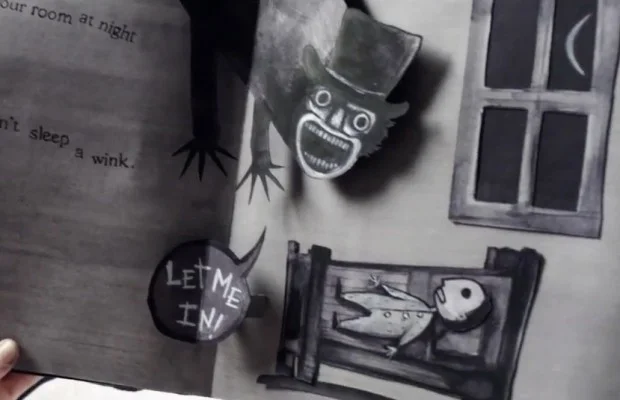
What is worse: sanity or insanity? The question is at the centre of supernatural horror, and while the answer seems obvious from the experience of a reader (likely sane), things aren't so clean cut in the realm of lucid nightmares. Put yourself in the shaking boots of Amelia, the tortured mother from The Babadook, for instance, and then ask yourself which mental paradigm you would prefer.
Aided by the unreliable narrator device that is typical of horror genre fiction, supernatural elements in stories like The Babadook thrive on the balance between the opposing worldviews of unbridled imagination and a strange reality. Throughout that film, the audience is given numerous hints that Amelia’s experience with the titular evil entity is simply a figment of her imagination born of insomnia, trauma and the stress of having a difficult child who builds weapons as a hobby. Stuck in her point of view, however, we are shown the Babadook as it appears to her: an increasingly real threat to the life of her son.
As viewers of Amelia’s struggle we are given two options on how to explain the film’s conflict. Is Amelia sane or insane, and which is worse? If she is insane - and the film’s ending is certainly open enough to suggest that she is being tortured by her mind - then the struggle exists solely within her home. The stakes are still very high, since an expressionist reading of the film forces you to accept that Amelia is trying to stop herself from a powerful urge to murder her son, but they are isolated. The same can’t be said if we accept a literal reading of the events.

If Amelia is perfectly sane in The Babadook, then she is perhaps worse off. The laws of our universe as we know them do not accommodate spectral, pop-up book enthusiasts who can manipulate reality and possess single mothers. The world proposed by a literal reading of The Babadook is near unthinkable. It is one in which we are wrong about everything and no one is safe. It is a reality that looks exactly like insanity.
In volume three of his Horror of Philosophy series, Tentacles Longer Than Night, Eugene Thacker says that it is the space between the definitive answers of sanity and insanity - a state which he terms fantasy - that horror thrives. Lovecraft and Poe, whose works make up the bulk of Thacker’s analysis, were masters of this balance. The author points to the introduction of Poe’s The Black Cat and Lovecraft’s The Shadow Out Of Time as pinnacle examples of this trope. Each story begins after the subsequently described events take place and the narrators specifically tell their readers that, given the unlikeliness of their recountings, it is quite possible they are insane.
In stories that evoke the question of a sane narrator, regardless of the medium, the question of reality is integral to the stakes and a key ingredient in the horror. It is the mark of a master, I think, when done properly and left unresolved. Either side – clear minded or off the rocker – provides an anchor from which an audience can navigate the supernatural events of a given tale. When those anchors are taken away, like they are in The Babadook, we are left to drift in the terrifying moments that make up the present. Here in the sea of uncertainty, where we live daily life, we can access something more terrifying than an unmapped reality or a broken brain: we face the human frailty contained in the thought that an explanation can’t save us from our present circumstances.
First it was Whitley Streiber’s Communion. The author of horror novels like The Wolfen and The Hunger was roundly ridiculed for his first person, non-fiction novel about alien abduction in 1987, but this didn’t stop him from writing a follow up, Transformation, a year later. The book editor at The L.A. Times' book editor even removed Transformation from the non-fiction best-seller list despite the fact that it was published as a non-fiction account. WIKI LINK
Then, it was The X-Files, which once again brought little green men – or grey men, to be more accurate – into pop culture consciousness. The alien abduction mythology of the show remains divisive, but it did spark enough of a debate to make shows like Sightings and Encounters: The Hidden Truth fairly popular in the 1990s.
By 2015, however, the number of reality shows on the topic, such as the outrageous Ancient Aliens, and the increasing discussion of sleep paralysis as a possible explanation for alien abduction stories, means that a lot of people don’t find aliens a plausible or scary subject for a horror movie.
Ejecta, written by Tony Burgess (Pontypool) and directed by Chad Archibald (The Drownsman, Bite) and Matt Wiele, opens with a frightfully intriguing premise: the aliens aren’t little green men or Greys and their abduction doesn’t involve blinding white lights and tractor beams, but something more insidious.
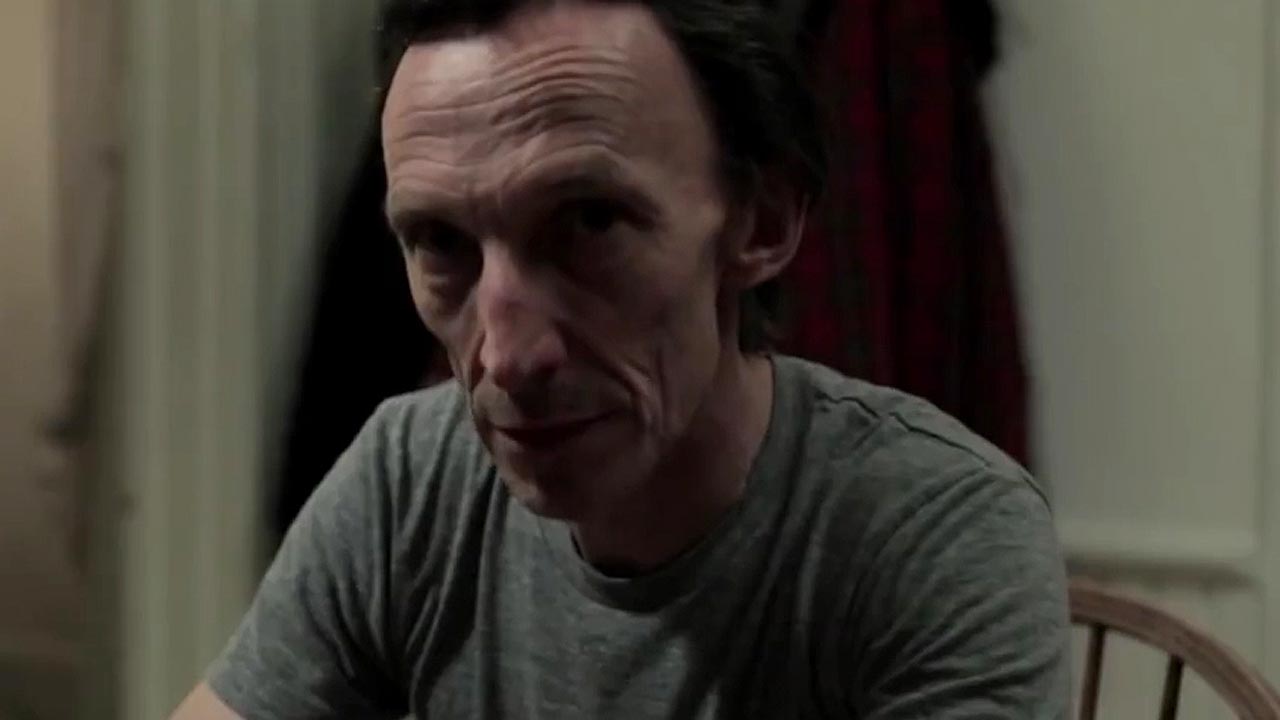
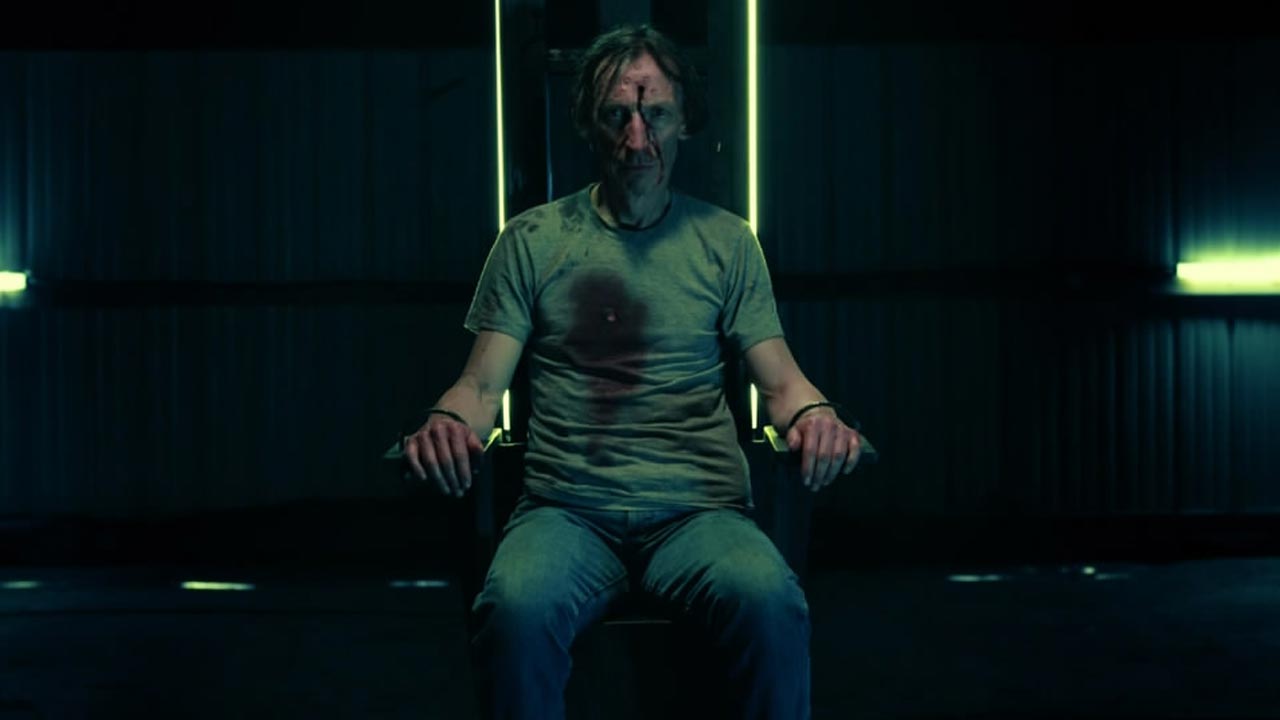
Bill Cassidy has been off the grid for years, with the exception of his untraceable online postings as Spider Nevi, a man who claims to have been tormented by his encounter with an alien presence. Fanboy Joe Sullivan tracks him down and begs Cassidy for a videotaped interview because he believes his story.
Like Pontypool, Ejecta plants a tantalizing suggestion: what if the evil forces that seek us out can’t be seen with the eyes, but instead are felt in the mind? Other films have tried to expand upon this idea with mixed results. 1982’s Xtro opens with an amazing shot of an alien and a storyline about a personality takeover but devolves into a bunch of gory birth scenes and toys that come to life (2012’s Almost Human takes on this same idea and dispenses with any alien visuals to create a much better version of the story). The Hidden, the 1987 feature with Kyle McLachlan and Michael Nouri, does a marvelous job at making the unseen entity seem uncanny and terrifying, even though it has a physical form which resides inside the host’s body (kind of like the cockroach alien from Men In Black but much smaller and less obvious).
How does Ejecta compare? As Cassidy, Julian Richings is as superbly creepy as usual. He’s gaunt and haunted and the idea of having something inside of your brain that you can’t get rid of is truly terrifying. But Ejecta fails when it relies too heavily on the tired trope of shaky cam found footage as a method of exposition and eventually shows us the alien itself. The film attempts to deviate from the trope by explaining that the alien body is just a host for the alien intelligence, but once we see the creature laid out on a table, the fake “alien autopsy” video is the first thing that comes to mind, and like Cassidy’s alien, we can’t get it out of our heads.
It’s a shame because Ejecta has a lot of promise from a narrative perspective but it feels like yet another movie that could have benefited from fewer special effects.
Count Dracula, 1977
When I was younger, lots of things terrified me. Not all of those things were intended to be scary, either. It's one of those burdens that some kids are just forced to bear.
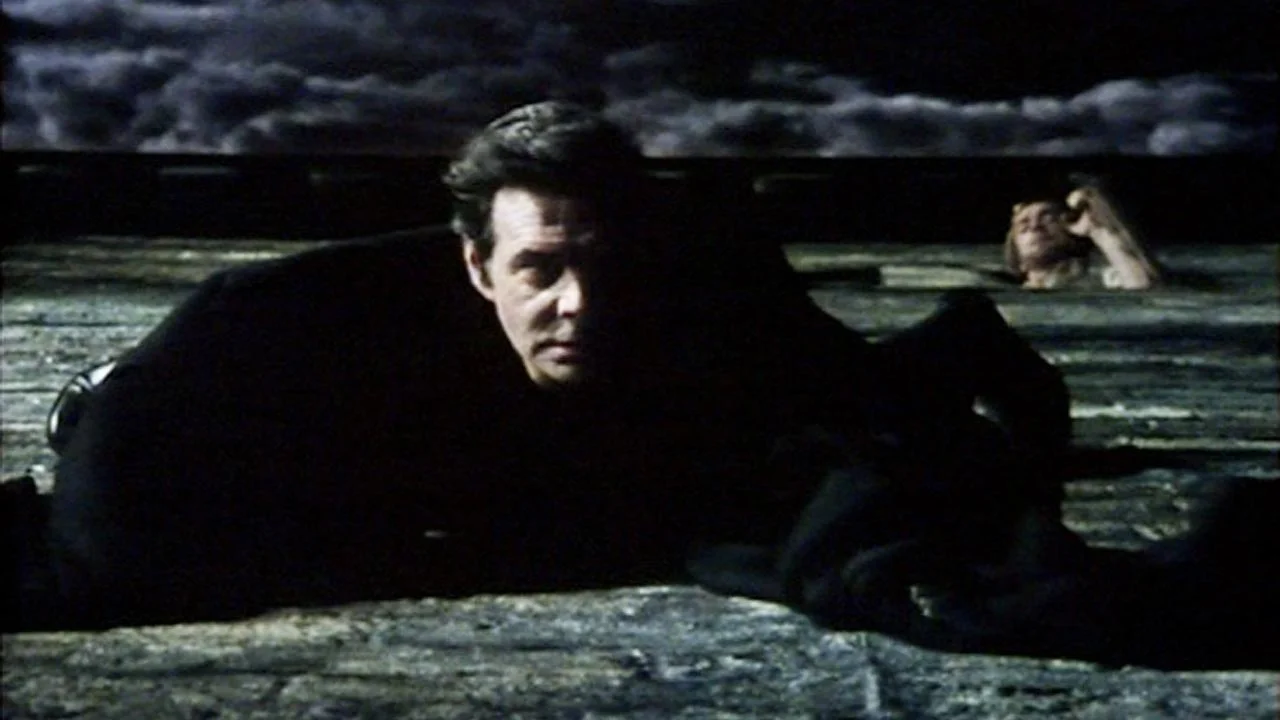
One of my earliest fears was of vampires, inspired by a BBC TV production of Bram Stoker's Dracula starring Louis Jourdan. That two-part miniseries forced me to sleep with a crucifix, a rosary, AND a Bible for at least two nights. A few years later, the trailer for Halloween III terrified me to the point that I had to change the channel when it came on. Horror movies haunted me for years and were responsible for many sleepless nights and panic attacks.
At one point, it was the clown puppet in Poltergeist, then Pazuzu in The Exorcist. An unexpected screening of The Gates Of Hell at a friend's house when I was 15 was particularly scarring. When I was in my twenties, The Texas Chainsaw Massacre was so terrifying that I couldn't get through it the first time around and had to wait a couple of decades to work up the courage again. 28 Days Later, Signs, Jeepers Creepers, The Descent, À l'intérieur, Insidious... all of these thrust me into varying levels of fright, from heart palpitations to openly weeping from fear.
Most recently, it was the movie February that got under my skin. Even though I saw it during TIFF in the daytime, it stayed with me in the way that all effective horror films do: you think of them in the middle of the night when you wake up to get a drink of water and get the actual creeps.
Being completely and thoroughly scared throughout an entire movie is rare. This isn't just an empirical perspective; good horror filmmakers know how to layer jump scares, creeping dread, and/or gut-churning gore in ways that are calculated to shock the senses at key points. Yet, as every hardcore horror film fan will admit, it becomes harder and harder to find movies that will completely scare the hell out of you. Part of this is due to becoming older and wiser; part of it is due to desensitization.
For many, the pop cultural glut of zombies has rendered them not only not scary, but annoying. In the last decade alone, we've seen countless movies and at least five different TV series about zombies, one of which is Fear The Walking Dead, a spin-off of The Walking Dead, a show whose ratings have increased every year since 2010. Zombies, it would seem, are everywhere. So are they still scary?
One of the most frequent complaints about The Walking Dead (besides people hating on poor Carl Grimes) is that there aren't ENOUGH of the titular characters on the show. Season Two was derided as "The Talking Dead" and when compared to the more recent seasons of the show, it feels admittedly underwhelming. At this point, people seem to love zombies, but it's hard to tell if they're actually scared of them.
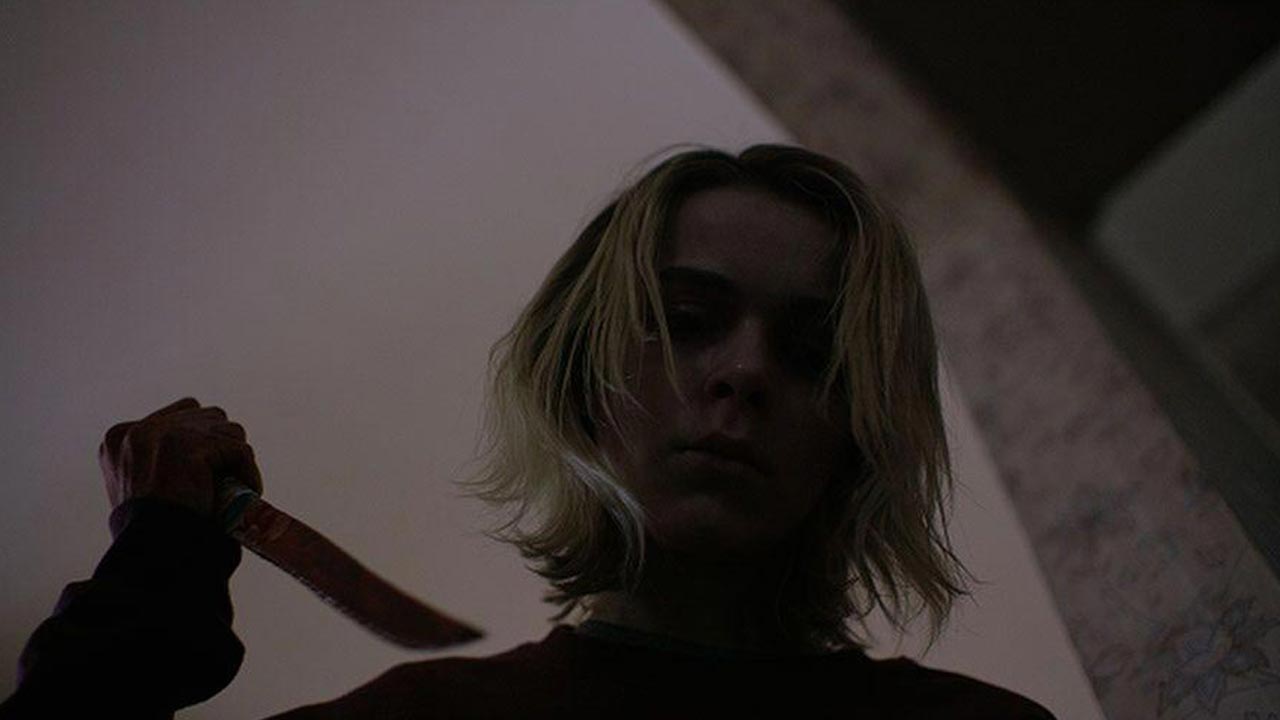
February, 2015
So what do people want now? Do they want to be scared, or do they just want to revel in the gore and blood? At what point does fear transition into the vicarious thrill of rooting for the good guys? The pendulum will always swing into the other direction and despite the overwhelming amount of zombie pop culture interpretations available, there are some who are taking it into different and interesting directions, as shown by the TV show iZombie or the recent comedy Life After Beth.
And there are always new versions of old ideas. For example, there seems to be a renewed interest in Satanic or occult-themed movies and TV shows, like February, for example, which is far more disturbing than any of the recent found footage possession films I've seen.
Since this new iteration of horror - the lurking danger of demons - hasn't yet been done to death, there are still plenty of opportunities for the discerning horror fan to seek out different ways to get scared. At least until the next trend comes along.
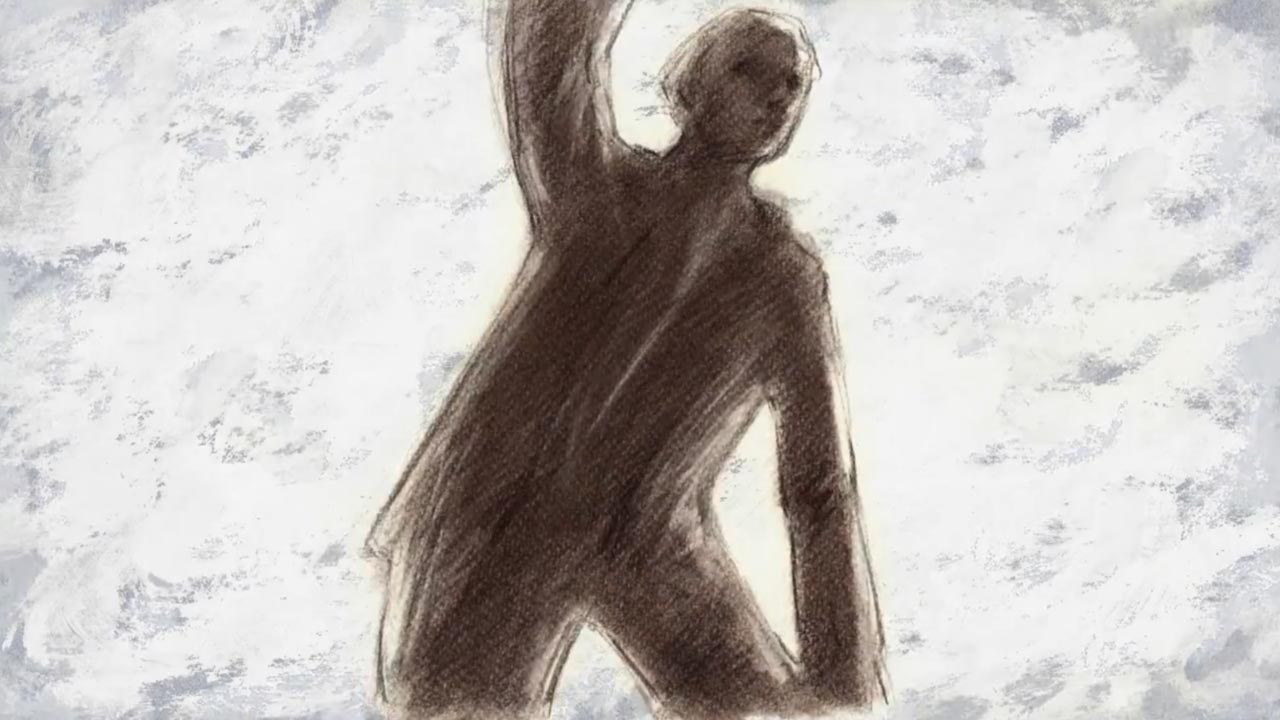
In 1936, 18-year-old writer Robert H. Barlow penned the short story The Night Ocean with the help of his friend and mentor, H.P. Lovecraft. As much as it explores the kind of unfathomable frights that Lovecraft is known for, the tale also has a distinctly lighter, but no less unsettling touch.
Like much of Lovecraft's work, The Night Ocean deals with those liminal spaces that are more disconcerting than specific details. The unnamed narrator of the story is taking a vacation in an isolated, one-room cabin on the beach near a town named Ellston after a year spent toiling over a mural submitted to a competition. At first he basks quite literally in the immense sunlight of the place, but soon a pall comes over his existence and he can't shake it off.
"I did not wish to see anything but the expanse of pounding surf and the beach lying before my temporary home," he muses, making it obvious that he will, of course, see something else. Yet such a device is not predictable or cliché, but instead sets up the state of vague apprehension that permeates the story, what the narrator describes as "an uneasiness which had no very definite cause."
The short film "The Night Ocean," directed and animated by María Carmen Lorenzo Hernández, adapts the story into 12 gauzy and sometimes ghastly minutes. Hernández utilizes an entirely appropriate animation style for a story about an artist. Much of the film (save for one brief snippet of what seems to be an old home movie on faded film stock) alternates between watercolor and pencil drawings.
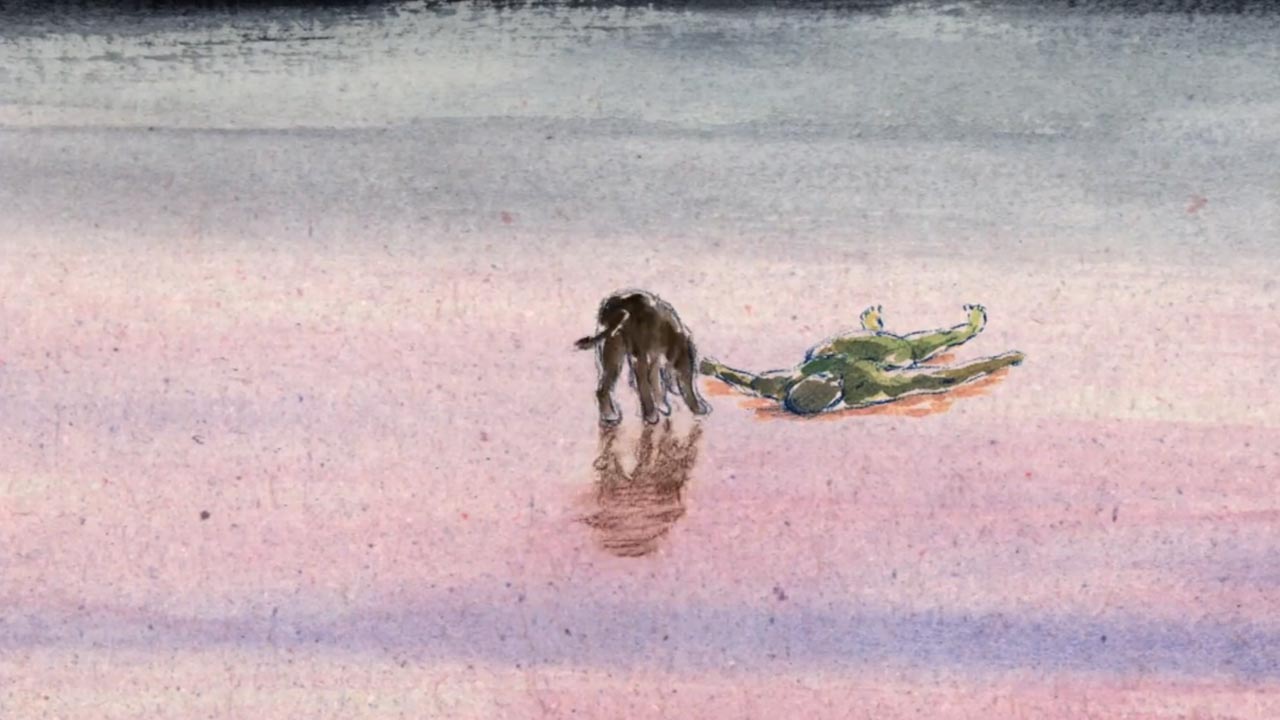
Furthermore, she transforms the first person narrative style into a visual diary by having the actual frames look like sketches in a notebook, right down to the center binding and edges of pages. It's an ingenious way to create an aura of ideas, perceptions, and feelings and also remains true to the mood of the original text at the same time.
"The Night Ocean" also includes a voice-over track during most of the running time, which again, is consistent with the story. Rather than just having someone read the text over the visuals, the events are shuffled around and shortened. The film dispenses with the VO in a couple of key sequences, which are also the most disturbing segments of the film itself. However, the most upsetting scene in the original story is jettisoned, possibly because it would have dipped too far into horror territory and contrasted strongly with the overall tone of the film.
That said, it's still a haunting piece of work. The rough pencil drawings on coarsely textured paper look like chalk on a blackboard at times and that wavering, wobbly look fits with the ephemeral nature of the story itself as well as the frights it contains.
"To shape these things on the wheel of art," ponders the narrator, "to seek to bring some faded trophy from that intangible realm of shadow and gossamer, requires equal skill and memory." With "The Night Ocean," María Carmen Lorenzo Hernández has, intriguingly enough, done just that.

Horror predilections come in all sizes and shapes. For every slasher film freak, there is another fan that prefers Giallo, or one who thinks the Hammer Studios aesthetic is the epitome of the genre. For those who fall into the latter category, the thrill comes not so much from horror as terror or dread. Enter Kevin McTurk's marvelous concoction, The Mill At Calder's End.
It may be a short film, but it packs more foreboding into its 13 minutes than five teen horror blockbusters put together. What's even more remarkable is that the film isn't live action or even animated; it uses puppets. It adds to the creepiness of the film, giving it an otherworldly flavor, much like the 1960s Japanese editions of famous fairy tales from Shiba and Golden Books.
These books featured lenticular covers and full color, full-page graphics to accompany the text, in which the characters were portrayed by puppet-like dolls with handcrafted felt skin, beads and buttons for eyes, and exquisitely detailed clothing and sets. As a child I was fascinated with these books and would stare at the pictures for hours wishing - despite my fear of inanimate objects coming to life -I could exist in that world. The Mill At Calder's End takes that aesthetic and breathes life into it and the result is breathtaking.
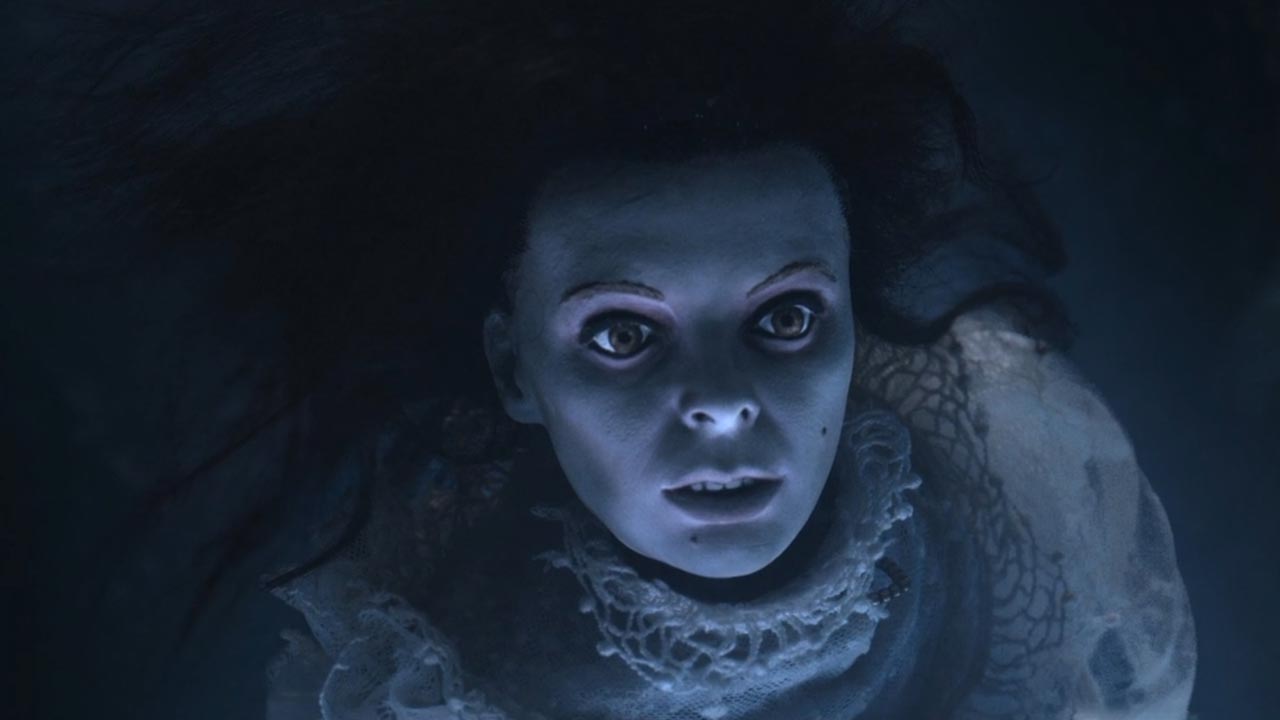
With a story from Ryan Murphy and a script penned by McTurk, you might feel like this is an H.P. Lovecraft or Edgar Allan Poe tale that you've read before. It's Gothic in the style of Jane Eyre or Wuthering Heights. Young Nicholas Grimshaw is troubled by a "curse that has haunted my family for generations," and wonders, "How did it find me after all this time? With a plot reminiscent of the original Lon Chaney Wolfman film, Nicholas must take possession of the family's Mill at Calder's End after the mysterious disappearance of his father.
Despite the film's uniquely different mode of production, it successfully captures the bold, ominous look of classic Gothic horror films, down to the color scheme and voice over narration. Nicholas's father, Harrison Grimshaw, bears more than a striking resemblance to Peter Cushing and Barbara Steele provides the voice of "The Apparition."
The Mill is part of the curse and the curse is part of the Grimshaw family, like the land itself, being passed down to each generation. It's never specified if the sins of the father from decades past started the malevolent chain of events, but that's part of what makes The Mill At Calder's End so satisfyingly spooky.
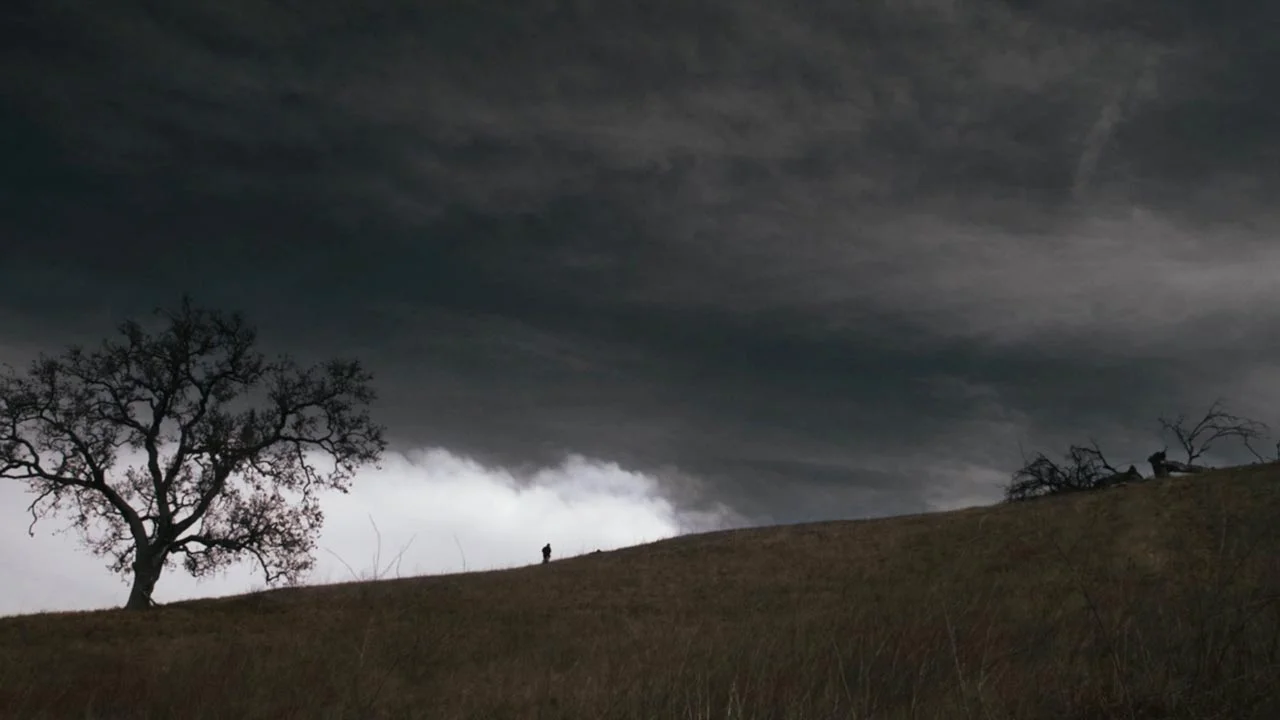
There's a Lovecraftian, folk horror element to the eventual reveal of the Great Beast, and McTurk keeps the monster in shadow, which makes it that much more fearsome. And even though the younger Grimshaw sets the Mill aflame and crushes the monster beneath its pillars, the original contract with evil remains in the form of a scrap of paper.
"Can one ever truly defeat evil?" Nicholas wonders in the end. It's the basis for so much horror and The Mill At Calder's End shows that it can persist, no matter how nebulous, and continue to bewitch and terrify us in cinematic form.
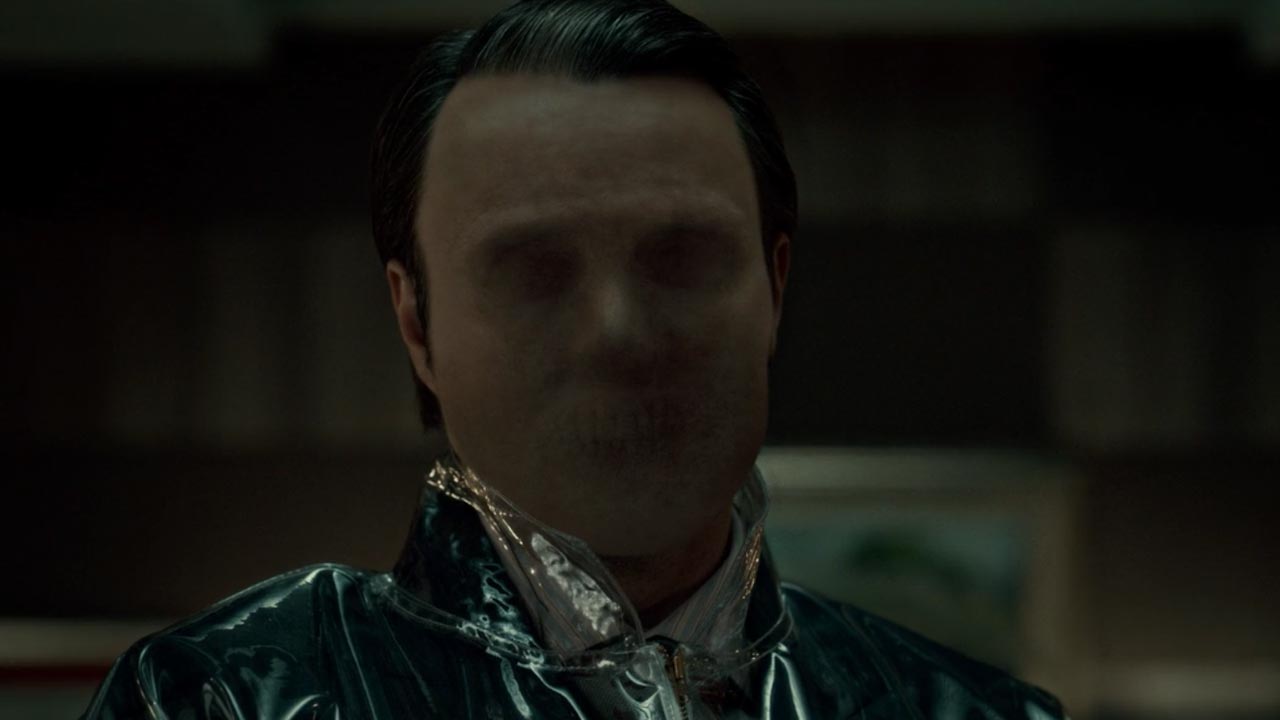
Alana Bloom: ... what do you think one of Will's strongest drives is?
Jack Crawford: Fear. Will Graham deals with huge amounts of fear. It comes with his imagination.
Alana Bloom: It's the price of imagination.
The mythology of Will Graham, as created by Thomas Harris, was always a mystery. Reading Red Dragon, we were allowed glimpses into his psyche, his internal thoughts, but many of those thoughts were borrowed.
Will is described as an eideteker, an empath, someone whose mirror neurons never melted away after childhood. When he seeks out killers, they come knocking at his door. Yet unlike vampires, they let themselves into his mind without his permission.
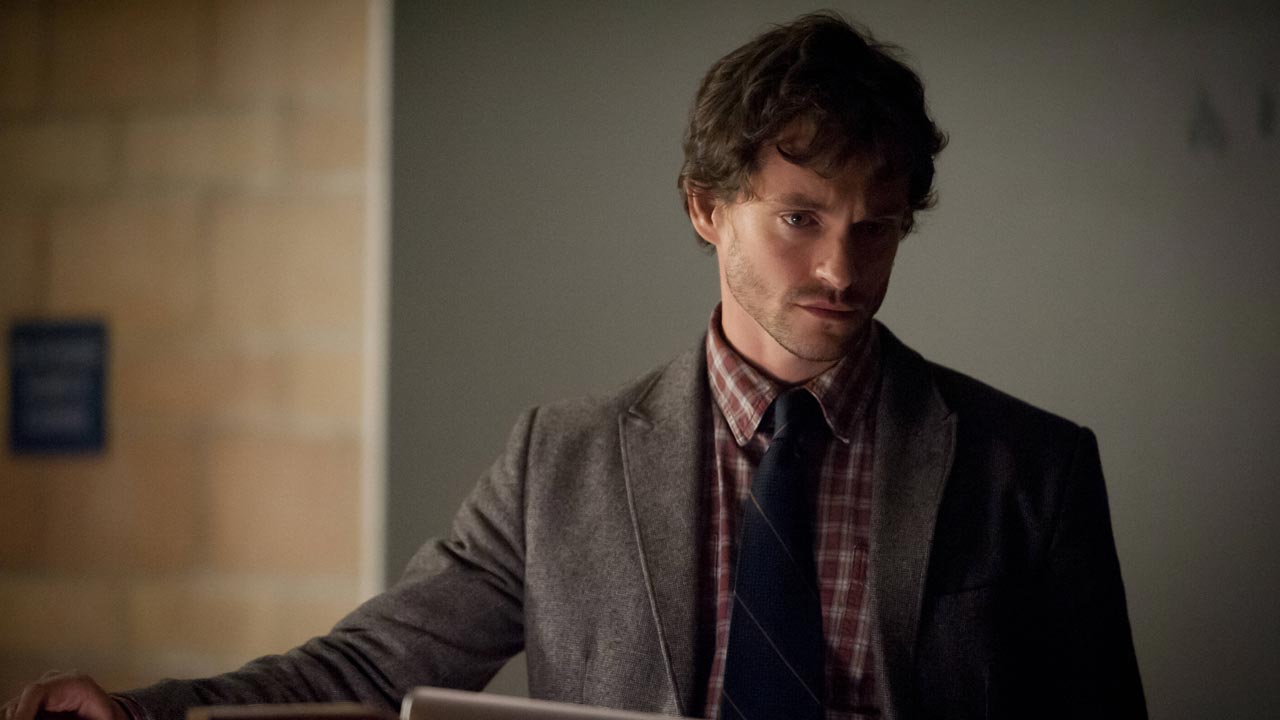
When Hannibal the TV series begins, we learn about Will through the same methods established by Harris initially: his serial killer profiling. Of course, the film versions of Will - in Manhunter and Red Dragon - provided a visual aspect to what had only been captured in words before, but Bryan Fuller's vision of Will's unique gift is different. It is more vivid and bloody, more beautiful and terrible.
It isn't long in the series before Will meets the ultimate in beauty and terror, Hannibal Lecter. Harris created Hannibal, too, but with the Hannibal series, Fuller and company filled in the gaps that Harris didn't talk about in his novels, the time between Hannibal's childhood and when he encounters Will Graham. We, along with Will, eventually realize that those gaps are more like chasms, or the gaping maw of hell.
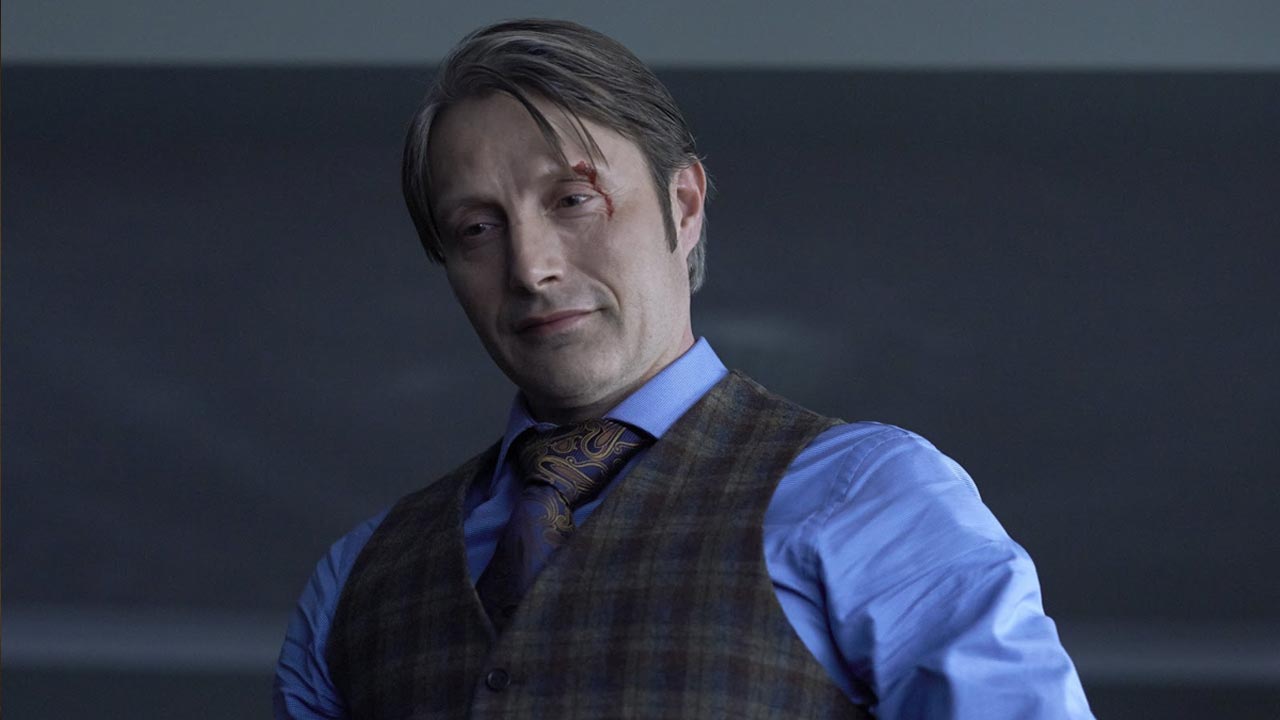
Hannibal as presented in Manhunter was a terrifying creation. Brian Cox did more with a scant few minutes of screen time, a clipped accent, and dead, black eyes than three movies' worth of Anthony Hopkins. That's the Hannibal that Bryan Fuller wanted to exploit, and to do so, he found the best version of Hannibal Lecter yet, Mads Mikkelsen, whose wolfish eyes and predatory smirk evoke a sense of unease and discord that none of the cinematic interpretations had quite managed to address.
As the latest incarnation of Harris's characters, Hannibal had the luxury of being able to use shorthand to convey backstory, personality traits, and motives, but instead of taking the easy route, the show adds baroque layers of complex psychology, references to literature and art, and deeply convoluted double entendres. This renders Hannibal 3.0 a wholly other creature.
Knowing he is a cannibal but seeing him portrayed as a classy aesthete and not actually seeing him kill, makes Hannibal Lecter as much of a mystery as Will Graham, who is portrayed by Hugh Dancy on the show as something of a trembling teacup (at least at first). When Hannibal's murderous nature reveals itself, it's in small doses. Although he tells Garrett Jacob Hobbs that the police are onto him in the first episode, Hannibal still comes across as more curious than outright nefarious. Hobbs seems frightening by comparison.
Bit by bit, we see what lurks underneath Hannibal's "person suit," as Bedelia Du Maurier calls it. He bashes Alana Bloom's head against a wall so she won't know what he's doing, in the first indication that he is capable of cold-blooded violence. When he cuts Dr. Sutcliffe's throat, we see this through Georgia Madchen's illness-compromised eyes, and his face is blurred. When he breaks Franklyn's neck, it's a matter of self-preservation not homicide.
What's more frightening are scenes of Hannibal looming over Bedelia as she tries to end their doctor/patient relationship and Hannibal suddenly appearing behind Beverly when she discovers his murder basement. It's a palpable threat that feels scarier than the act of killing itself.
Even when Will discovers that Hannibal is the Chesapeake Ripper, he's so wracked by his encephalitis that it feels more like exhausted outrage than terror. In betraying Will - hiding his medical diagnosis and framing him for the murders - he's committed premeditated murder against their friendship.
When he's exonerated for Hannibal's crimes, Will decides to publicly forgive Hannibal and resume the FBI-ordered therapy with him on his own accord, but it's a pretext to gaining Hannibal's trust and exposing him. This eventually leads to Will moving from empathizing to embracing, in this case, the dark side of his nature. Instead of just catching a killer, he kills one: Randall Tier. What has always fascinated Hannibal and attracted him to Will is his ability to exploit his empathy. Hannibal wants Will to become a killer in more than imagination; his most fervent desire is for Will to become a killer in reality.
Hannibal, hiding "behind the veil," is also besotted by Will's ability to see him as he truly is. The second and third seasons of the show further explore Hannibal's dedication to transforming Will and Will's commitment to Hannibal, one which feels more like an involuntary stay at a mental institution than a relationship entered into with clear eyes and a pure heart.
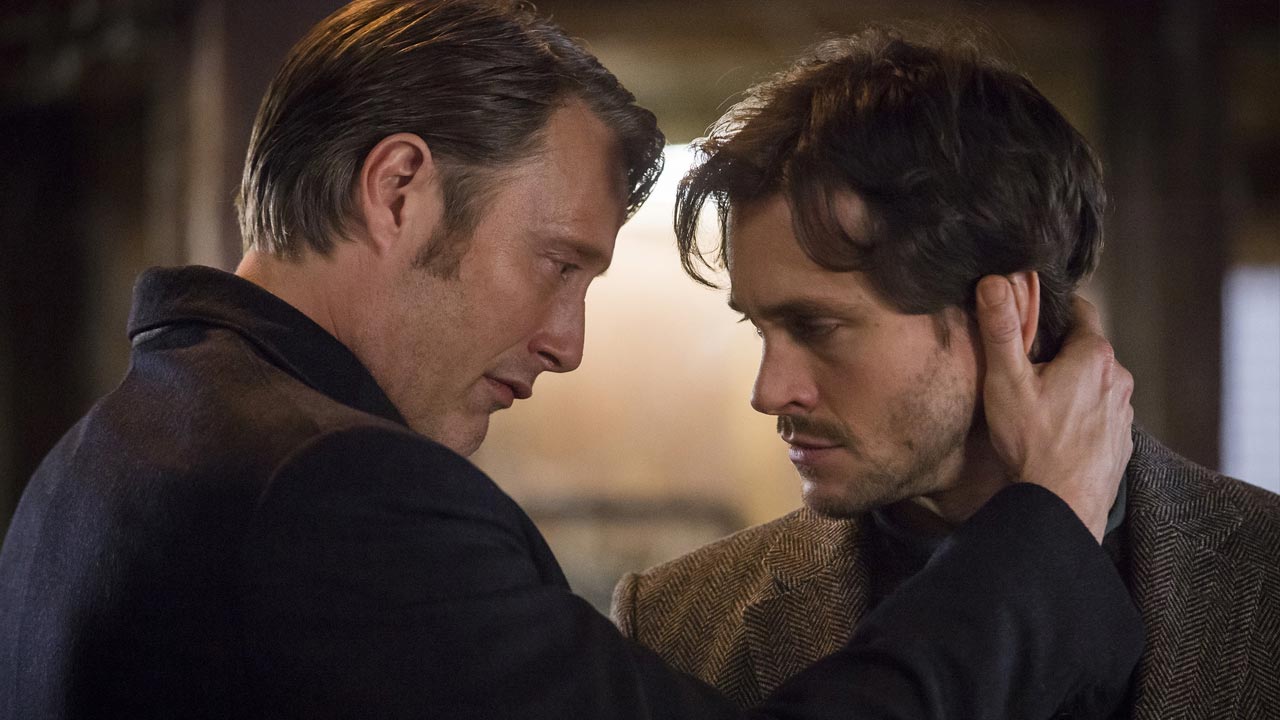
Both of these seasons explore the arc of Will pretending to be one thing, while acting another, much like Hannibal did throughout the first season. By this point, of course, Will has already echoed many of Hannibal's own words and has even begun to dress more like the doctor, exchanging his fly fishing jackets for tweed coats. This cat and mouse game continues throughout the second season, until neither the audience nor Will seem to know if he's sincere about his reciprocated feelings towards Hannibal or just playing the long con. This culminates in Will's betrayal of Hannibal, and Hannibal gutting Will and leaving him for dead.
Will survives and so does his relationship with Hannibal. That already thin line between the two doesn't disappear, but becomes a blood vessel that connects them both. It's terrifying: Will has looked into the abyss and not only has someone looked back at him - Hannibal - it's someone with his own face. Through its third season, the show upends the idea of a soul mate, or to borrow a term from fanfiction, a One True Pairing (OTP) by transfiguring it into something both terrible and beautiful. Will becomes something else, and so does Hannibal. Like Hannibal, we truly see Will for the first time, in a way that we never did with the previous cinematic interpretations.
Hannibal is Will's greatest weakness, and Will is Hannibal's. They aren't necessarily, as Aristophanes proposes in Plato's Symposium, two halves of one whole, they are as Jack Crawford states, "identically different." It's a kind of love that surpasses morality or even sexuality. Not only does Will embrace his darkest nature, he embraces his darkest self, in this case, Hannibal. He embraces him literally after they kill Dolarhyde together. For the first time, Hannibal has let someone see him - all of him - and not desired to kill the voyeur. He merely desires the voyeur.
There's a reason that relationships are described as "falling in love." It's the loss of control that people fear. At the end of Hannibal's third season, in "The Wrath of the Lamb," Will and Hannibal not only embrace each other, they fall - both literally and metaphorically - off of a cliff into an abyss.
The abyss that Will and Hannibal tumble into is one of love, murder, and the great unknown. What Will Graham always feared the most was becoming a killer; when he finally becomes one, he fears that he loves it - and Hannibal - too much to continue existing. What takes place next is purposely unclear, much like the nature of love itself. We don't see any bodies at the bottom of that cliff, but we do see two more place settings at Bedelia's table.
Thus the most beautiful and terrifying aspect of Hannibal - and the legacy of the show - will always remain that abyss, the inability to know, even when we think we do. This is its design, and its genius.
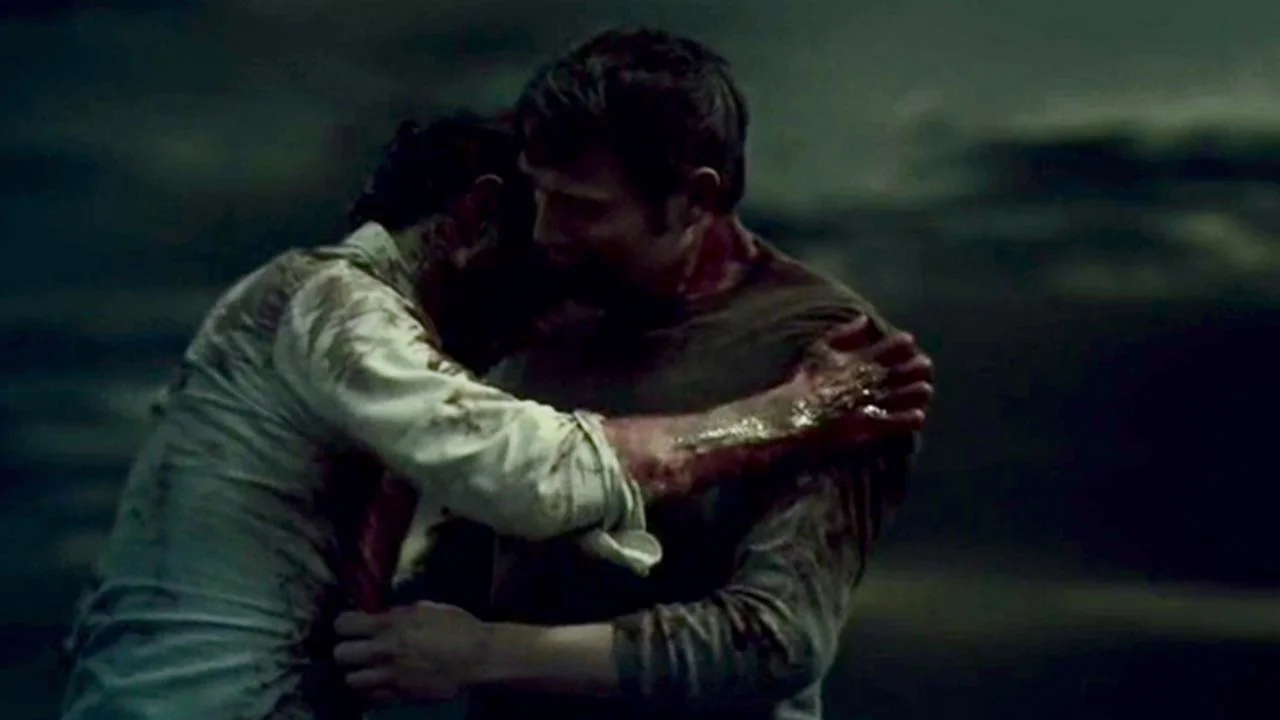

"Wait, come back! I don't know how to love!"
When I thought about The X-Files before I started rewatching the whole series again recently, my mind was a jumble of feelings: nostalgia, fear, and a major crush on David Duchovny. One of those fearful memories was Season Two's "The Host" episode, which, if that name doesn't sound familiar is The One About The Giant Flukeman Living In The Sewer Tunnel.
Like "Tooms" and "Squeeze," it's one of the best Monster Of The Week episodes of The X-Files and easily one of my favorites. There are episodes of the show that are funny or weird, and those are good, too, but I tend to remember the ones that freaked me out and "The Host" is at the top of that list.
The episode opens inside a Russian submarine where some poor bastard has been dispatched to deal with overflowing toilets. Right away, it's incredibly gross and uncomfortable. Eugene Victor Tooms made nests out of bile and newspaper, but how often do you come across bile in the wild? Poop on the other hand... When the Russian guy goes to inspect the sewage tanks, he flinches from the smell.
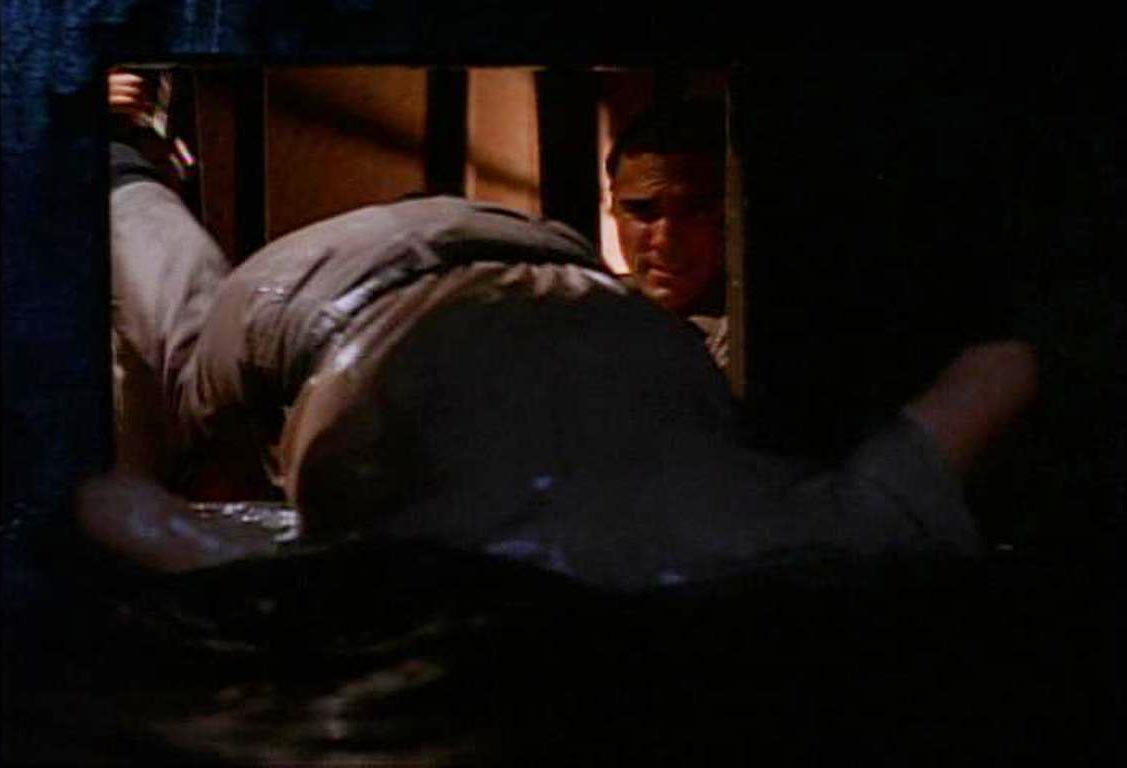
Looks like someone got in over his head.
So we're already squicked out within the first few minutes of "The Host," and it just keeps getting grosser, weirder, and creepier as the episode progresses. Poor Russian Bastard gets pulled into the sewage tank by something that's already in there and he doesn't make it out.
Meanwhile at the FBI, as happy as Fox Mulder is to be taken off of his current, mind-bogglingly boring wiretapping assignment, when he gets to Newark, New Jersey (surely Jon Stewart was laughing hysterically watching this episode back in the day), he's peeved to find that the case Skinner has assigned him to is a dead body discovered in a sewer tunnel. It's one of the few times Mulder looks truly uncool and not crush worthy while the jokes fly as fast as the droplets of stinky water: a close up of rubber boots next to a manhole cover, Mulder gagging and coughing, and when one of the men present tells him to watch himself, his response is "Yeah, I wouldn't want to step in anything". Then there's my favorite exchange in this scene:
NORMAN: They say it cuts the smell if you don't breathe through your mouth.
MULDER: They lied.
Mulder, in full-on diva mode, interrupts a meeting that Assistant Director Skinner is having with a bunch of important looking people in suits to complain and is summarily embarrassed into leaving the room, his tantrum ignored. Later, he tells Scully that Skinner is "just rubbing my nose in it." Ah, poop jokes. Of course, we laugh because it's funny, but we also laugh because it helps break up the atmosphere of sheer horror; somehow fecal matter is more horrifying than any monster... except maybe for the one that we'll see later in the episode.
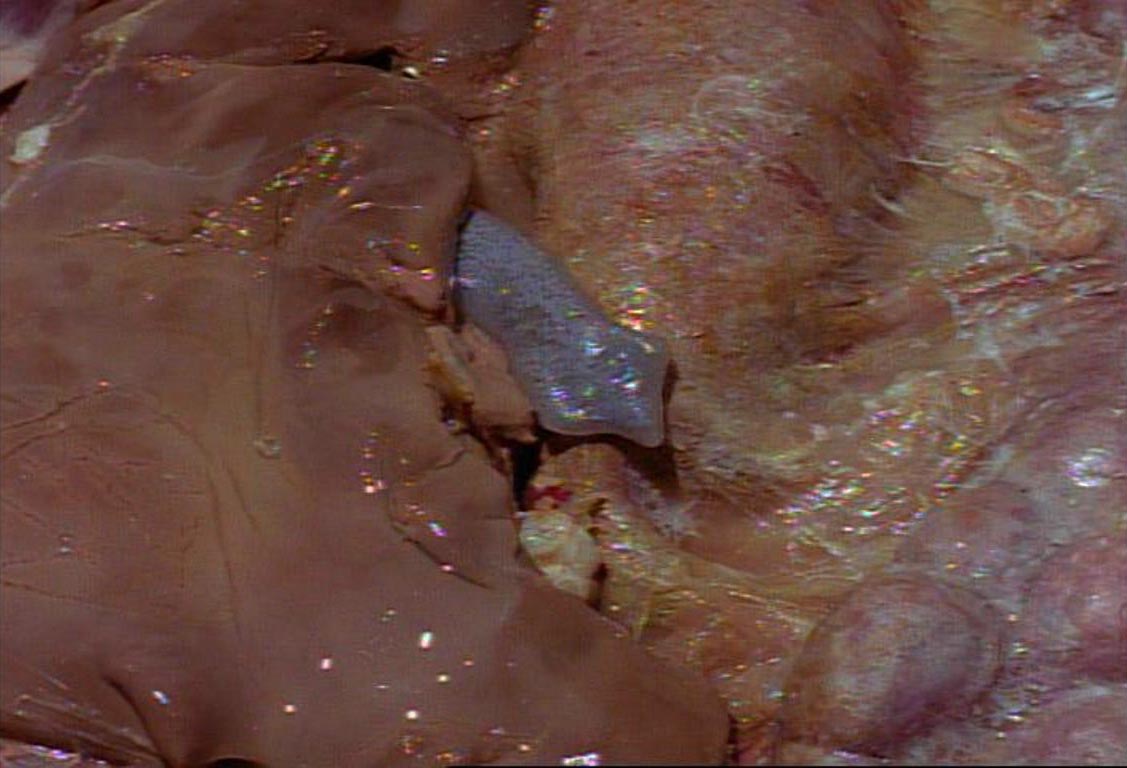
It's not a fluke; it's an actual fluke.
During the autopsy, Scully gasps as a grayish looking worm wriggles out of the corpse. Then, another sanitation worker is attacked; something grabs and tears a strip off of him (literally) when he's armpit-deep in a sewer tunnel full of water. At the doctor's office, the man complains about a bad taste in his mouth and his feeling of nausea is palpable, especially after we saw that critter on Scully's exam table. She reveals to Mulder that it's a Turbellarian, also known as a flatworm or fluke. "Apparently" she says, "it had attached itself to the bile duct and was feeding off the liver." (Tooms would be so proud!)
The bite on sanitation worker victim #2 (ha!) is far too large to be from a regular flatworm, but this is The X-Files so we know it's only going to get worse. And it does. At the Newark County Sewage Processing Plant, Mulder is having an enlightening conversation with the foreman, who's quite proud of the fact that "560,000 people a day call my office on the porcelain telephone." They're interrupted by a frantic call from Charlie, one of the workers, who says that something in the sewer pipe just "swam right past."

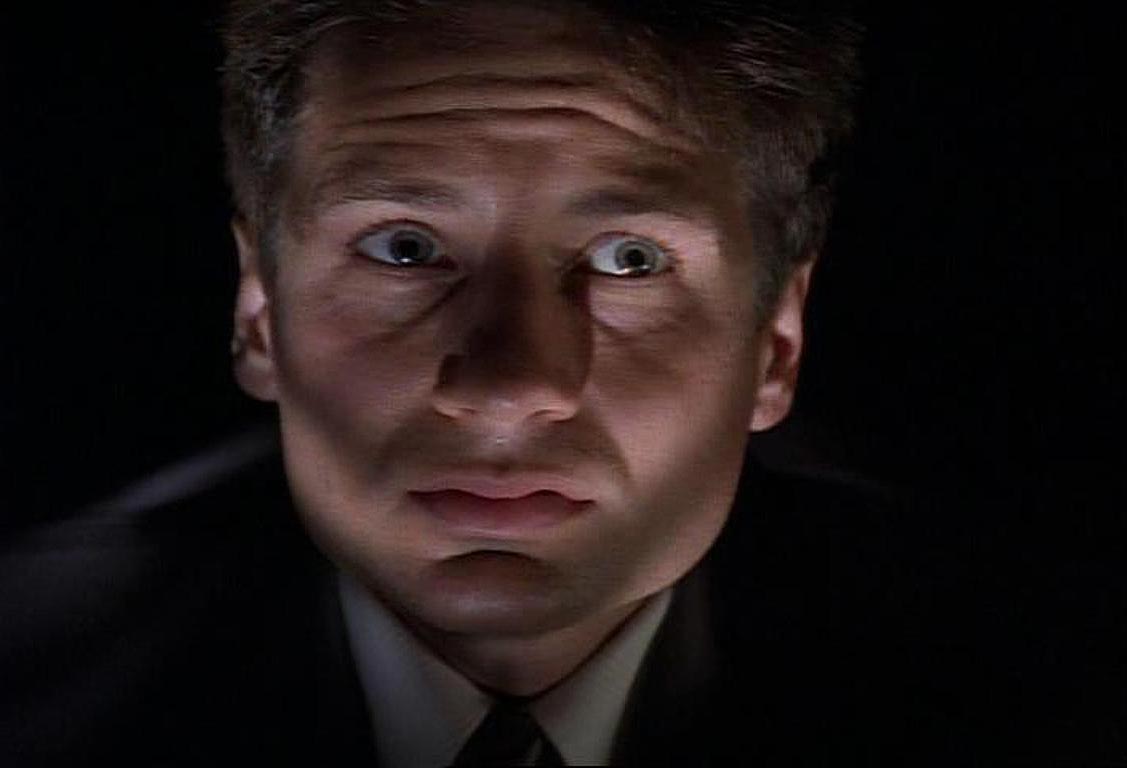
Fox Mulder is done with your shit.
The Flukeman is taken into custody (!) and despite the bizarre and grotesque circumstances, Skinner assures Mulder that the suspect will undergo a "full psychiatric evaluation." Mulder argues that "this is not a man; it's a monster" but Skinner is unconvinced. On the way to said institution, the Flukeman escapes from the ambulance and into a portable toilet. A tank cleaning service comes by the next day to vacuum out the portable toilets. The horrible hilarity of something large and lumpy clogging up the giant, intestinal-shaped tube connected to the worker's truck is not lost on anyone watching. When Scully informs Mulder that the worm she found might have been an incubating larvae, Mulder realizes that truly, this is the darkest timeline.
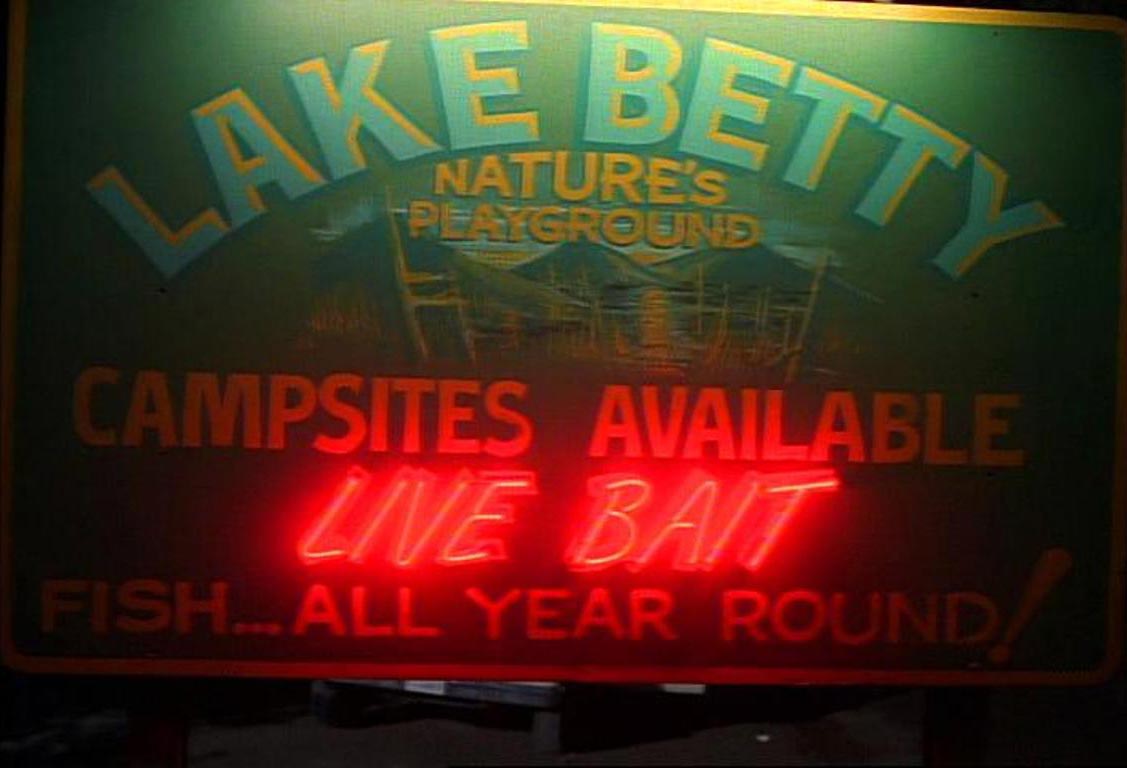
Inspiration for Bryan Fuller on HANNIBAL.
During what is probably the most exciting workday the foreman at the sewage processing plant has ever experienced, he and Mulder rush to the overflow pipe to try and prevent the Flukeman from heading back out to sea. In a moment of genuine what-the-fuckedness, some water splashes on Mulder's shoulder and he wipes it off and then smells his hand, grimacing at the stench. The foreman loses his glasses and gets attacked so Mulder has to jump in the nasty water and save him. Mulder screams for help and all I can think is "Damn it, man, close your mouth!" In the end, they manage to sever the Flukeman in half by slamming a gate down as he's swimming through a pipe.
This episode has become even more disturbing to me since it first aired. About 15 years ago I was forced, through work-related circumstances, to eat lunch at a local casino. I was having stomach problems and the only thing I thought I could tolerate was barbecued shrimp. I had eaten a few when I noticed something unusual in my plate. It was not curled like a shrimp and it wasn't pink: it was grey and rubbery. My manager insisted it was "just a shrimp," but having spent the majority of my life eating Gulf Coast shrimp, I was not fooled. I actually had to cover my plate with a napkin because the damn thing seemed to be staring at me.
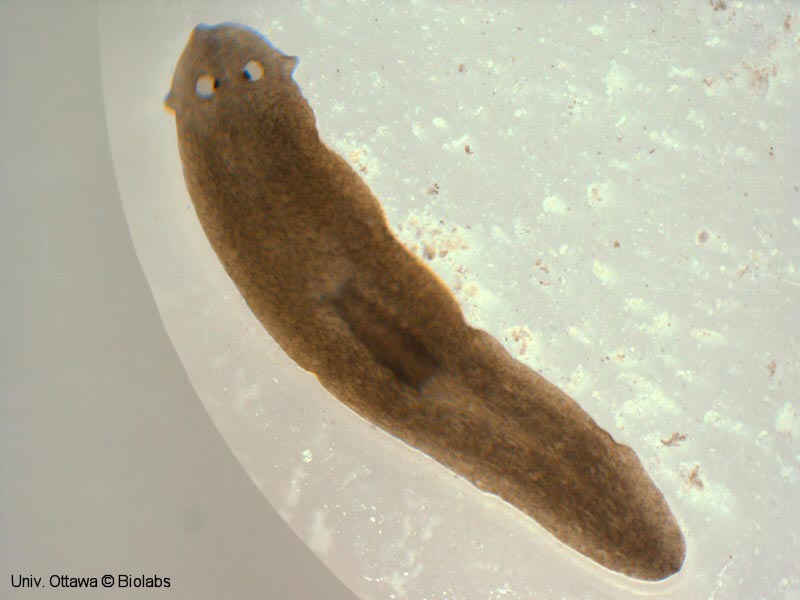
Not a barbecued shrimp.
Google searches reveal that it was possibly the same type of critter depicted in The X-Files, albeit smaller. Still, it's difficult to decide what's more frightening: a grey flatworm in your barbecued shrimp or having to deal with human poop as a major part of your job.